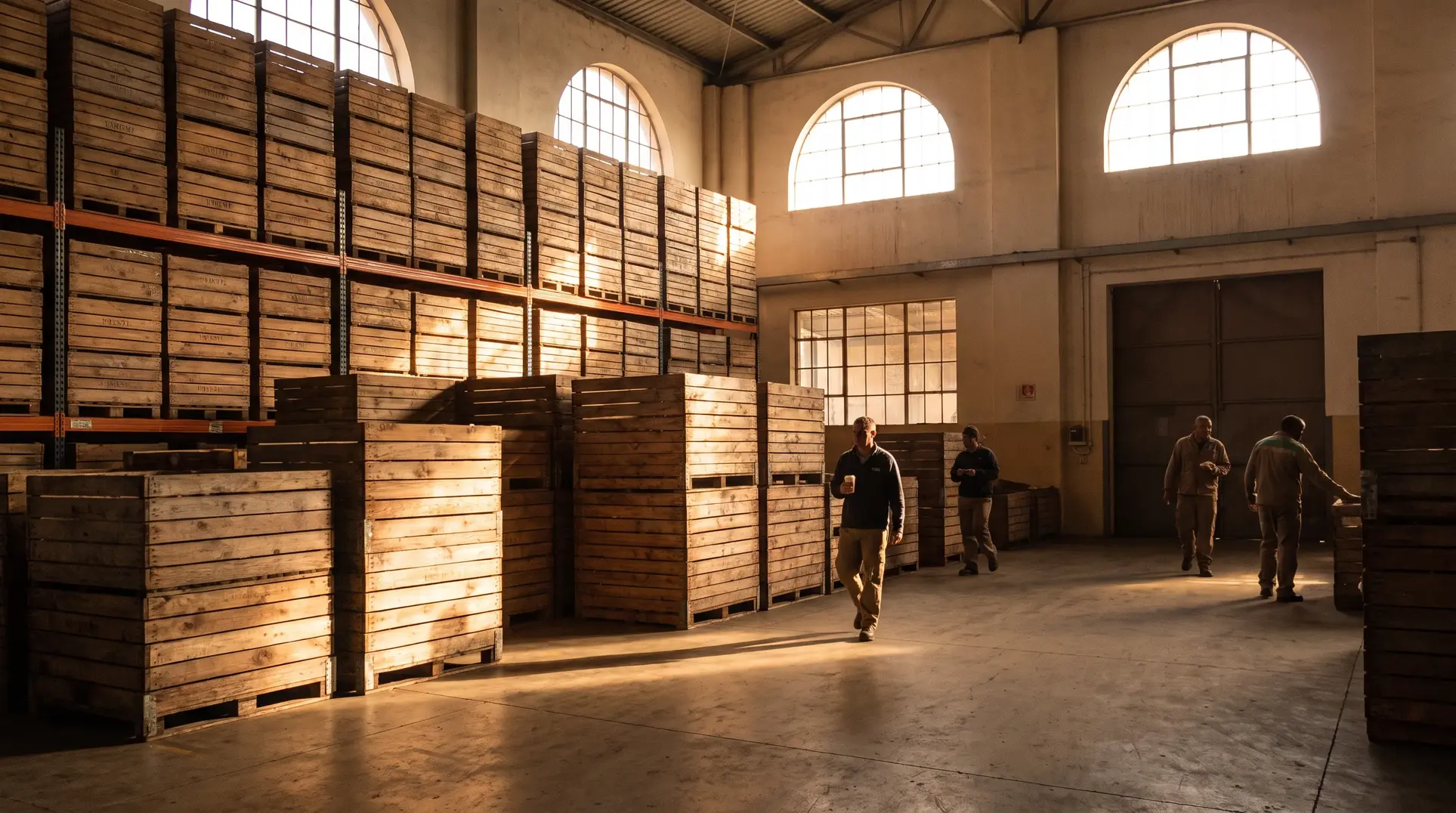
Canada is spending more on defence than it has in decades, and the contracts that follow are reshaping who gets to participate in the supply chain. For Ontario manufacturers and engineering firms watching this shift, the question is no longer whether opportunities exist—it is whether they are ready to capture them. Readiness, in this context, means more than technical capability. It means compliance infrastructure, security protocols, and logistics partners who can handle controlled goods without breaking the chain of custody. Packaging sits at the centre of that readiness equation, and firms that treat it as an afterthought will find themselves disqualified before the first RFP lands on their desk.
Who This Article Is For

This article is written for procurement officers, operations managers, and compliance leads at Ontario-based subcontractors who manufacture or service equipment destined for defence applications. If your firm machines components for aerospace primes, builds test equipment for military programs, or supplies any goods that fall under the Controlled Goods Program, this is directly relevant to your planning.
This article is not for companies shipping consumer products, firms with no interest in defence work, or businesses looking for cheap packaging solutions. Defence supply chains demand a different standard, and the content here reflects that reality.
Canada’s 2% NATO Commitment and the Scale of What’s Coming
Canada has committed to meeting the NATO defence spending commitments target of 2% of GDP. According to World Bank data, Canadian military expenditure has historically hovered well below that threshold, which means the path to 2% represents a substantial increase in procurement activity over the coming years.
For context, moving from roughly 1.3% to 2% of GDP in defence spending translates into billions of additional dollars flowing through the procurement system annually. The Department of National Defence currently spends approximately $5 billion per year on contracting, awarding over 100,000 contracts annually. As spending scales to meet NATO targets, that contracting volume will grow—and a significant portion of it is mandated to flow to Canadian firms.
This is not a speculative opportunity. It is a structural shift in how defence procurement operates in this country.
The 70% Domestic Sourcing Target
Canada’s Defence Industrial Strategy directs that 70% of defence contracts should flow to Canadian companies. The intent is to build resilient domestic supply chains that reduce dependence on foreign suppliers for critical military capabilities.
For Ontario subcontractors, this policy creates a protected lane. Primes bidding on major programs must demonstrate Canadian content in their Value Propositions, and those commitments are scored alongside technical and cost criteria. A prime that cannot show meaningful domestic participation is at a disadvantage.
What does this mean in practice? It means primes need Canadian partners—not just for manufacturing, but for every link in the logistics chain, including packaging and handling of controlled goods. Firms that can demonstrate compliance readiness become attractive partners. Firms that cannot become liabilities.
What Subcontractors Must Have in Place to Compete
Winning defence work requires more than competitive pricing and technical competence. The compliance infrastructure matters just as much as the product itself. Here is what subcontractors need to have in place:
- Controlled Goods Program registration: If you manufacture, possess, or handle controlled goods—defence articles, technology, or technical data—you must be registered under the Controlled Goods Program registration. This is not optional. Primes cannot work with unregistered suppliers without risking their own compliance status.
- Security clearances: Many defence contracts require facility security clearances and personnel security clearances at various levels. The application process takes time, so firms should initiate it well before bidding on sensitive programs.
- Quality management systems: Defence clients expect documented quality processes that ensure traceability, consistency, and accountability. ISO-based certifications are common baseline expectations.
- Compliant logistics partners: Your compliance chain extends beyond your facility. If your crating provider, freight handler, or warehouse is not registered under the Controlled Goods Program, your goods cannot legally be transferred to them. A single non-compliant link breaks the entire chain.
This last point is where many subcontractors underestimate the requirements. They invest in their own compliance infrastructure but partner with packaging and logistics providers who cannot legally handle the goods they ship.
CGP-Compliant Packaging as a Competitive Requirement
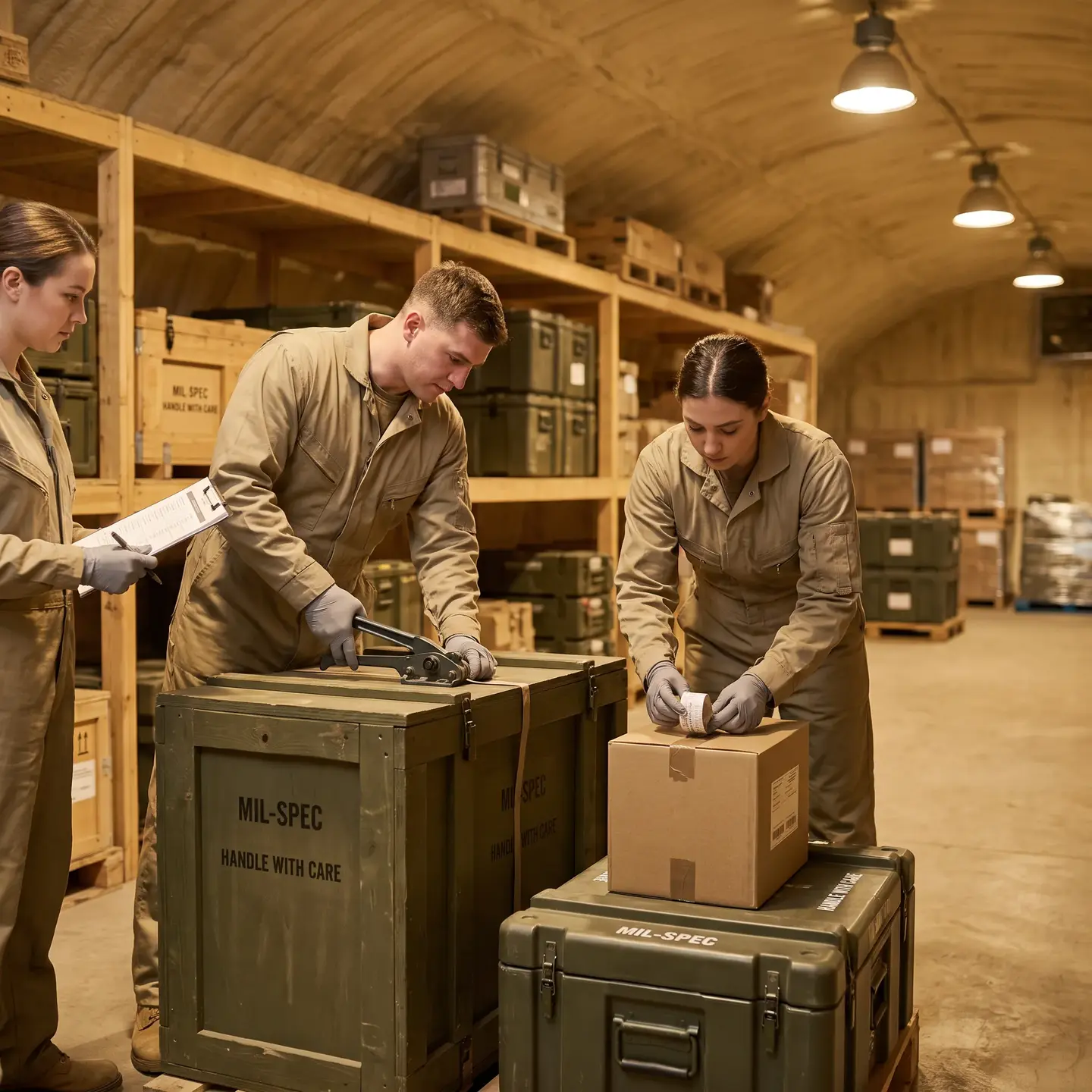
Defence contractors do not have the luxury of choosing packaging partners based on price alone. Controlled goods must remain in the custody of registered entities from the moment they leave your facility until they reach their destination. If your crating provider is not CGP-registered, you cannot legally transfer the goods to them for packaging.
This is not a technicality. It is a hard legal requirement enforced by Public Services and Procurement Canada. Violations can result in fines, loss of registration, and disqualification from future contracts.
Beyond registration, defence packaging involves standards that commercial providers rarely encounter:
- MIL-STD specifications: Military packaging standards dictate material selection, cushioning requirements, closure methods, and marking protocols. These standards exist because military equipment often sits in storage for years or travels through harsh environments before deployment.
- NATO Stanag compliance: For equipment destined for allied operations, NATO standardization agreements govern how items are packaged, labelled, and coded. Packaging materials can themselves be catalogued with NATO Stock Numbers.
- Environmental protection: Defence packaging must protect against moisture, corrosion, shock, and vibration over extended storage periods. Desiccants, vapour barriers, and specialized coatings are standard requirements.
- Documentation and traceability: Every crate must carry proper markings, including NSN codes, contract numbers, handling instructions, and barcodes. Documentation must be complete and verifiable.
Subcontractors entering the defence supply chain need packaging partners who understand these requirements and can execute them consistently. Ad hoc solutions built for commercial freight do not meet the standard.
Material and Design Standards in Defence Packaging
Defence packaging is engineered protection, not commodity boxing. The materials and designs used must satisfy specific performance criteria:
- Shock and vibration resistance: Equipment travels by truck, rail, ship, and aircraft. Each mode introduces different shock profiles. Packaging must cushion contents against all of them.
- Corrosion prevention: Metal components exposed to humidity during transit or storage can corrode. Packaging designs incorporate vapour barriers, desiccants, and anti-corrosive wraps to prevent damage.
- Load-bearing capacity: Crates must support stacking loads during storage and transport without crushing or shifting contents.
- ISPM-15 compliance: Wood packaging used in international shipments must be heat-treated and stamped to meet phytosanitary requirements. Non-compliant wood is rejected at borders.
- Reusability and modularity: Some defence programs require packaging that can be reused for returns, repairs, or redeployment. Modular designs reduce lifecycle costs.
Subcontractors should expect their packaging partners to engineer solutions that meet these criteria—not simply build boxes that look adequate. The consequences of inadequate packaging include damaged equipment, failed inspections, and disqualification from future work.
Why Ontario Subcontractors Need a Ready Packaging Partner
Ontario’s industrial base includes dozens of firms capable of manufacturing defence-grade components. What many lack is a packaging and logistics partner who can complete the compliance chain.
We operate from Ottawa, serving the Montreal to Toronto corridor with CGP-compliant crating and packaging designed for defence, aerospace, and high-tech clients. Our registration under the Controlled Goods Program means we can legally receive, handle, and package controlled goods without breaking your compliance chain. Our ISPM-15 certification and membership in the CWPCA heat treat program mean your crates clear international borders without delay.
For subcontractors evaluating their readiness to compete for defence contracts, the packaging question is straightforward: do you have a partner who can handle controlled goods, meet military specifications, and deliver on schedule? If the answer is uncertain, your bid is already at risk.
What Disqualifies Firms Before They Start
We have seen capable manufacturers lose opportunities because of avoidable gaps in their supply chain. Common disqualifiers include:
- Non-CGP packaging providers: If your crating partner is not registered, you cannot legally transfer controlled goods to them. Primes conducting supplier audits will flag this immediately.
- Non-compliant wood packaging: Crates that do not meet ISPM-15 requirements are rejected at borders. Shipments get held, timelines slip, and reputations suffer.
- Inadequate documentation: Missing or incomplete packaging documentation creates traceability gaps that auditors cannot accept.
- Inconsistent quality: Defence programs require recurring shipments built to identical specifications. Providers who treat each job as a one-off cannot deliver the consistency primes demand.
These are not edge cases. They are common failure modes that disqualify otherwise capable subcontractors from defence work.
Next Steps for Subcontractors Entering the Defence Supply Chain
If your firm is positioning to capture defence opportunities, here is a practical framework for assessing readiness:
- Verify your own CGP status: Confirm your registration is current and covers all controlled goods you expect to handle. If you are not registered, begin the application process immediately.
- Audit your supply chain partners: Identify every firm that will handle your goods—packaging, freight, warehousing. Verify their CGP registration and compliance certifications.
- Document your quality systems: Ensure your quality management processes are documented, auditable, and aligned with defence expectations.
- Establish relationships before RFPs arrive: Primes assembling bid teams prefer partners they have already vetted. Do not wait for a specific opportunity to introduce yourself.
- Prepare for longer sales cycles: Defence procurement moves slowly. Relationships built today may not yield contracts for 12 to 24 months. Plan accordingly.
For subcontractors who need a packaging partner with defence credentials, we are available to discuss your requirements and assess fit. You can contact AML for a readiness consultation to review your compliance needs and packaging specifications before your next bid deadline.

The Window Is Open
Canada’s defence buildup is not a temporary surge. It is a multi-year structural shift driven by NATO commitments, domestic industrial policy, and geopolitical realities that are not going away. Ontario subcontractors who invest in compliance infrastructure now will be positioned to capture contracts as procurement volumes scale.
Packaging is one piece of that infrastructure—but it is a piece that disqualifies firms when it is wrong. Getting it right means working with partners who understand defence requirements, hold the necessary registrations, and can deliver consistent quality on every shipment.
The firms that treat this seriously will win work. The firms that treat it as an afterthought will watch from the sidelines.
Frequently Asked Questions
How does Canada’s 2% NATO defence spending target change what we need to have in place as subcontractors?
Canada’s move from roughly 1.3% to 2% of GDP in defence spending means billions of additional dollars in contracts every year and over 100,000 awards annually. That scale changes expectations for us as subcontractors. Primes will favour teams that are already fully compliant, with Controlled Goods registration, security clearances, documented quality systems, and ready logistics partners. If we wait to build this infrastructure until an RFP appears, we will be too slow and lose out.
Why is packaging a make-or-break issue for our eligibility in defence supply chains?
Packaging is often the first place otherwise capable firms fail compliance. Controlled goods must stay in the custody of CGP-registered entities from our loading dock to the end destination. If our crating provider cannot legally handle controlled goods, we break the chain of custody and put the prime at risk. Defence clients treat this as a hard legal requirement, not a technical detail. A non-compliant packaging partner can disqualify our bid before anyone reviews our technical capabilities.
What specific packaging standards do we need to meet for defence, beyond normal commercial shipping?
Defence packaging goes far beyond typical freight boxes. We are expected to meet MIL-STD specifications for cushioning, closures, and markings; follow NATO Stanag rules when equipment supports allied operations; and protect against moisture, corrosion, shock, and vibration for long storage periods. That usually means vapour barriers, desiccants, anti-corrosive wraps, and detailed documentation with NSNs, contract numbers, and barcodes. If we rely on commercial packaging assumptions, we risk damage, failed inspections, and lost future work.
How can our choice of wood and crate design cause border delays or contract problems?
Using the wrong wood or untested designs is a common way defence shipments go wrong. International shipments must meet ISPM-15: heat-treated, properly stamped wood that passes phytosanitary inspection. Non-compliant wood can be rejected at the border, holding our shipment and damaging our reputation. Crates also need verified load-bearing capacity for stacking, plus shock and vibration control for truck, rail, ship, and air. If we treat crates as generic lumber boxes, we accept a high risk of delays and damage.
What practical steps should we take now to avoid being disqualified before bidding?
We should start by confirming our own Controlled Goods Program registration and fixing any gaps. Next, we need to audit every supply chain partner—packaging, freight, warehousing—for CGP status and relevant certifications. Then we document our quality processes so they are traceable and auditable. Finally, we build relationships with compliant packaging partners before RFPs land, because primes prefer vetted teams and defence sales cycles often run 12–24 months. If we delay these steps, we may never reach the shortlist.