
Export Crates That Clear the Border
An export shipment fails at the border for one of two reasons: the packaging is not compliant, or the packaging did not survive the trip. Both are avoidable, and both are expensive when they happen. Non-compliant wood packaging can be refused, treated or destroyed at the shipper’s cost, and the delay usually costs more than the crate did.
AML Crating builds ISPM-15 compliant export crates from heat treated, IPPC stamped lumber at our Ottawa facility, ten minutes from the international airport. Every build is engineered for the transit it is actually going on, whether that is air freight to Europe, ocean freight to Asia, or sealift into Canada’s North.
- ISPM-15 certified export builds
- IPPC stamped and traceable
- Ocean, air and cross-border freight
- Oversized and heavy equipment
- Moisture barriers for long transits
- Recurring export production runs
What We Build for Export
A crate crossing an ocean faces a different set of problems than one crossing a province. Longer exposure, more handling points, humidity and salt air, and a customs officer at the other end who will read the stamp before anyone reads the packing list. We build to the route, not to a standard size.
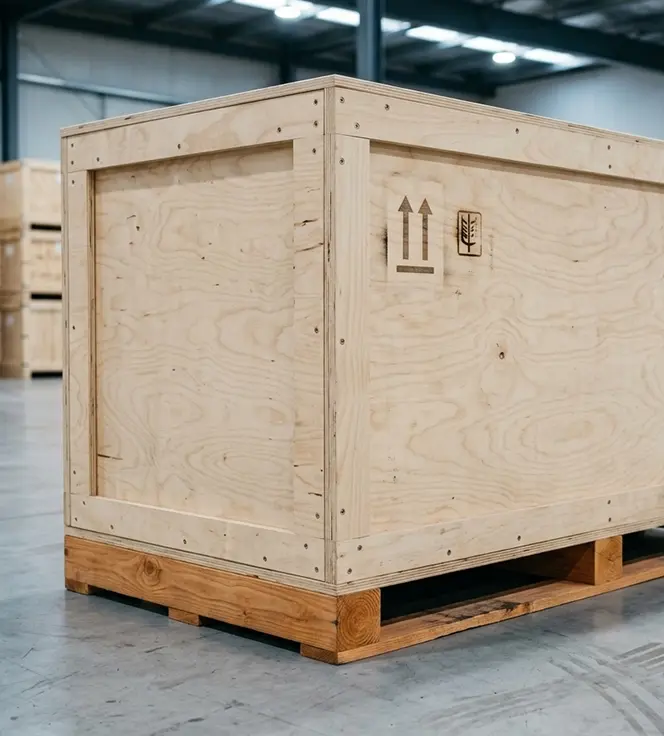
Standard export builds for international shipment, constructed from heat treated lumber and marked with the IPPC stamp. The mark carries the IPPC symbol, the CA country code, our facility registration number and the HT treatment code, which together tell any customs authority the packaging has been treated to the international standard.
Crates are engineered around the asset rather than sized to stock dimensions, with blocking and bracing that hold the load through repeated handling.
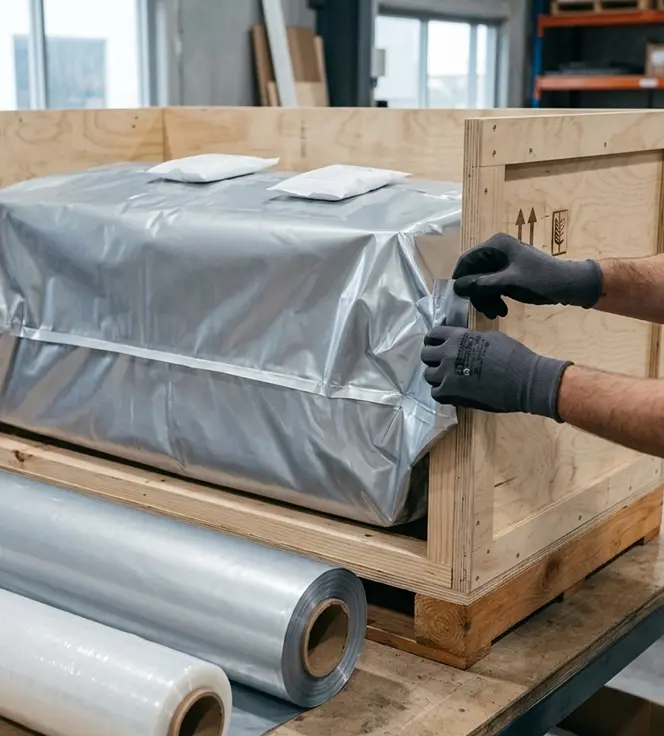
Sea transits measure in weeks, not days, and the cargo spends all of it in humid, salt-laden air. For these routes we recommend sealing the asset inside a Marvel Seal moisture barrier with desiccant sized to the enclosed volume and duration, with Marine Wrap over the crate itself. Both are specialist add-ons priced with the build, so we will advise what the route actually justifies rather than adding cost by default.
Sealift shipments into Canada’s North get the same treatment with heavier blocking, because cargo on that route is handled repeatedly and may sit in the open before it reaches its final destination.
Air freight rewards weight discipline, so these builds balance protection against every kilogram of crate. Construction is engineered to hold the asset securely without over-building, with dimensions worked around ULD and pallet constraints so the crate does not cost more in freight than it needs to.
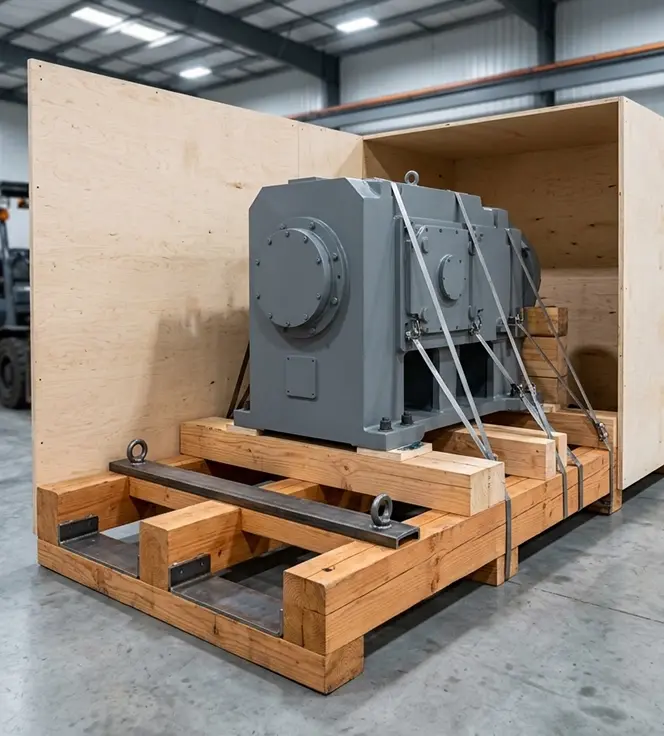
Machinery, industrial equipment and large assemblies are engineered around the asset’s weight distribution and lift points, with skids sized for forklift and crane handling at both ends. Where equipment should not travel uncrated to our facility, our crew builds the crate on site with our own forklift, then loads at your dock.
Compliance,
Stamped
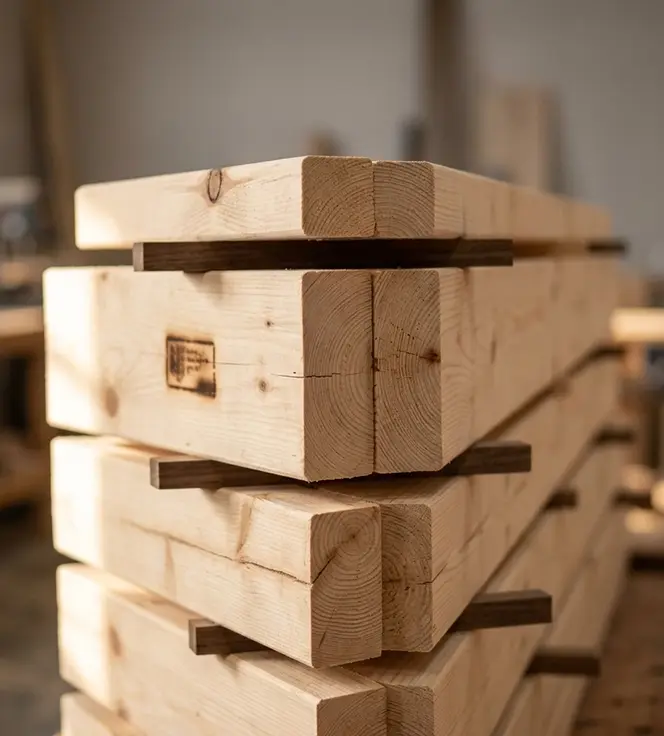
ISPM-15 exists to stop invasive pests travelling inside wood packaging. Compliant material is heat treated to a minimum of 56 degrees Celsius through the core of the wood for at least 30 minutes, then marked. Methyl bromide fumigation is accepted in some countries but is not permitted in Canada, so heat treatment is the only route here.
Our export builds use treated lumber tracked through the certification chain and carry the IPPC mark on the crate itself. See our certifications for the full detail on what we hold and how to verify it.
- Heat treated to 56°C through the core
- IPPC stamped and traceable
- Treated lumber tracked to source
- Packaging documentation included
Built for the
Whole Journey
A crate that clears customs but arrives with the contents damaged has still failed. Long transits stack up hazards that a domestic move never sees: condensation cycling as the container heats and cools, vibration over thousands of kilometres, and handling by crews who have no idea what is inside.
So the compliance is the starting point, not the finish. Every export build is protected at each contact point, and moisture barriers and handling indicators are specified with you based on the route, the value of the cargo and how long it will be in transit.
- Marvel Seal
- Marine Wrap
- Anti Static
- Anti Shock
- Desiccant Bag
- High Density Foam
- Bubble Wrap
- Tip / Tell & Shock Watch Monitors
Specified per shipment. We will recommend what your route justifies and price it with the crate.
Browse our FAQs to find detailed answers to common questions about export crating and ISPM-15.
ISPM-15 is the international phytosanitary standard governing solid wood packaging used in international trade. It exists to stop invasive pests travelling inside pallets, crates and dunnage. Compliant wood is heat treated to a minimum of 56 degrees Celsius through the core for at least 30 minutes, then marked with the IPPC stamp.
Not usually. Canada and the continental United States operate a bilateral exemption for wood packaging made from wood originating in either country, provided the shipping documents state that the wood packaging originated in Canada.
Two caveats worth knowing. The exemption does not extend to Hawaii, Puerto Rico or US territories, which require the ISPM-15 mark. And the exemption has been under review for well over a decade, so if a crate may be reused for onward export we recommend building it compliant from the start.
Yes. Export builds use certified heat treated lumber and are marked with our IPPC stamp, which carries the IPPC symbol, the CA country code, our facility registration number 01303, and the HT treatment code. The full mark reads CA-01303 HT. The stamp is what customs authorities read to confirm the packaging is compliant.
No. ISPM-15 applies to solid wood packaging. Processed wood products including plywood, oriented strand board and particle board sit outside the standard, because the manufacturing process already eliminates the pest risk. Most crates still contain solid wood in the skids and framing, which is why the crate as a whole needs treated material and marking.
Not in Canada. ISPM-15 recognises methyl bromide fumigation in some countries, but it is not permitted for producing compliant wood packaging here. Heat treatment is the only approved method here, and all our export material is heat treated to that standard.
Non-compliant wood packaging can be refused entry, ordered for treatment, or destroyed, and the cost falls to the shipper. In practice the bigger cost is usually the delay, because the cargo sits while the packaging problem gets resolved.
Yes. Ocean and sealift shipments face weeks of humidity, salt air and repeated handling, and blocking is engineered for cargo that will be handled multiple times rather than moved once. For those routes we usually recommend a Marvel Seal moisture barrier with desiccant sized to the enclosed volume and transit duration, plus Marine Wrap over the crate. Both are specialist add-ons quoted with the build.
Yes. Oversized and heavy loads are engineered around the asset’s weight distribution and lift points, with skids sized for forklift and crane handling. Where equipment should not travel uncrated to our facility, our crew builds the crate on site with our own forklift. See our onsite crating service.
Every export build ships with the packaging documentation international shipments require, and the IPPC mark is applied to the crate itself. Export permits and licences for the goods inside remain the responsibility of the exporter of record.
Send the product, dimensions, weight, destination country and mode of transport through the quote form below. Flag anything sensitive to moisture, static or orientation. You will typically have a quote with timeline within 1 to 2 business days.