
Secure your valuable assets with AML Crating’s expertly designed wooden crates, crafted to meet the highest standards for safe, efficient transport worldwide.
Engineered Once, Built on Repeat
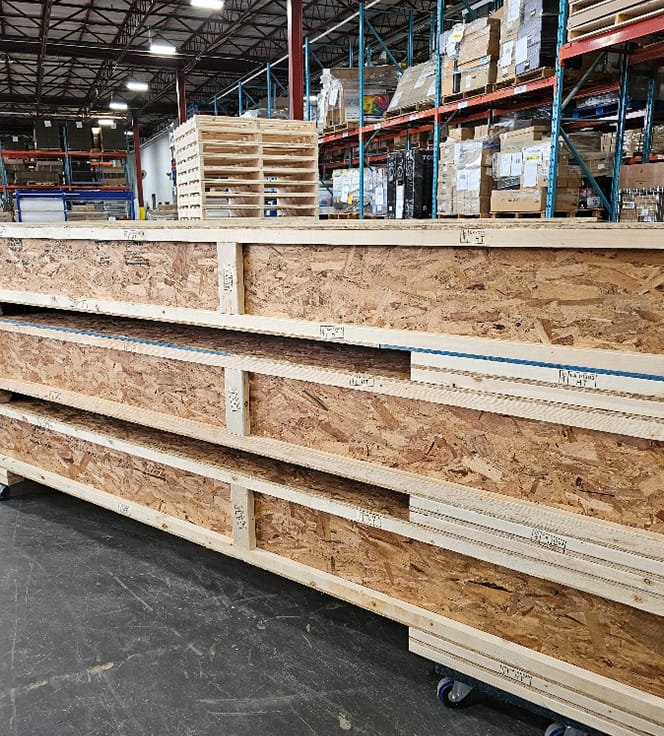
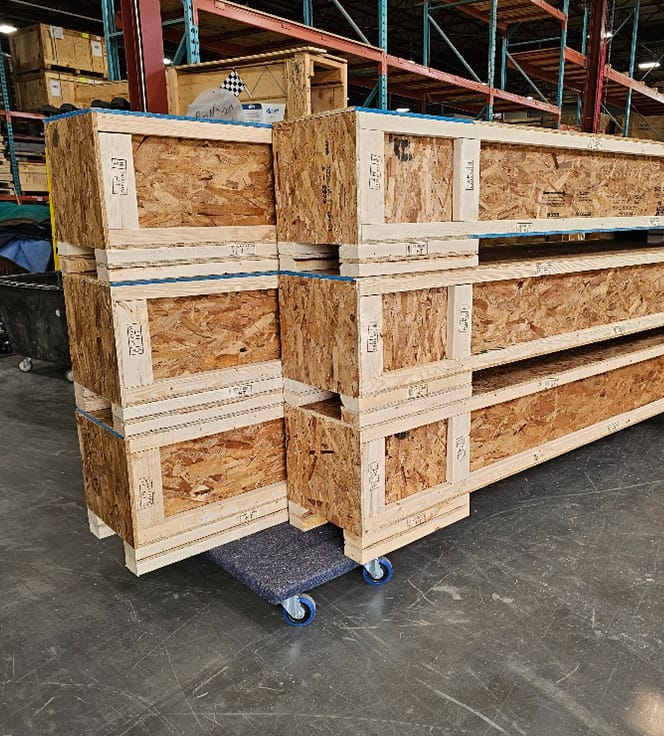
Production crating is repeatable, high-volume crating for OEMs and manufacturers that ship the same product again and again. We engineer your crate once, prove the build, then reproduce it to the same specification on every order. The result is what recurring shippers actually need: consistent protection, fewer mistakes, quicker production, and unit pricing that improves as volume grows.
This is our priority service and the work we are built around. If your servers, test equipment, drones, HVAC units, or manufactured components leave the dock weekly or monthly, a production program replaces one-off guesswork with a proven build.
- Consistent specifications across every batch
- Engineered 3D crate design on file
- Quicker production on repeat orders
- Volume pricing that improves with scale
- ISPM-15 tracked lumber on every build
- Reusable crate options for closed loops
How a Production Crating Program Works
A production crating program turns your recurring shipment into a standing specification. We design the crate once, you approve the first build, and every crate after that is produced to the identical spec. Your receiving teams open a crate they already know, your logistics team orders against a known price, and your product gets the same engineered protection every time.
We start with your product: dimensions, weight distribution, fragile points, and packing requirements. The crate can be modelled in 3D before a board is cut, with blocking, bracing, and any foam lining you approve engineered into the design rather than improvised. That model becomes your specification on file.
The first crate is built to the spec and checked against your product. Once you approve the fit and protection, the specification is locked for the program. Any future changes go through the same review, so nothing drifts between batches.
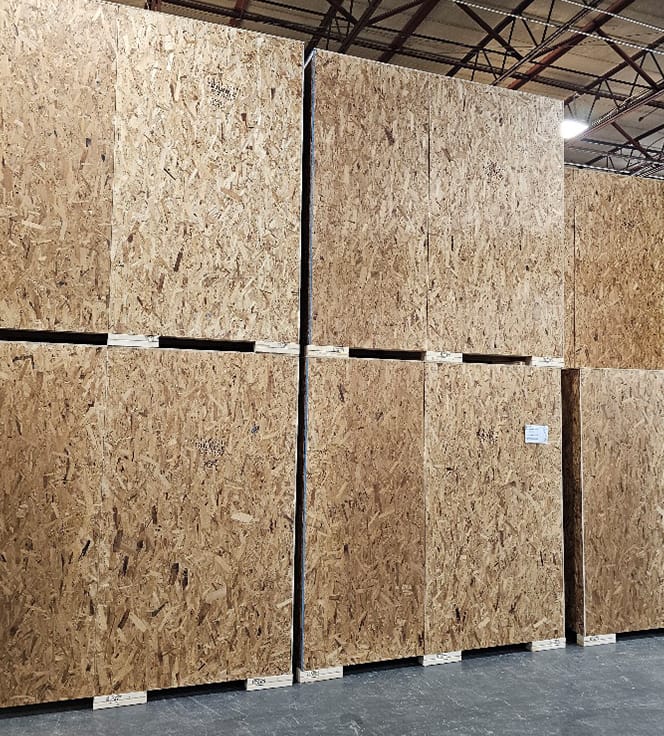
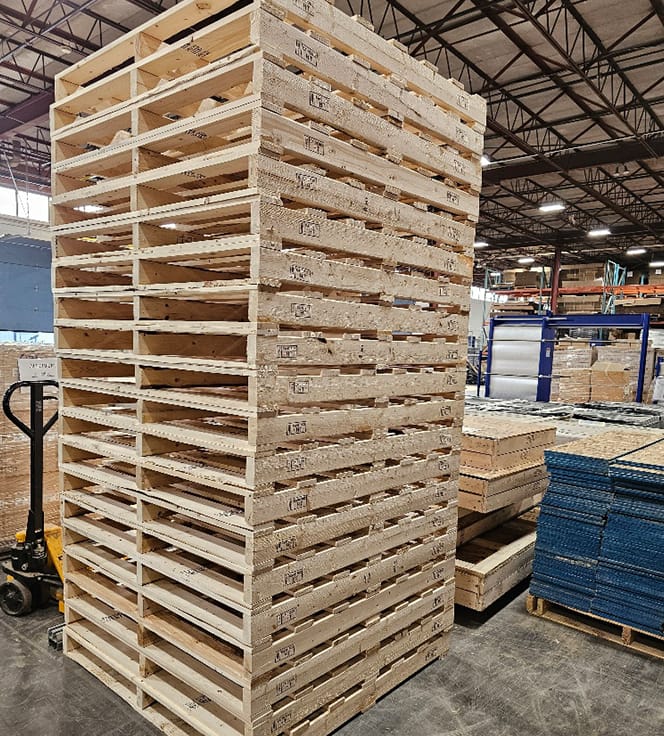
Repeat orders are produced against the approved specification. Because the design work is already done, production is quicker and the opportunity for error is smaller than with one-off builds. Every crate matches the last one.
Recurring volume can be scheduled ahead, so crates are ready when your shipping calendar needs them instead of when the queue allows. Many customers move to standing orders that match their production cycle.
Same Crate,
Every Time
- Approved specification on file
- Jigged builds for repeatability
- Checks against the approved standard
- Familiar uncrating for receiving teams
Built for OEM
Schedules
- Marvel Seal
- Marine Wrap
- Anti Static
- Anti Shock
- Desiccant Bag
- High Density Foam
- Bubble Wrap
- Tip / Tell & Shock Watch Monitors
Browse our FAQs to find detailed answers to common questions about production crating.
Production crating is the repeat manufacturing of shipping crates to a single engineered specification for customers with recurring volume. Instead of designing a new crate for every shipment, the crate is engineered once, approved, and reproduced identically on every order.
Custom crating solves a one-time shipment with a one-time build. Production crating takes that same engineering and locks it into a repeatable specification for products that ship again and again. The design cost is spent once, and every crate after benefits from it.
If the same product ships monthly or more often, a program usually pays for itself through quicker production, fewer errors, and better unit pricing. Send us your product and shipping frequency, and we will tell you honestly whether a program or one-off builds serve you better.
Crates are quoted by cubic foot and become more economical as they get bigger. Recurring production runs improve unit pricing further because design and setup are already done. Projects that add onsite work or deliveries are quoted as a custom mixture of hourly, size, and project pricing.
Yes. The approved specification stays on file, builds are jigged for repeatability, and each crate is checked against the standard your first approval set. Changes only happen through the same review process that created the spec.
Quicker than one-off builds, because the engineering is already done. Quotes typically arrive within 1 to 2 business days, and standing orders can be scheduled against your production calendar. We give realistic timelines rather than guarantees, since outside shipping factors are beyond any provider’s control.
Yes. Every build uses heat treated, ISPM-15 tracked lumber from our certified supply chain, so the same production crate that ships domestically can cross international borders with the right documentation.
Yes. For closed-loop shipping where the same assets travel repeatedly, we design reusable crate systems built to last through delivery and come back for the next one. Reusable programs often pay for themselves within a few cycles.
High-tech companies shipping servers and test equipment, manufacturers and OEMs with recurring product lines, HVAC equipment makers, and defence and aerospace suppliers with recurring controlled shipments. If your product ships on a schedule, the program fits.
Send us the product, quantity, dimensions, packing requirements, and how often it ships through the quote form below. You will typically have a quote with timeline within 1 to 2 business days, and the first build follows your approval of the design.