You have ordered the same crate five times this year. Each time, we quoted it, engineered it, sourced materials, and built it from scratch. Each time, you paid for that engineering work again. Each time, small variations crept in: a quarter-inch difference here, a slightly different lumber grade there. Your receiving team noticed. Your damage rate ticked up on order four. And now you are wondering whether there is a smarter way to do this.
There is. The question is whether your volume justifies the switch from one-off custom builds to production crating services. This article walks through that decision. We will explain how each approach works, break down the unit economics, and give you a framework for determining when repeat builds pay for themselves. No hard rules, because every operation is different. But by the end, you will know whether you are leaving money on the table.

Who This Article Is For
This article is written for procurement officers, logistics coordinators, and operations managers at companies shipping high-value equipment on a recurring basis. If you are moving servers, test stations, manufacturing equipment, or similar assets multiple times per quarter and ordering crates each time, this applies to you.
This article is not for companies shipping one unique piece of equipment once. If you have a prototype going to a single destination and you will never ship that exact configuration again, one-off custom crating is the right answer. No need to read further.
Understanding One-Off Custom Crating
One-off custom crating is the traditional approach. You contact a crating provider, describe your equipment, and receive a quote. An engineer designs a crate for that specific unit. Materials are sourced. The crate is built. You ship.
This works well in certain situations:
- Prototype shipments where the equipment configuration may change
- Truly unique machinery that will never ship again in that form
- Low-frequency shipping where you move equipment once or twice per year
- Variable destinations requiring different compliance standards each time
The flexibility is genuine. Each crate is tailored to the job. If the equipment changes slightly between shipments, the crate changes with it.
But flexibility comes with costs that are not always obvious:
- Engineering time per order. Every quote involves design work, even if the crate looks similar to one we built last month.
- Material sourcing variability. Without standardized specs, lumber grades and panel thicknesses can shift between orders.
- Labour inefficiency. Each build requires reading new drawings, making new cuts, solving new fit problems.
- Dimensional variation. Small differences accumulate. A crate that was 48 inches wide last time might be 48.5 inches this time.
That last point matters more than most buyers realize. When crates vary slightly between orders, your receiving team cannot stack them predictably. Your warehouse layout calculations break. Your trailer loading patterns shift. These are small frictions, but they compound across dozens of shipments.
How Production Crating Works
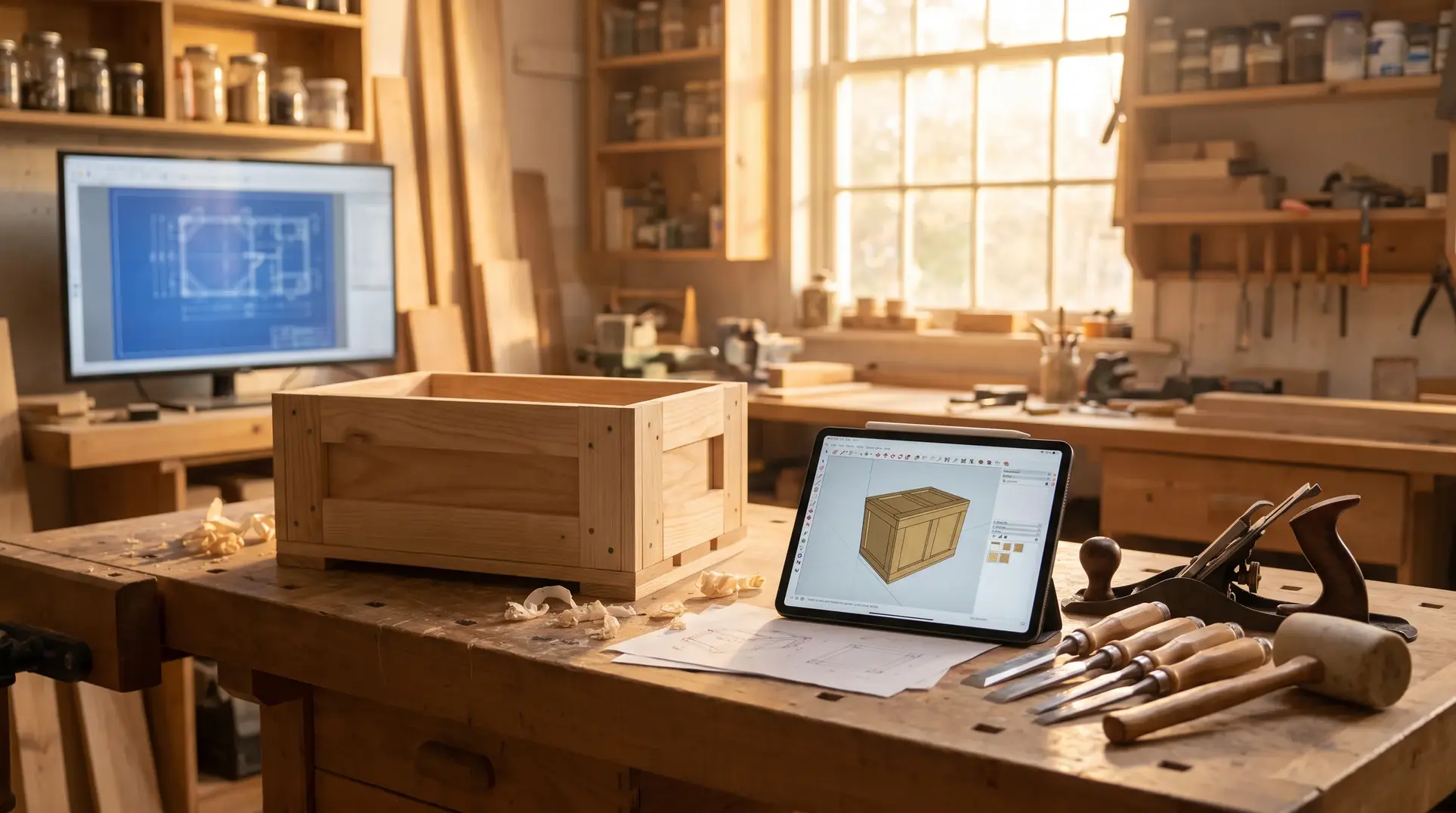
Production crating starts with the same engineering work as a custom build. We design a crate for your specific equipment, accounting for weight distribution, fragile components, handling requirements, and compliance standards. The difference is what happens after that first build.
Instead of discarding the design, we save it. The specifications are documented: exact dimensions, material grades, fastener types, internal blocking positions, foam densities if applicable. The crate gets a reference number. When you need another one, you order by reference number rather than starting from scratch.
The process looks like this:
- Initial design and approval. We engineer the crate, build a prototype, and get your sign-off.
- Specification documentation. Every detail is recorded so the crate can be reproduced exactly.
- Standardized materials. We source consistent lumber grades and panel thicknesses for all future builds.
- Documented build procedures. Our shop follows the same steps every time, eliminating variation.
- Reference number reordering. You call, provide the reference number, specify quantity, and we build.
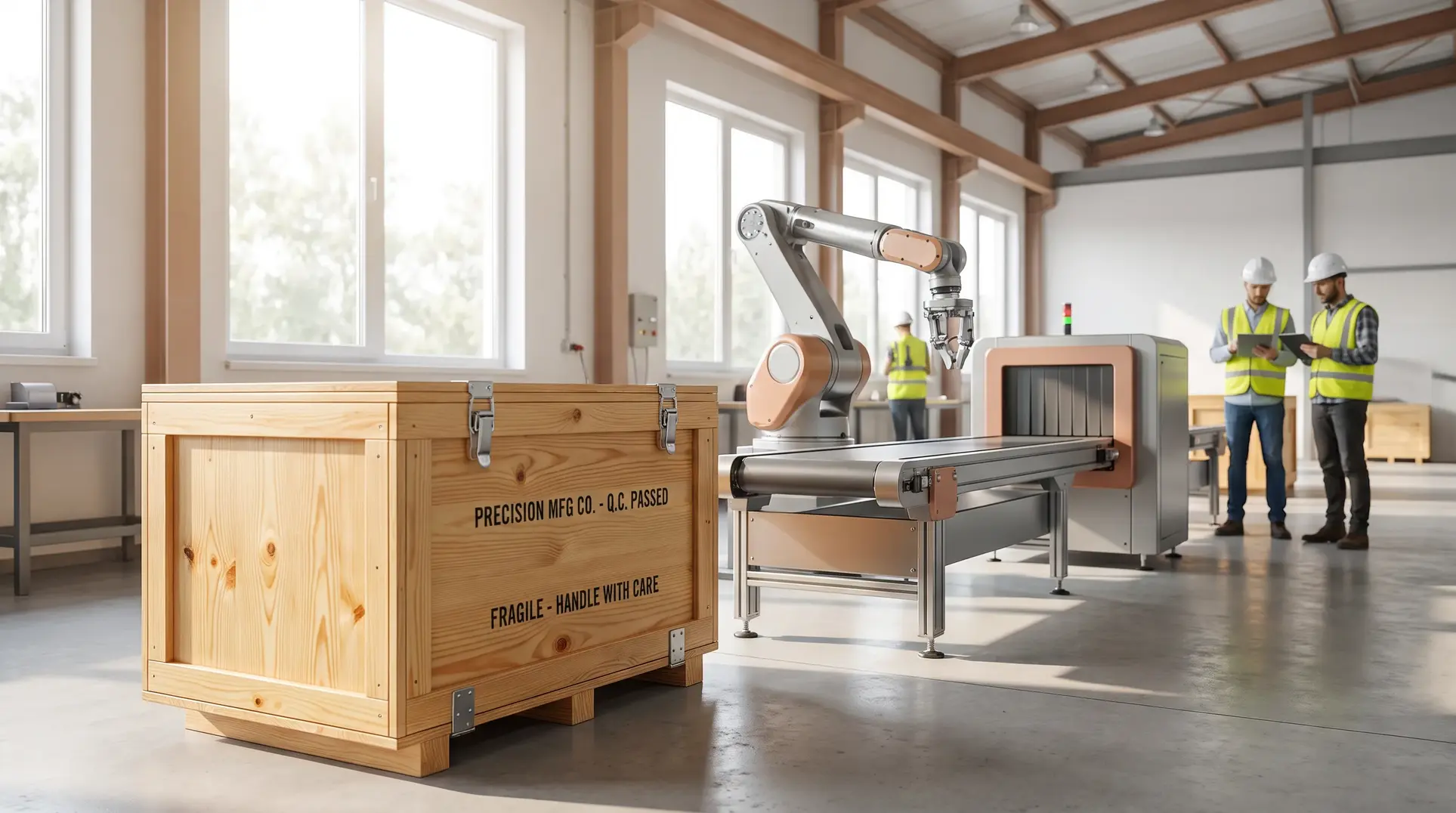
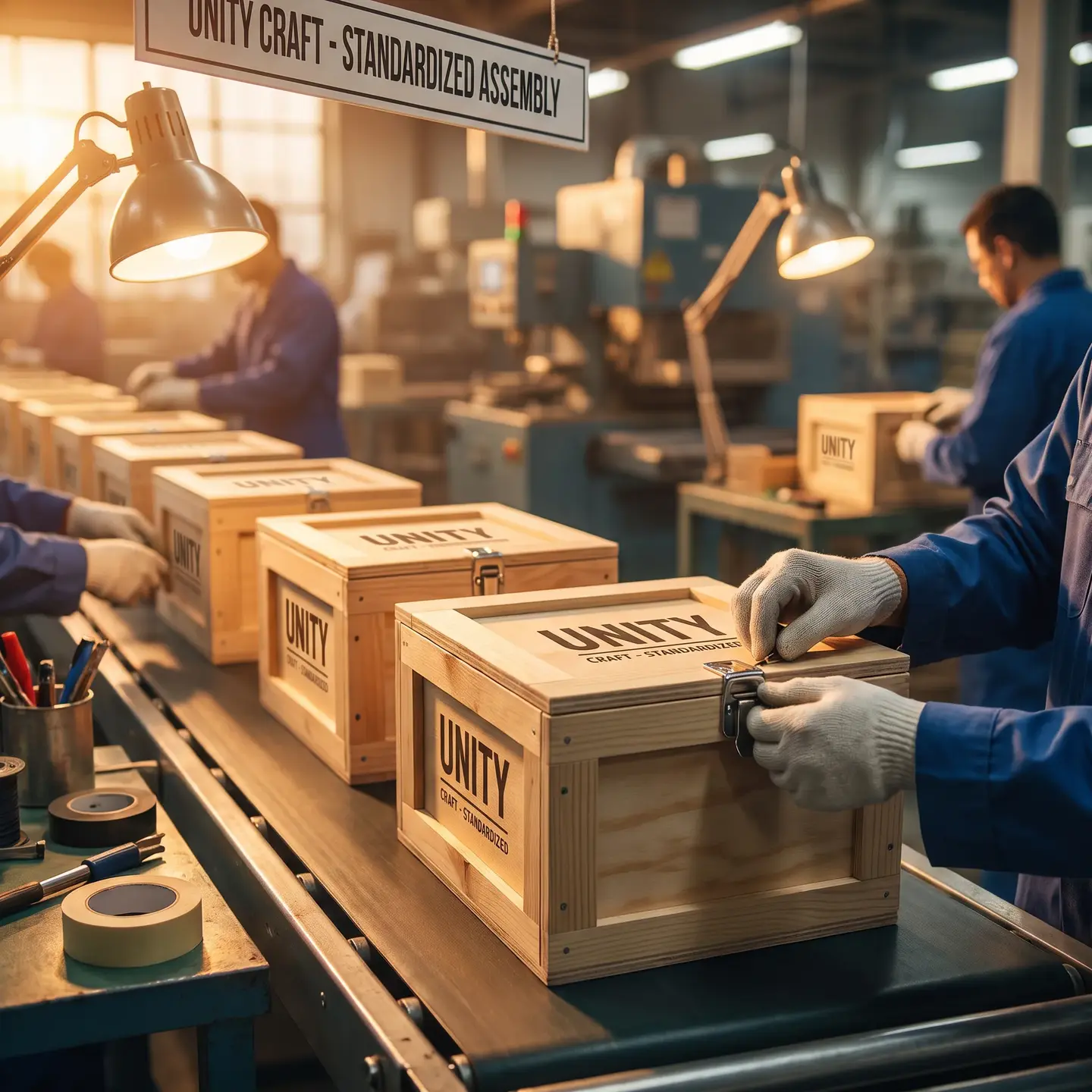
Standardization means every crate in a production run is identical. Not similar. Identical. Same dimensions, same materials, same internal blocking, same protection level. Your receiving team knows exactly what to expect. Your warehouse can plan around consistent footprints. Your damage rates stabilize because the design has been proven across multiple shipments.
The Unit Economics Breakdown
Here is where the decision gets concrete. One-off crating and production crating have fundamentally different cost structures.
One-Off Cost Structure
- Engineering time charged per order
- Materials purchased per order, often at retail or small-batch pricing
- Labour includes interpreting new drawings and solving fit issues
- Quoted on a per-crate basis with full margin on each unit
Production Cost Structure
- Upfront engineering investment (first crate costs more)
- That investment amortizes across all future units
- Materials purchased in bulk at volume pricing
- Labour follows documented procedures with no interpretation needed
- Pricing shifts toward cubic footage rates at scale
The break-even point depends on crate complexity, size, and order frequency. But here is a framework for thinking about it:
Orders 1-2: One-off and production approaches cost roughly the same. Production may cost slightly more because of the documentation overhead.
Orders 3-5: Production crating begins showing advantages. Engineering costs are already paid. Material standardization kicks in. Labour efficiency improves.
Orders 6+: Production crating typically delivers measurable savings per unit. The exact percentage varies, but 15-25% reductions in per-crate cost are common for medium-complexity builds.
This is directional guidance, not a guarantee. A small, simple crate has less engineering cost to amortize than a large, complex one. Your specific numbers depend on what you are shipping and how often.
Consistency and Quality Benefits
Cost savings are the headline. But for many operations, consistency matters more than price.
When you order one-off crates repeatedly, variation creeps in. The lumber supplier had a different batch. The builder read the dimension slightly differently. The blocking shifted a half-inch to accommodate a cut pattern. These are not errors. They are the natural result of treating each order as a new project.
The downstream effects include:
- Handling inconsistencies. Forklift operators learn muscle memory for specific crate sizes. Variation disrupts that.
- Stacking problems. Crates that do not match exactly do not stack reliably.
- Receiving confusion. Your team cannot verify correct delivery if the crate looks different each time.
- Damage rate fluctuation. One crate fits perfectly. The next is slightly loose. Protection levels vary.
Production crating eliminates these problems. Every crate matches the approved specification. Your equipment sits in the same position, supported by the same blocking, cushioned by the same foam, every single time. The protection level that worked on shipment one works on shipment twenty.
This predictability matters especially for high-value equipment. According to industrial packaging standards documentation, consistent packaging is a core requirement for reliable transit outcomes. When you are shipping servers worth $200,000 or test equipment worth $350,000, you do not want protection levels fluctuating between orders.
Lead Time and Scheduling Advantages
Saved specifications change more than cost. They change speed.
A one-off custom crate requires:
- Initial consultation and information gathering
- Engineering and design work
- Quote preparation and approval
- Material sourcing
- Build scheduling
- Construction
A production reorder requires:
- Reference number and quantity confirmation
- Build scheduling
- Construction
Steps one through four disappear. For operations with regular shipping schedules, this is significant. If you know you ship equipment every Tuesday, you can establish a standing order pattern. We build your crates ahead of demand. They are ready when you need them. No engineering delays. No material sourcing surprises.
According to supply chain efficiency metrics research, eliminating lead time variability is one of the highest-impact improvements manufacturers can make. Predictable crating availability means predictable shipping schedules means predictable delivery commitments to your customers.
Volume Thresholds: When to Make the Switch
There is no universal volume number that triggers the switch to production crating. But there are decision factors that indicate when the conversation is worth having.
Consider Production Crating If:
- You ship the same equipment configuration monthly or more frequently
- Your annual volume for a single crate type exceeds 10-12 units
- Your product line has stabilized and the equipment design is not changing
- You ship to consistent destinations with consistent compliance requirements
- You have experienced damage or handling issues due to crate variation
- Lead time predictability matters for your operation
Stick With One-Off Crating If:
- You ship equipment once or twice per year
- Your equipment configuration changes frequently
- Each shipment involves fundamentally different dimensions or protection needs
- Compliance requirements vary between shipments
The gray area is the 5-10 units per year range. At that volume, the economics depend on crate complexity. A simple skid with blocking might not justify production setup. A complex crate with custom foam, specific blocking, and precise dimensions probably does.
For manufacturing crating solutions, the threshold tends to be lower. Manufacturers usually have stable product lines, predictable shipping schedules, and quality control expectations that favour standardization. If you are shipping production equipment or finished goods on a regular schedule, production crating likely makes sense at even modest volumes.
Real-World Applications
Production crating scales across a wide range of volumes. We work with customers ordering 10 crates per month and customers ordering 200+ per week. The approach adapts to the operation.
Monthly parts shipments. A manufacturer ships testing equipment to field locations monthly. Same equipment, same destinations, same compliance requirements. Production crating delivers identical protection every time, with reorder turnaround measured in days rather than weeks.
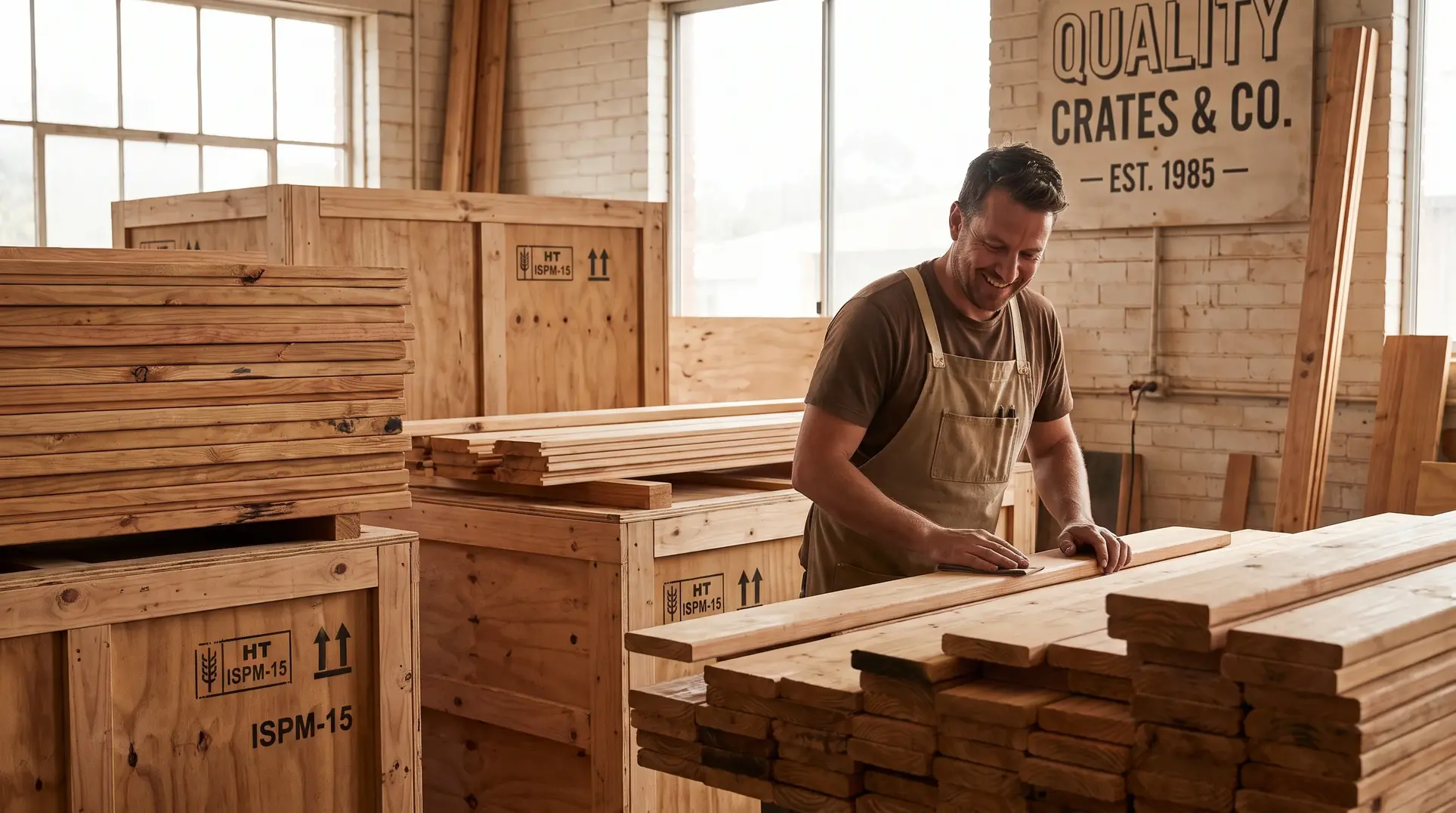
Weekly export loads. An exporter sends equipment overseas weekly. All crates require ISPM-15 compliance. Production runs ensure compliant crates are ready when loads are ready, with no compliance scrambles.
Multi-phase project deployments. A technology company deploys server racks across data centres in phases. Each phase ships identical equipment. Production crating means phase three gets the same protection as phase one, with no re-engineering between deployments.
Steady manufacturing output. A production facility ships finished equipment daily. Crates are integrated into the production schedule. We build ahead of demand based on their forecast. Crate availability never gates shipment.
Implementation Considerations
Transitioning from one-off to production crating requires some upfront work. Here is what to expect:
Initial Investment
The first production crate typically costs more than a one-off equivalent. You are paying for the documentation, the specification development, and the approval process. This investment pays back across future orders, but the first order is higher.
Approval Process
We build a prototype and get your sign-off before locking the specification. This is the time to verify fit, protection levels, and handling characteristics. Changes after approval are possible but reset some of the standardization benefits.
Specification Documentation
Every dimension, material, and build procedure is recorded. This documentation is yours. You can use it to verify incoming crates match spec, to communicate requirements internally, or to maintain quality records for compliance purposes.
Flexibility Concerns
The most common objection to production crating is fear of losing flexibility. What if the equipment changes? What if requirements shift?
The answer is that specifications can be updated. If your equipment changes, we modify the specification and document a new version. The standardization benefits continue with the updated design. You are not locked into obsolete packaging.

Making the Decision
If you are reading this article, you are probably shipping equipment regularly and wondering whether your current approach makes sense. Here is how to evaluate:
- Count your orders. How many times have you ordered crates for the same equipment in the past 12 months?
- Assess stability. Is the equipment design stable, or is it changing between shipments?
- Evaluate variation. Have you noticed inconsistencies between crates ordered at different times?
- Consider lead time. Has crate availability ever delayed a shipment?
- Check damage patterns. Have damage rates varied between otherwise identical shipments?
If your order count exceeds five per year, your design is stable, and you have experienced variation or timing issues, production crating likely pays for itself. The exact economics depend on your specific equipment and volumes.
We help customers work through this decision regularly. If you want to evaluate whether production crating makes sense for your operation, gather your shipment history for the past year and request a quote. We will run the numbers with you and give you an honest assessment of whether the switch makes sense, or whether one-off crating remains the right approach for your situation.
Frequently Asked Questions
How do we know when to switch from one-off custom crates to production crating?
We start by looking at how often we ship the same equipment in the same configuration. If we are ordering crates for identical gear more than 5 times a year, and the design is stable, we are likely paying repeatedly for engineering and tolerating small variations that drive damage and handling issues. Production crating makes sense when repeat orders, rising damage rates, or warehouse inefficiencies begin to show up in our shipping history.
What specific problems does crate variation cause in our warehouse and logistics operations?
When every crate is treated as a fresh project, small dimensional and material differences creep in. A crate might be 48 inches wide one month and 48.5 inches the next. Lumber grade or foam density can change. Our receiving team loses predictable stacking patterns, forklift operators lose muscle memory, and trailer loading plans stop fitting. Those frictions drive mis-handling, inconsistent protection, and ultimately higher damage rates on otherwise identical shipments.
How does production crating change our per-crate cost over multiple orders?
With one-off crating, we pay full engineering, small-batch material, and interpretation-heavy labour on every unit. Production crating front-loads engineering and documentation on the first crate, then amortizes that investment over future builds. Materials move to bulk pricing, and shop labour follows a fixed procedure. After roughly 3–5 repeat orders, that structure typically delivers measurable savings per unit, often in the 15–25% range for medium-complexity equipment.
What impact does production crating have on our lead times and scheduling reliability?
One-off crates require consultation, engineering, quoting, approval, sourcing, then build. Each step adds variability. With production crating, we reorder by reference number, go straight to scheduling and construction, and can even build ahead against a forecast. That removes several time-consuming steps and makes crate availability far more predictable. For operations shipping weekly or monthly, this stability helps us lock in shipping days and meet delivery commitments without packaging-related delays.
If our equipment or requirements change, do production crate specifications lock us in?
We are not frozen in place. Production crating is standardized, not static. We treat the specification as a controlled document: exact dimensions, materials, blocking, foam, and procedures. If our equipment layout changes or compliance rules shift, we update the spec, build a new prototype, and get fresh sign-off. That does reset some of the amortization, but it preserves the main benefit: every crate for the new configuration is built consistently to the approved standard.