
Secure your valuable assets with AML Crating’s expertly designed wooden crates, crafted to meet the highest standards for safe, efficient transport worldwide.
CGP Registered Crating in Ottawa
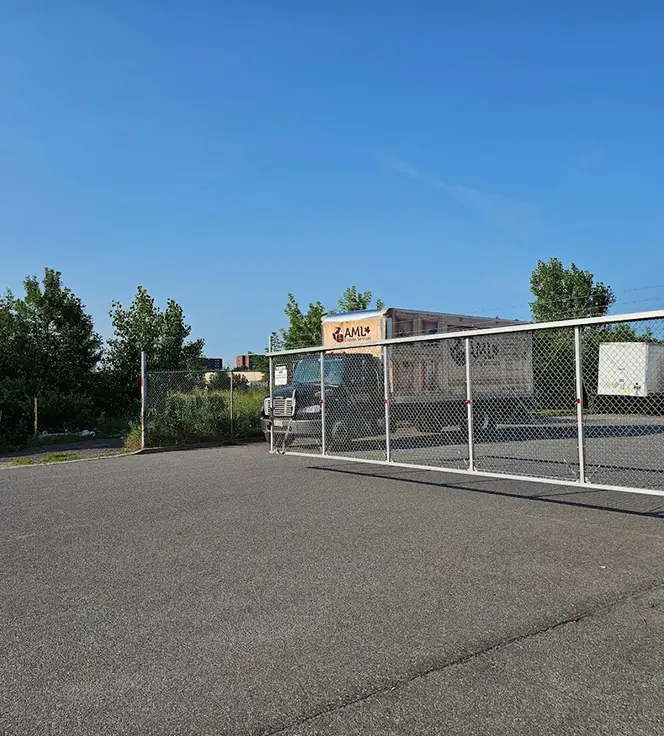
AML Crating is registered under Canada’s Controlled Goods Program. When your company ships controlled technology, every party that examines, possesses, or transfers it must hold CGP registration, and that includes the company that builds the crate. Our registration means your defence and aerospace shipments stay inside the compliance chain from your floor to final transport, handled by a security-assessed team in a controlled-access Ottawa facility.
It is a specialist capability few crating providers offer, and it is backed by the same engineering we bring to every high-value build since 2011. It is the foundation of our defence and aerospace crating work.
- Registered under the Controlled Goods Program
- Security-assessed personnel
- Controlled-access Ottawa facility
- ISPM-15 certified export crating
- CWPCA heat treat program member
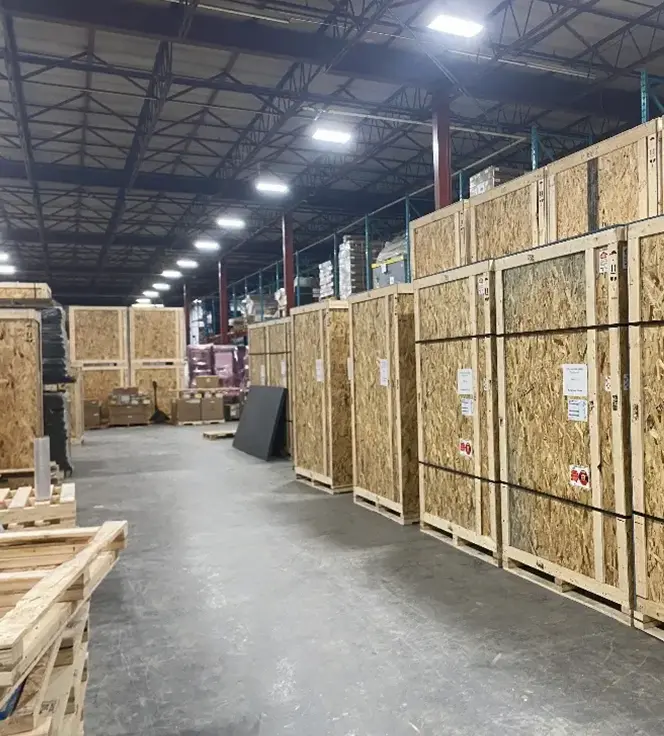
- Secure storage with documented pickup
What Is the Controlled Goods Program?
The Controlled Goods Program is Canada’s federal regime for safeguarding goods and technology with military or national security significance, administered by Public Services and Procurement Canada. Any company that examines, possesses, or transfers controlled goods in Canada must be registered in the program. That requirement follows the item itself, so it applies to manufacturers, subcontractors, warehouses, and the crating company that packages the shipment.
Every person or company in Canada that examines, possesses, or transfers controlled goods must be registered, including suppliers, subcontractors, and logistics partners. If a crating crew builds around your controlled hardware or your crated item sits in a warehouse, that provider needs registration for the compliance chain to hold.
Controlled goods are items and technology listed in the schedule to the Defence Production Act, which covers many military, dual-use, and satellite-related items. Your contract or your compliance officer identifies which of your products qualify. When they do, everyone who handles them must be registered.
Registered companies appoint a designated official, complete security assessments for people who access controlled goods, put a security plan in place for their facility, and keep records of how controlled goods are handled and transferred. These measures are exactly what AML maintains for its crating operations.
An unregistered handler breaks the compliance chain. That exposes the owner of the goods to regulatory consequences and can put defence contracts at risk. Verifying your crating provider’s registration before the crate is built is far less expensive than discovering the gap afterwards.
The Chain of Custody,
Protected
- Security-assessed team members
- Controlled facility access
- Documented transfers at every handoff
- Coded release at pickup
Defence-Grade
Crate Engineering
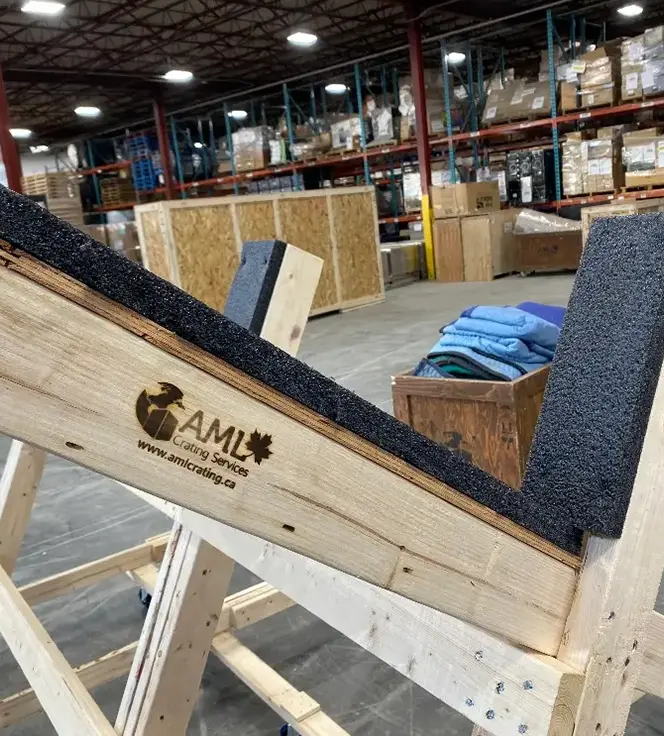
Compliance keeps your shipment legal. Engineering keeps it intact. Every controlled goods crate is measured and modelled in 3D before a board is cut, cushioned and braced to the approved design, with foam lining available where the build calls for it, and built from heat treated, ISPM-15 tracked lumber so the same crate can clear international borders when your shipment calls for it.
- Marvel Seal
- Marine Wrap
- Anti Static
- Anti Shock
- Desiccant Bag
- High Density Foam
- Bubble Wrap
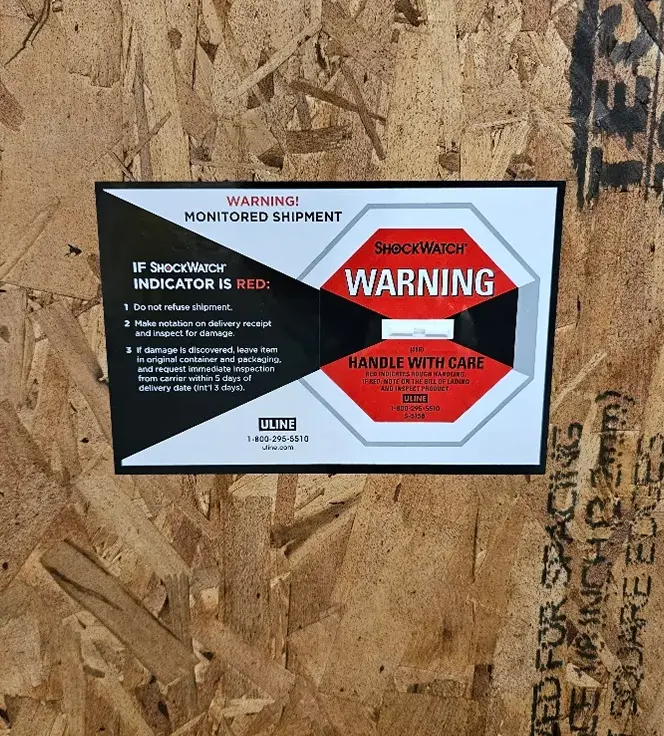
- Tip / Tell & Shock Watch Monitors
Browse our FAQs to find detailed answers to common questions about controlled goods crating.
Yes. AML Crating is registered under Canada’s Controlled Goods Program. Our team is security assessed, our Ottawa facility is controlled access, and our handling and transfer procedures are documented, so controlled items never leave the compliance chain while in our care.
Controlled goods crating is the packaging of items regulated under Canada’s Defence Production Act by a provider registered in the Controlled Goods Program. It combines standard high-value crate engineering with the security, personnel, and record-keeping requirements the program imposes on everyone who handles the item.
Because registration obligations follow the controlled item, not just the manufacturer. When a crating crew examines or possesses your controlled hardware, they are handling controlled goods. If they are not registered, the compliance chain is broken and responsibility lands on the owner of the goods.
Yes. Subcontractors that possess controlled goods must be registered themselves, and their logistics chain must hold registration too. As defence procurement grows in the region, primes are auditing their suppliers’ chains more closely. A registered crating partner keeps yours audit-ready.
Yes. Crated items are held in secure storage in our controlled-access facility. When your crate is ready, we issue a ready notice with a unique numerical code, and the crate is released only against that code at pickup by you or your transport company.
Yes. Our export builds use heat treated, ISPM-15 stamped lumber tracked through the certification chain, with the documentation international shipments require. Export permits and controls for the goods themselves remain with the exporter of record; we make sure the crate never becomes the compliance problem.
Once we have product, quantity, dimensions, and packing requirements, you typically receive a quote with a timeline within 1 to 2 business days. Production time depends on the build. We provide realistic timelines rather than guarantees, because outside factors in shipping are beyond any provider’s control.
Recent work includes test stations, testing equipment, avionics and aerospace components, drones, servers, and precision instruments. If it is high value, sensitive, or controlled, it is exactly the kind of cargo our crates are engineered for.
Our facility is at 1255 Humber Place in Ottawa. Primary service runs across the Montreal to Toronto corridor, with onsite crating available when equipment should not travel uncrated. Crates we build ship worldwide every week.
Send us the product, quantity, dimensions, and packing requirements through the quote form below. You will typically have a quote with timeline within 1 to 2 business days. If the item is controlled, mention it up front so we plan handling accordingly.