
Secure your valuable assets with AML Crating’s expertly designed wooden crates, crafted to meet the highest standards for safe, efficient transport worldwide.
Crating Built for Canada's Defence Sector
Canada’s defence and aerospace sector is scaling, and every prime and subcontractor in that chain needs logistics partners who can handle sensitive hardware without breaking compliance or the hardware itself. AML Crating serves defence primes, aerospace OEMs, and their suppliers across the Montreal to Toronto corridor with engineered aerospace crating for avionics, test stations, drones, and precision components.
We are registered under the Controlled Goods Program and ISPM-15 certified, with a security-assessed team and a controlled-access Ottawa facility minutes from the heart of Canada’s defence procurement.
- Avionics and aerospace components
- Test stations and testing equipment
- Drones and UAV systems
- Servers and sensitive electronics
- Precision instruments and tooling
- Recurring production runs for OEMs
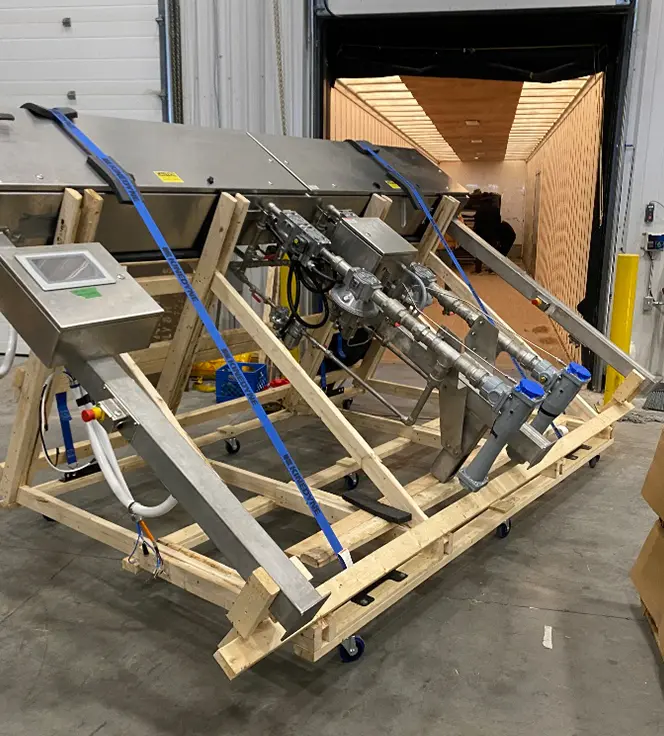
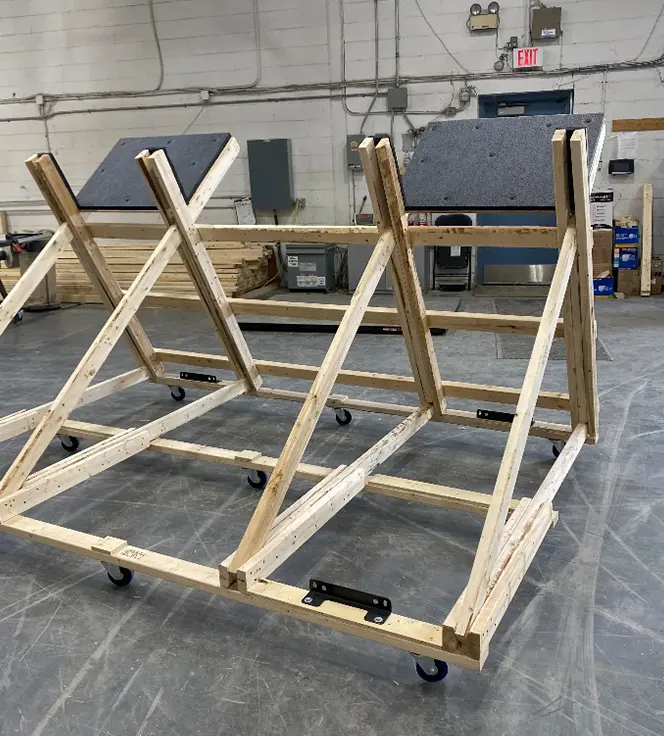
What We Crate for Defence and Aerospace
Defence and aerospace cargo punishes ordinary packaging. Components are precision-built, sensitive to shock and static, often awkward in geometry, and frequently regulated. Our custom crates are engineered around each asset: modelled in 3D, cushioned where the hardware calls for it, and monitored in transit with tip and shock indicators.
Flight hardware, instrumentation, and structural components travel in custom-fit cradles with anti-static protection where electronics require it, moisture barriers for sensitive assemblies, and blocking engineered around each component’s geometry rather than a standard box.
Test stations are among the highest-value single items we crate. Each build starts from the asset’s weight distribution and fragile points, can be modelled in 3D before construction, and can ship with tip and shock indicators so the receiving end knows exactly how the crate travelled.
Composite airframes, payloads, and ground stations each get engineered protection: airframe cradles that carry weight without stressing the structure, separated payload compartments, and cushioning engineered for composite surfaces where the build requires it.
Aerospace OEMs shipping the same component on repeat move to a production crating program: the crate is engineered once, approved, and reproduced identically on every order, with pricing that improves at volume.
Compliance,
Covered
- Controlled Goods Program registered
- ISPM-15 certified export builds
- Documented chain of custody
- Secure storage with coded release
Engineered for
Mission-Critical Loads
- Marvel Seal
- Marine Wrap
- Anti Static
- Anti Shock
- Desiccant Bag
- High Density Foam
- Bubble Wrap
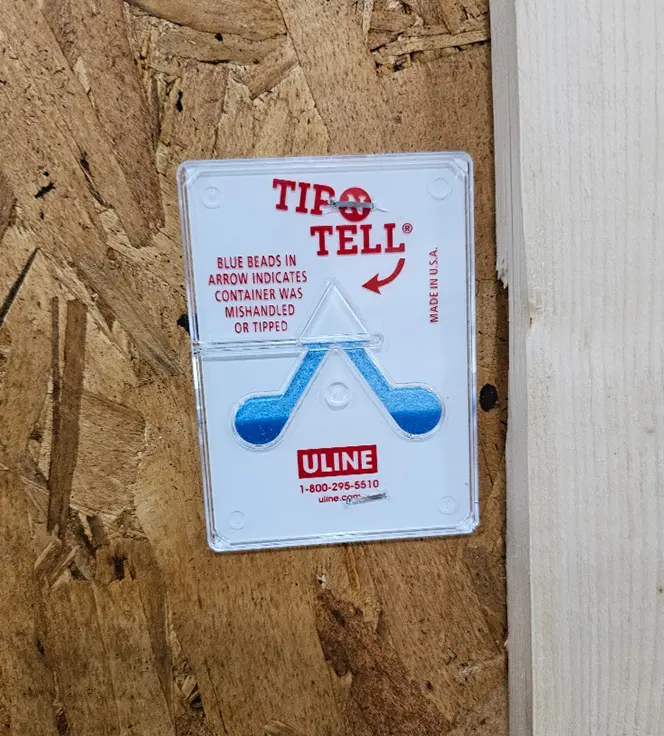
- Tip / Tell & Shock Watch Monitors
Browse our FAQs to find detailed answers to common questions about defence and aerospace crating.
Yes. We serve defence primes, aerospace OEMs, and their suppliers across the Montreal to Toronto corridor from our Ottawa facility. Both one-off shipments and recurring production runs are core work for us.
Yes. AML Crating is registered under Canada’s Controlled Goods Program, which is required of every company that examines, possesses, or transfers controlled items. Our Controlled Goods crating service covers the full compliance chain, from security-assessed handling to documented transfers and secure storage.
Aerospace crating is the engineered packaging of flight hardware, avionics, components, and support equipment for transport. It differs from general crating in its tolerance for shock, static, and moisture, and in the compliance requirements that often attach to the cargo.
Yes, within the requirements that apply to the item. Regulated items are handled under our Controlled Goods Program registration, and our builds are engineered for the weight, geometry, and sensitivity of defence hardware.
Our crates do. Every export build uses heat treated, ISPM-15 stamped lumber tracked through the certification chain, with the packaging documentation international shipments require. Export permits for the goods themselves remain with the exporter of record.
Yes. Anti-static wrap and packaging are built into crates carrying avionics, servers, and sensitive electronics, alongside foam lining, moisture barriers, and desiccant where the asset calls for it.
Tip indicators and shock monitors travel on the crate, so the receiving team can see how the shipment was handled before opening it. Inside, blocking, bracing, and cushioning engineered to the build keep the asset isolated from the impacts the indicators record.
Yes. When hardware should not travel uncrated, our crew brings materials and our own forklift to your site and builds the crate around the equipment where it stands, then loads at your dock.
Yes. Recurring components run through a production crating program: engineered once, approved by you, and reproduced identically on every order with pricing that improves at volume.
Send the product, quantity, dimensions, and packing requirements through the quote form below, and mention if the item is controlled so we plan handling accordingly. You will typically have a quote with timeline within 1 to 2 business days.