
Crating Built for Sensitive Electronics
High-tech hardware fails in transit for reasons ordinary freight never encounters: a static discharge that leaves no visible mark, condensation inside a sealed chassis, or a shock event that shifts a component a millimetre out of tolerance. AML Crating builds crates around those failure modes for OEMs, integrators and IT teams across the Montreal to Toronto corridor, from our Ottawa facility ten minutes from the international airport.
Builds can be modelled in 3D before a single board is cut, and foam lining, anti-static protection and handling indicators are specified with you depending on what the asset needs and how far it is travelling.
- Servers, racks and network hardware
- Test stations and testing equipment
- Drones and UAV systems
- Precision instruments and lab equipment
- Data centre relocations
- Recurring production runs for OEMs
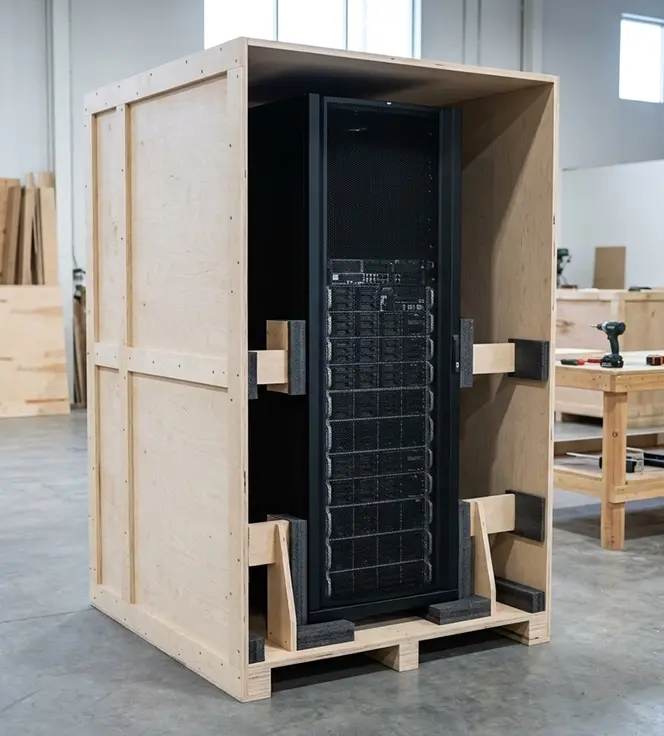
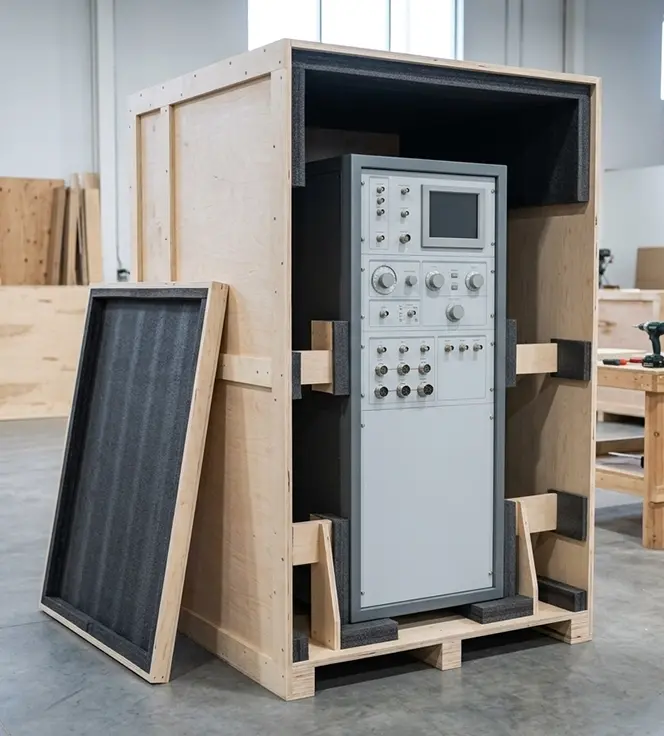
What We Crate for High-Tech and IT
Electronics are unforgiving cargo. They are dense in small footprints, sensitive to static and moisture, often mounted in frames that were never designed to be lifted, and almost always worth more than the truck carrying them. Our crates are engineered around each asset rather than sized to a standard box.
Individual servers, populated and unpopulated racks, switches, storage arrays and network gear. Full racks are braced so the frame carries the load rather than the mounted equipment, and shock-isolated at the base to keep road vibration out of the hardware. Where boards or connectors are exposed we recommend anti-static protection, and for longer transits a sealed moisture barrier. Both are quoted as part of the build so you can decide what the shipment justifies.
Test stations are among the highest-value single items we crate. Each build starts from the asset’s weight distribution and fragile points, and can be modelled in 3D before construction. Handling indicators are available so the receiving end knows exactly how the crate travelled. Calibrated equipment gets orientation-locked blocking so it cannot shift out of alignment in transit.
Custom moulded, foam-lined crates built around the airframe, payload and ground control equipment. Foam is cut to the contours of each component so nothing shifts in transit and delicate surfaces are never in contact with bare wood.
OEMs and integrators shipping the same hardware on repeat move to a production crating program: the crate is engineered once, approved, and reproduced identically on every order, with pricing that improves at volume. Reusable crate systems are available where hardware ships out and comes back.
Static and Moisture Protection
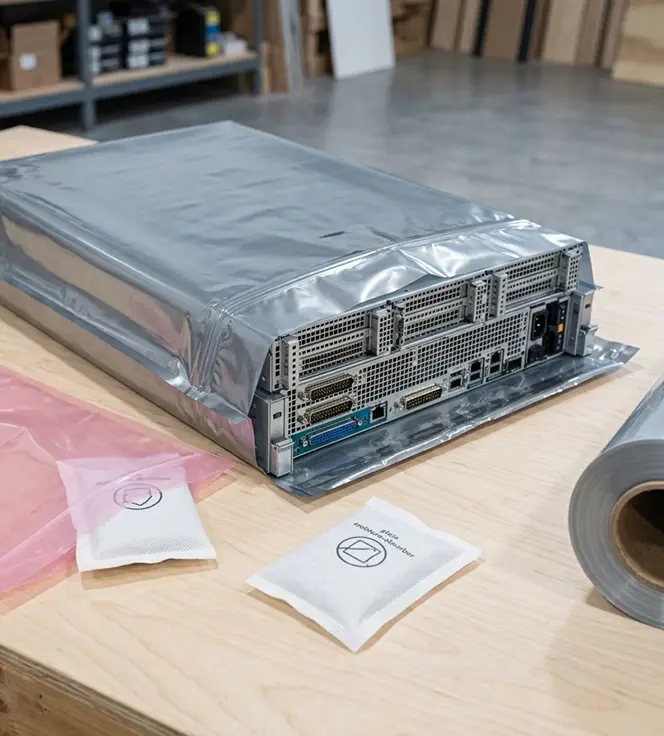
The two failure modes that damage electronics in transit leave no dent on the outside of the crate. Static discharge can degrade a component without any visible sign, and condensation inside a sealed chassis does its work quietly over days at sea. Both can be designed out before the crate is built, using static-protective materials where electronics are exposed and a Marvel Seal moisture barrier with desiccant sized to the enclosed volume and transit time. These are specialist add-ons rather than standard inclusions, so we will walk you through what your shipment actually needs and price it with the crate.
-
Anti-static and static-shielding options
-
Marvel Seal moisture barrier available
-
Marine Wrap for ocean freight and storage
-
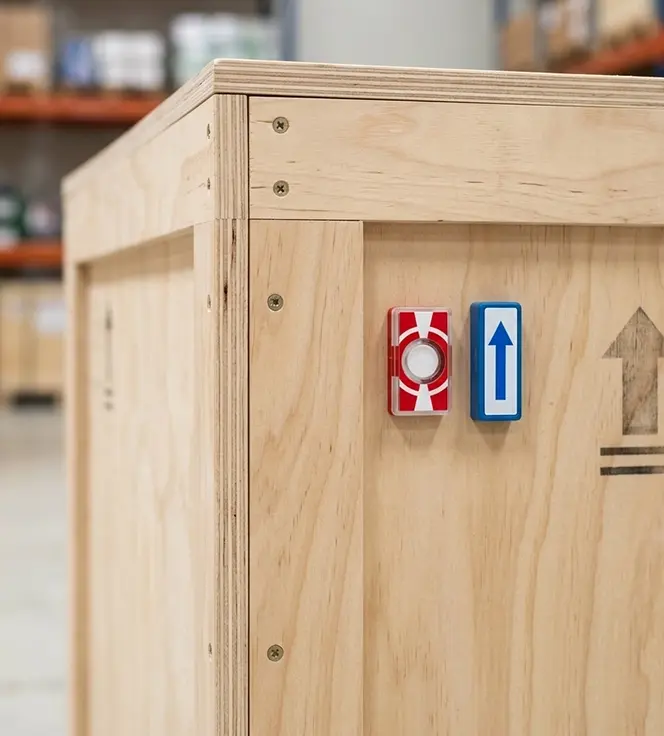
Tip and shock indicators on request
Engineered Around
the Asset
A server that arrives damaged is rarely just a hardware cost. It is a delayed migration, a data centre window missed, or a test programme stalled waiting on a replacement. That is why nothing in our shop is guesswork: every crate is designed before it is built and protected at each contact point, with monitoring and specialist barrier materials specified alongside you where the shipment warrants them.
- Marvel Seal
- Marine Wrap
- Anti Static
- Anti Shock
- Desiccant Bag
- High Density Foam
- Bubble Wrap
- Tip / Tell & Shock Watch Monitors
Browse our FAQs to find detailed answers to common questions about server and high-tech crating.
Yes. We crate individual servers, populated and unpopulated racks, network hardware and storage arrays. Full racks are shock-isolated and braced so the frame carries the load rather than the mounted equipment, and anti-static protection is available wherever electronics are exposed.
Static-shielding and anti-static materials are available on any crate carrying sensitive electronics. Boards, drives and exposed assemblies can be bagged or wrapped in static-protective material, and foam in contact with electronics can be specified as anti-static grade rather than standard packing foam. Tell us what is inside and we will recommend the right level of protection and price it with the crate.
Yes. Test stations are among the highest-value single items we crate. Each build starts from the asset’s weight distribution and fragile points, can be modelled in 3D before construction, and can ship with tip and shock indicators so the receiving team can see how it travelled.
For sensitive assemblies we recommend sealing inside a Marvel Seal moisture barrier with desiccant sized to the enclosed volume and transit duration, and adding Marine Wrap over the crate for ocean freight or long storage. Marvel Seal is a specialist material and the sealing process is labour intensive, so it is quoted as an add-on rather than included by default. We will tell you honestly whether your route justifies it.
Yes. For relocations we crate on site with our own crew and forklift, so hardware is protected before it leaves the room. Reusable crate systems are common on these projects because the same racks often move again. See our onsite crating service.
Yes. We build custom moulded, foam-lined crates for airframes, payloads and ground control equipment, with foam cut to the contours of each component so nothing shifts in transit.
Our crates do. Every export build uses heat treated, ISPM-15 stamped lumber tracked through the certification chain, with the packaging documentation international shipments require. Export permits for the goods themselves remain with the exporter of record.
Yes. When hardware should not travel uncrated, our crew brings materials and our own forklift to your site and builds the crate around the equipment where it stands, then loads at your dock.
Yes. Recurring hardware runs through a production crating program: the crate is engineered once, approved by you, and reproduced identically on every order with pricing that improves at volume.
Send the equipment type, quantity, dimensions, weight and destination through the quote form below, and note any static, moisture or orientation requirements. You will typically have a quote with timeline within 1 to 2 business days.