
When equipment cannot travel uncrated, our crew brings the materials, the forklift and the crate to your facility and builds it around the asset where it stands.
When the Crate Has to Come to the Equipment
Some equipment should not travel uncrated, not even as far as a crating shop. A machine that has been bolted to the floor since it was installed, a test rig that would need recalibrating after an unprotected trip, controlled hardware that cannot leave a secure site without the right handling in place. In those cases the sensible order of operations is reversed: the crate comes to the asset.
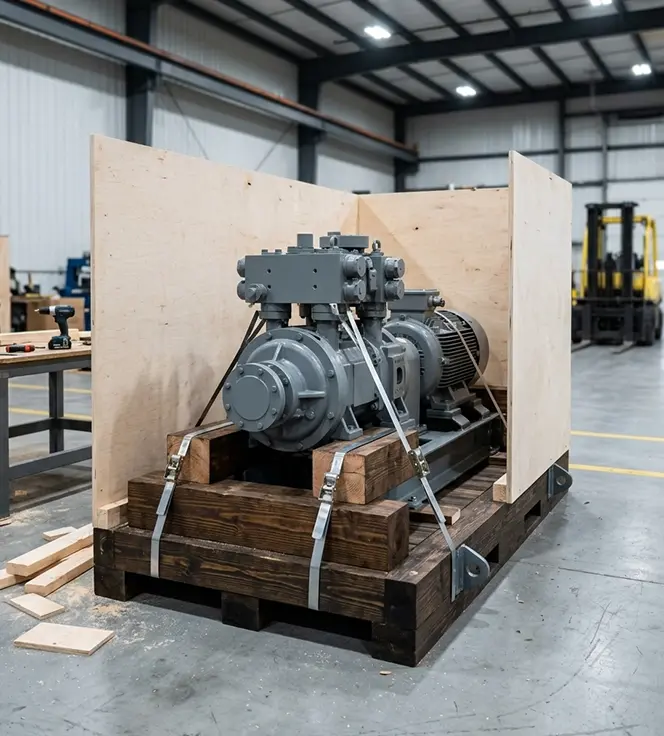
Our crew arrives at your facility with lumber, foam, fasteners and our own forklift, measures the equipment where it stands, and builds the crate around it. You get the same engineered protection we would build in the shop, without the asset making an unprotected journey first.
- Crate built around the asset in place
- Our own forklift on site
- Machinery and plant relocations
- Controlled goods handled on your site
- ISPM-15 stamped lumber for export
- Multiple machines in a single visit
What We Do On Site
Onsite work covers more than building a box in your loading bay. Most jobs involve some combination of measuring, building, packing, lifting and loading, and the point of bringing a crew is that all of it happens in one visit rather than across three vendors.
The core of the service. We measure the asset in place, build the crate around it, and engineer blocking and bracing to its actual weight distribution and lift points rather than to a drawing. Foam lining, moisture barriers and handling indicators can be specified with you beforehand and brought to site with everything else.
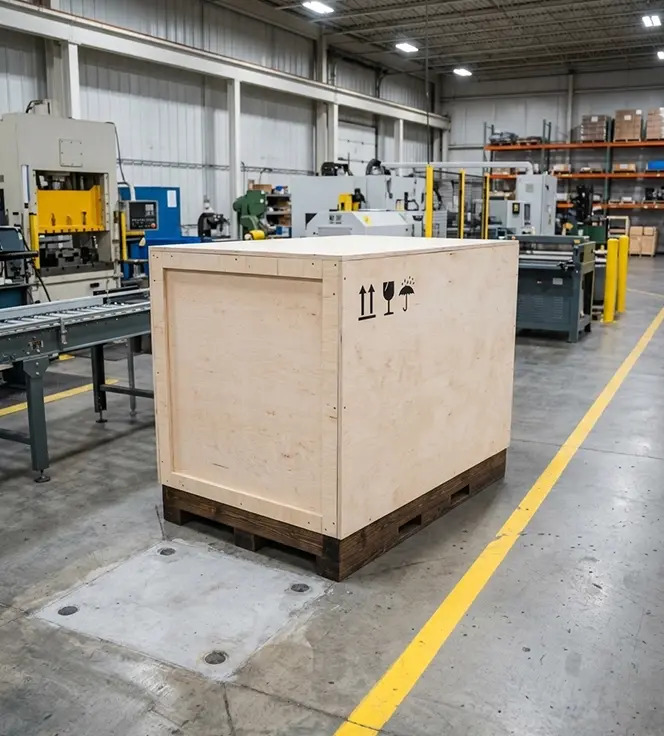
The crate leaves with the equipment already inside it and secured, so the first time the asset moves it is already protected.
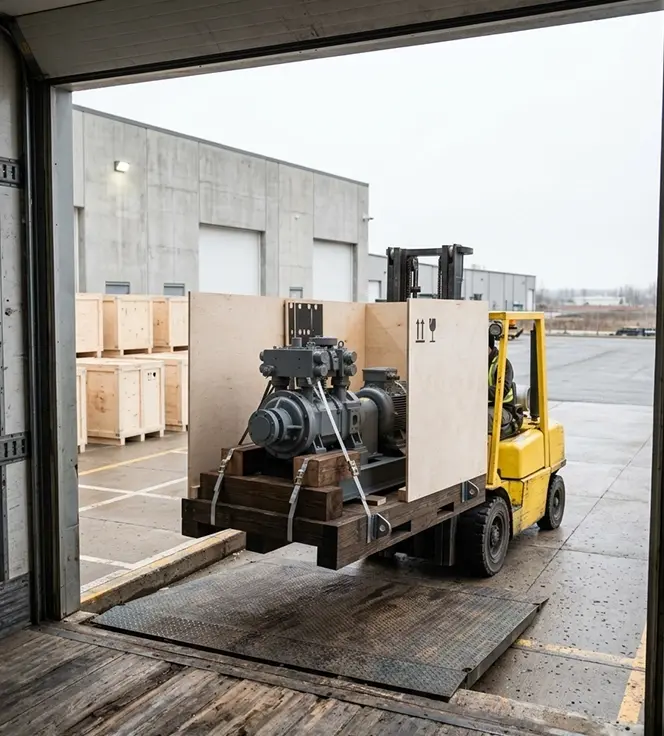
Our crew brings a forklift, so the job does not stall waiting on your equipment or your people to come free. That covers repositioning the asset to build around it, lifting it into place, and loading onto the truck at the end.
If the lift needs more than a forklift, tell us at quote stage. We would rather plan the approach with you in advance than discover the problem on the day.
Moving a production line or clearing a facility means multiple assets, a fixed window and usually a hard deadline. Crating on site lets the whole batch be protected in one pass, with crates built in the order the equipment is coming out.
Grouping assets into a single visit is also more economical, since mobilising the crew and forklift is a fixed cost spread across the full job rather than charged per machine.
AML Crating is registered under Canada’s Controlled Goods Program and our crew is security assessed, so regulated hardware stays inside the compliance chain even when the work happens at your site rather than ours.
For defence and aerospace clients this is often the deciding factor: the equipment never leaves your secure area unprotected, and every person handling it has cleared the assessment the programme requires.
One Visit,
One Crew
The usual alternative to onsite crating is a chain of handoffs: a rigger to move the machine, a truck to bring it in, a crating shop, then a truck back out. Every handoff is a scheduling dependency and a chance for something to go wrong while the asset is unprotected.
Bringing one crew with materials and a forklift collapses that into a single visit. The equipment is measured, crated, and loaded without leaving your floor in between.
- No unprotected transport to the shop
- Crew, materials and forklift in one visit
- Fewer handoffs, fewer dependencies
- Realistic timelines quoted upfront
What We Bring
to Site
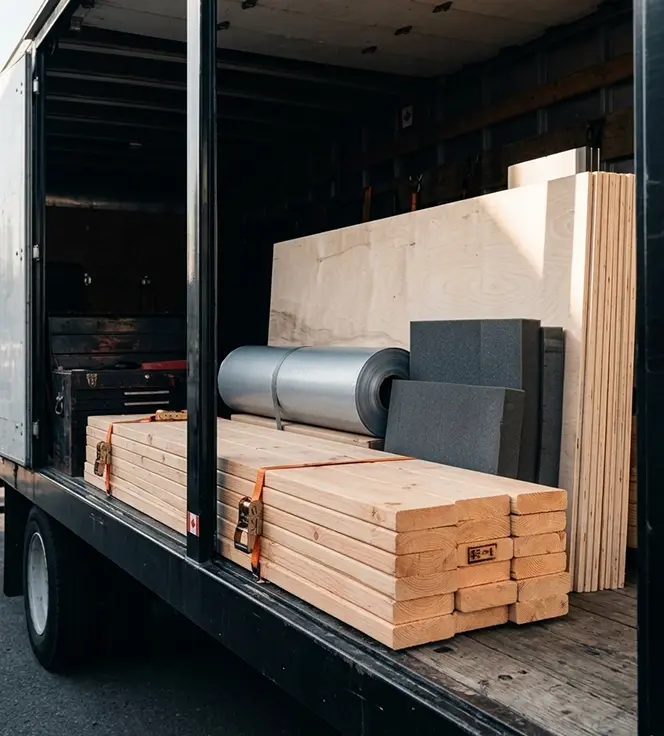
Everything needed to build a finished crate around your equipment, brought to you. Protective materials and monitoring are specified with you when we quote, so what arrives on the truck matches what the asset actually needs rather than a standard kit.
- Heat Treated Lumber
- Forklift
- High Density Foam
- Blocking & Bracing
- Marvel Seal
- Marine Wrap
- Anti Static
- Tip / Tell & Shock Watch Monitors
Browse our FAQs to find detailed answers to common questions about onsite crating and forklift services.
Onsite crating means we build the crate at your location instead of you shipping the equipment to us. Our crew arrives with lumber, foam, fasteners and our own forklift, measures the asset where it stands, and builds the crate around it. The equipment is protected before it moves at all, rather than making an unprotected trip to a crating shop first.
For a lot of cargo, shipping to us is the sensible option. But some assets should not travel uncrated even once: machinery that is bolted down until the day it moves, equipment too large or delicate for an unprotected trip, or controlled hardware that cannot leave a secure site without the right handling. In those cases the crate needs to come to the equipment.
Yes. Our crew brings a forklift to site, so you are not depending on your own equipment or people being free on the day. If the asset needs rigging or lifting beyond what a forklift handles, tell us at quote stage and we will plan the approach with you before we arrive.
Our core area is the Montreal to Toronto corridor, with most onsite work inside roughly 60 to 90 minutes of our Ottawa facility. We do travel further for larger projects. Send us the location along with the job details and we will tell you honestly whether onsite or shop crating makes more sense for you.
Yes. AML Crating is registered under Canada’s Controlled Goods Program and our crew is security assessed, so controlled hardware stays inside the compliance chain even when the work happens on your site. Mention that the item is controlled when you request a quote so we plan the handling and documentation properly. See our Controlled Goods crating service.
It depends on the size and complexity of the asset and how many crates are involved. A single machine is often a same-day job. Larger plant relocations run across several days. We give you a realistic timeline with the quote rather than a guarantee, because access, weather and site conditions all affect the day.
Access to the equipment, enough clear floor space around it to build, and someone who can answer questions about lift points or anything fragile. If the asset needs to be disconnected, drained or unbolted, that is usually handled by your team or your millwright before we start.
Yes, and it is usually more economical. Mobilising a crew and forklift is a fixed cost, so grouping several assets into one visit spreads that across the whole job. If you have a plant move or a batch of equipment going out, send us the full list.
Yes. We bring heat treated, ISPM-15 stamped lumber tracked through the certification chain, so a crate built at your facility carries the same IPPC mark as one built in our shop. Tell us the destination country when you request the quote. See our export crating service.
Send the equipment type, dimensions, weight, your site location and the timeframe through the quote form below. Photos of the equipment in place help a lot. You will typically have a quote with timeline within 1 to 2 business days.