
Certifications Your Compliance Team Can Verify
For most freight, packaging is a purchasing decision. For regulated hardware and international shipments it is a compliance decision, and the wrong supplier turns your shipment into a customs hold, a failed audit, or a breach of the Defence Production Act.
AML Crating is registered under Canada’s Controlled Goods Program and certified to produce ISPM-15 compliant wood packaging. Our Ottawa facility is controlled-access and monitored, our personnel are security assessed, and every transfer of a controlled item is documented. Procurement teams onboarding us as a supplier can request our registration details directly for their vendor file.
- Controlled Goods Program registered
- ISPM-15 certified export builds
- CWPCA member facility
- Security-assessed personnel
- Controlled-access Ottawa facility
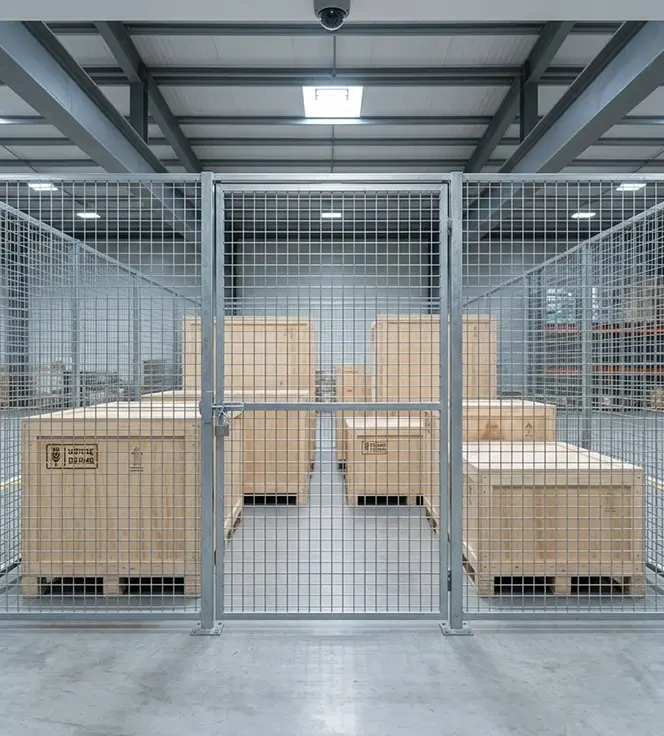
- 24/7 monitored secure storage
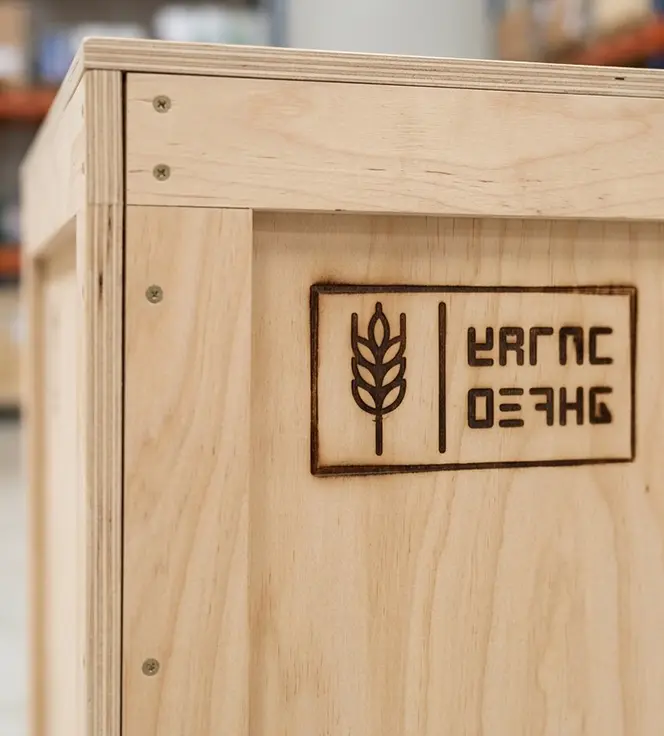
What Each Certification Covers
Certifications are only useful if you know what they actually permit. Here is what ours cover, what the regulator requires to hold them, and where the boundary sits between our responsibility and yours.
The Controlled Goods Program is a federal registration regime under the Defence Production Act, administered by Public Services and Procurement Canada. It governs who may examine, possess or transfer controlled goods, including defence articles, military and strategic hardware, and US-origin items subject to ITAR.
Holding registration is not a formality. It requires a Designated Official accountable to the regulator, a security assessment for every person who handles controlled items, a documented security plan, and periodic federal inspection. Companies that handle controlled goods without it face penalties that run into the millions.
For you it means one thing: your regulated hardware stays inside the compliance chain from the moment it reaches our floor. See our Controlled Goods crating service for how that works in practice.
ISPM-15 is the international phytosanitary standard governing wood packaging in export. Compliant material must be heat treated to a minimum of 56 degrees Celsius through the core of the wood for at least 30 minutes, then marked with the IPPC stamp.
In Canada the standard is administered by the Canadian Food Inspection Agency, with certification delivered through the Canadian Wood Packaging Certification Program. Methyl bromide fumigation is accepted in some countries but is not permitted in Canada, so heat treatment is the only route here.
All our export material is sourced already heat treated from certified suppliers, and every export build is marked with our IPPC stamp: the CA country code, our facility registration number 01303, and the HT treatment code. That stamp is what a customs officer reads to decide whether your shipment moves or stops.
Certification covers handling, but regulated material also has to be stored somewhere that satisfies the same standard. Our Ottawa facility is a Class A warehouse with controlled access, 24/7 CCTV coverage and six loading docks, ten minutes from the international airport.
Controlled items are segregated, handled only by security-assessed personnel, and released against a coded pickup so material leaves only to the party entitled to receive it. Every transfer is documented, which is what makes the chain of custody auditable rather than assumed.
Cargo heading to Canada’s North travels a route most freight never sees: sealift windows measured in weeks, multiple handling points, and storage exposed to conditions that punish ordinary packaging.
We have been building for NEAS-regulated sealift shipments for the past four years. Blocking is engineered for cargo that will be handled repeatedly rather than moved once, and for these routes we usually recommend a moisture barrier and marine wrap sized to the transit, quoted with the build.
Compliance in
Practice
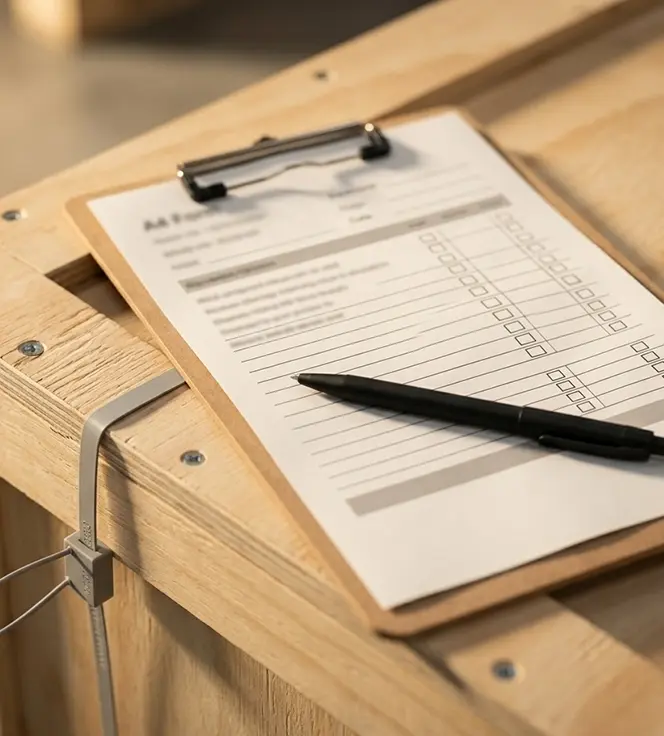
Registration on paper matters less than what happens on the floor. When a controlled item arrives, it is logged, segregated, and handled only by personnel who have cleared the security assessment the programme requires. It is stored under controlled access with continuous monitoring, and it is released against a coded pickup rather than to whoever arrives with a truck.
Each transfer is documented, so if your compliance team is ever asked to demonstrate the chain of custody, the record exists.
- Security-assessed personnel only
- Documented chain of custody
- Segregated controlled-access storage
- Coded pickup release
The Facility
Behind the Paperwork
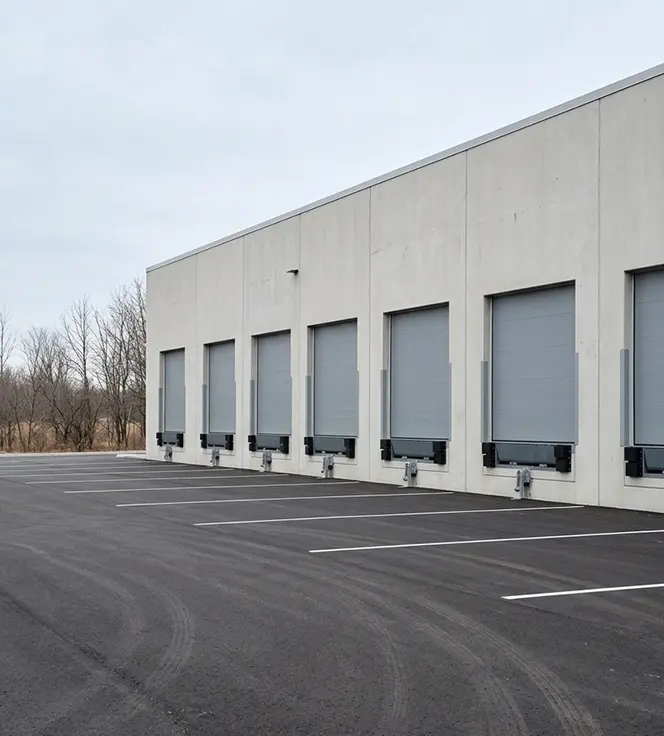
Certifications are held by facilities, not by companies in the abstract. Ours is a Class A warehouse in Ottawa, ten minutes from the international airport and inside the corridor where most of Canada’s defence and aerospace procurement happens.
Six docks, controlled access, continuous monitoring, and enough floor space to stage large builds without moving your hardware more than necessary.
- Class A Warehouse
- Six Loading Docks
- Controlled Access
- 24/7 CCTV Coverage
- 10 Min From Airport
- Segregated Storage
- Coded Pickup Release
- Documented Transfers
Browse our FAQs to find detailed answers to common questions about our certifications and compliance.
Yes. AML Crating is registered under Canada’s Controlled Goods Program, administered by Public Services and Procurement Canada. Registration is a legal requirement for any company that examines, possesses or transfers controlled goods in Canada, and it covers our handling, storage and crating of regulated items.
It is a federal registration regime under the Defence Production Act. It governs who may examine, possess or transfer controlled goods, which include defence articles, military and strategic hardware, and items originating in the United States that fall under ITAR. Registration requires a Designated Official, security assessments for every person who handles controlled items, a documented security plan, and periodic federal inspection.
Yes. Every employee who examines, handles or transfers controlled goods has completed the security assessment required under the programme. Personnel who have not been assessed do not access controlled items or the areas where they are stored.
ISPM-15 is the international phytosanitary standard for wood packaging used in export. Compliant material is heat treated to a minimum of 56 degrees Celsius through the core of the wood for at least 30 minutes, then marked with the IPPC stamp. Wood packaging without a valid stamp can be refused, treated or destroyed at the border at the shipper’s cost.
Yes. Export builds use certified heat treated lumber and are marked with our IPPC stamp, which carries the IPPC symbol, the CA country code, our facility registration number 01303, and the HT treatment code. The full mark reads CA-01303 HT. The stamp is what customs authorities read to confirm the packaging is compliant. See our export crating service.
Not in Canada. Methyl bromide fumigation is accepted under ISPM-15 in some countries but is not permitted for producing compliant wood packaging here. Heat treatment is the only approved method in Canada, and all our export material is heat treated to that standard.
Controlled items are held in our controlled-access Ottawa facility under 24/7 CCTV monitoring, handled only by security-assessed personnel, and released against a coded pickup so material leaves only to the party entitled to receive it. Transfers are documented at each step. See our warehousing service.
Yes. Procurement teams onboarding AML as a supplier can request our Controlled Goods Program registration details and ISPM-15 facility information for their vendor file. Send the request through the form below and note which documents your process requires.
No, and the distinction matters. Our certifications cover the packaging and our handling of your hardware. Export permits and licences for the goods themselves remain the responsibility of the exporter of record. We build and document the packaging so it does not become the reason a shipment is delayed.
Our ISPM-15 facility registration number is CA-01303, and the full IPPC mark reads CA-01303 HT. It appears on every export crate we build. For Controlled Goods Program registration details, contact us through the form below and we will supply them directly to your compliance or procurement team.