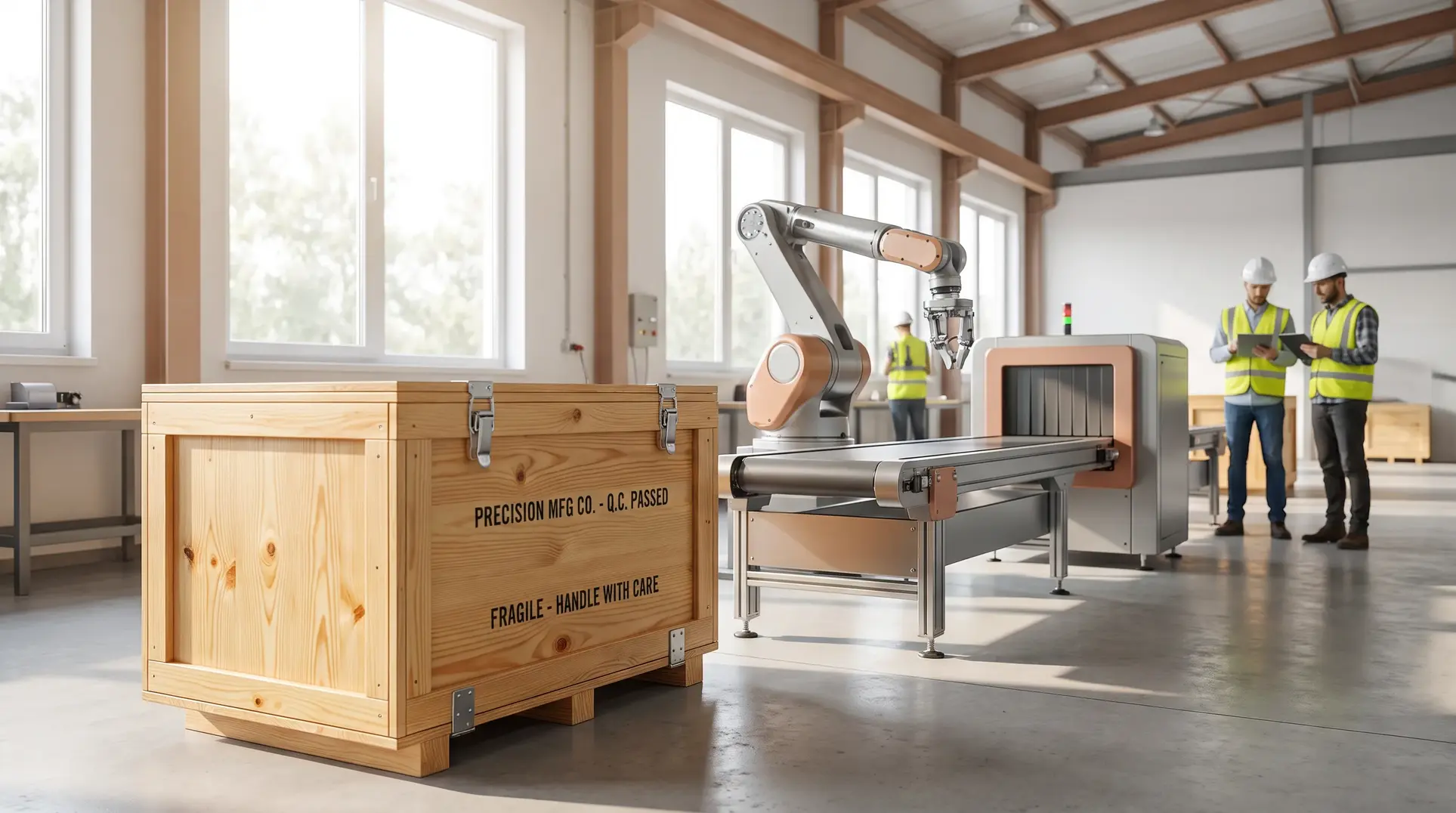
When a crate crosses an international border, customs officers do not care how carefully you bolted down the equipment inside. They check one thing first: the wood. If the lumber in your crate cannot prove it was heat-treated through a documented supply chain, your shipment stops. The equipment waits. The project timeline stretches. And the crate that was supposed to protect your $200,000 server or test station becomes the reason it sits in a bonded warehouse instead of arriving on schedule.
We build export crates in Ottawa for defence, aerospace, high-tech, and manufacturing clients. Every week, crates leave our shop for destinations across Europe, Asia, and the Americas. The difference between a crate that clears customs in hours and one that triggers a quarantine hold often comes down to decisions made long before the lumber ever arrived at our facility. This article explains why the choice between heat-treated and green lumber matters, how the ISPM 15 certification chain actually works, and what questions you should ask any crating supplier before trusting them with your international shipment.
Heat-Treated vs. Green Lumber: The Technical Difference
Green lumber is freshly cut wood that has not been intentionally dried or treated. It contains high moisture content—sometimes above 30 percent—and may harbour insects, larvae, nematodes, or fungal organisms that hitched a ride from the forest. This is the material that caused the problem ISPM 15 was designed to solve: untreated wood packaging spreading invasive pests across borders.
Heat-treated lumber has been processed in a certified kiln under specific conditions. The ISPM 15 international standard requires that wood reach a core temperature of 56°C for a minimum of 30 minutes. This treatment kills the biological threats that make green lumber a quarantine risk:
- Wood-boring insects and their larvae
- Pine wood nematodes
- Bark beetles
- Fungal spores that cause decay
The difference is not visible. Dry green lumber and properly heat-treated lumber can look identical on a shop floor. That visual similarity is precisely why documentation and supply chain traceability matter more than appearance.
The ISPM 15 Certification Chain: From Kiln to Stamp
Understanding the certification chain explains where compliance actually lives—and where it breaks down. Here is how legitimate ISPM 15 compliance works:
Step 1: Certified Heat Treatment Facility
A kiln operator with accreditation from the Canadian Food Inspection Agency (CFIA) or equivalent national authority performs the heat treatment. The facility must maintain calibrated temperature monitoring equipment and detailed records proving each batch of lumber reached the required 56°C core temperature for the minimum 30-minute duration.
Step 2: Documentation and Stamping at Source
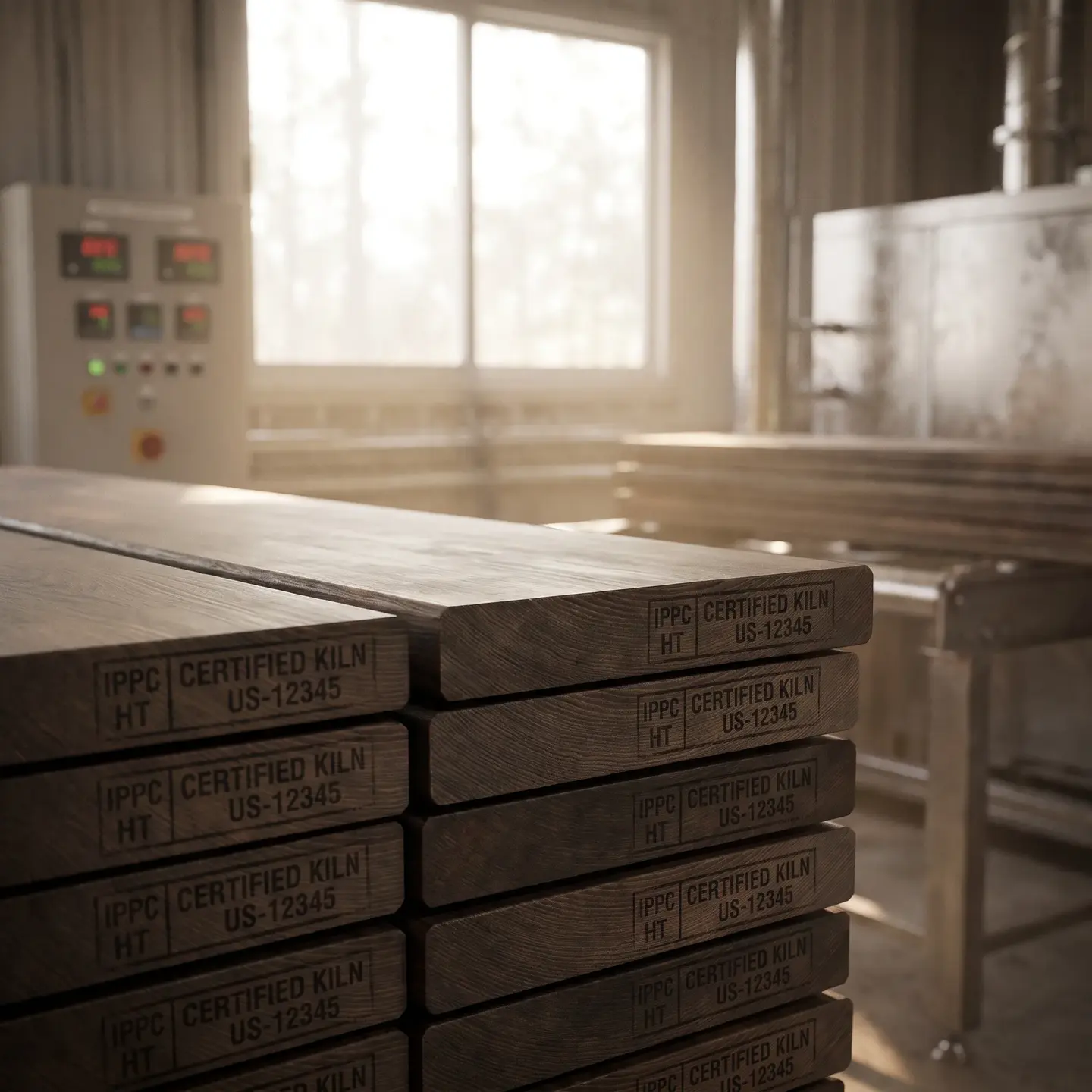
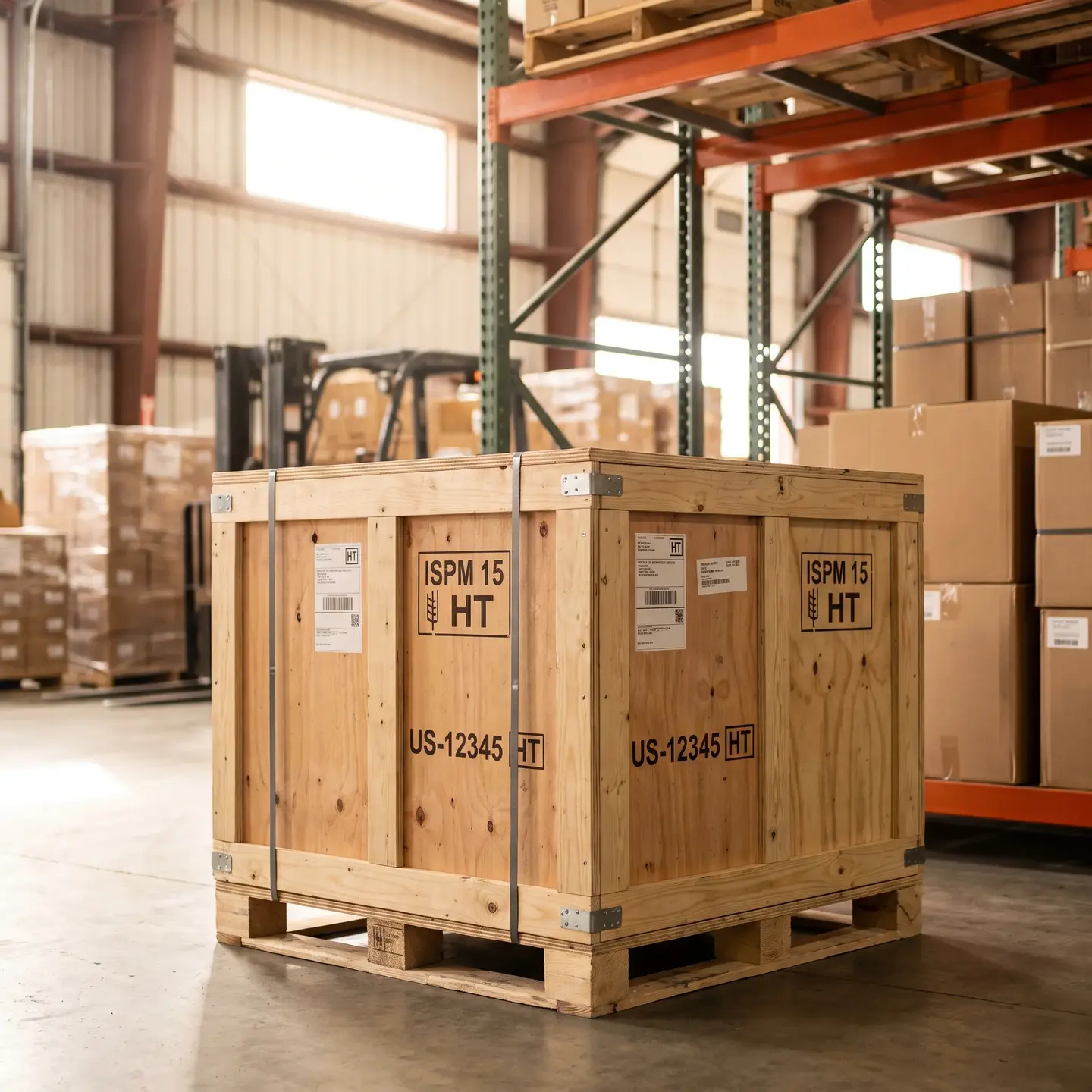
The treatment facility issues certificates documenting the treatment date, batch identification, temperature records, and treatment duration. The official IPPC (International Plant Protection Convention) stamp gets applied at this point. The stamp includes:
- The IPPC logo
- A two-letter country code (CA for Canada)
- A unique facility code assigned by the national authority
- The treatment code (HT for heat treatment)
Step 3: Chain of Custody to Fabricator
The lumber moves from the treatment facility to the crating shop. This is the critical handoff. For the stamp to remain valid, the fabricator must be able to trace the lumber back to the certified treatment. That means incoming documentation must match the lumber received, and the crating shop must maintain records linking specific crates to specific lumber batches.
Step 4: Finished Crate Stamping
When we build a crate from properly sourced heat-treated lumber, we apply the ISPM 15 stamp to the finished product. Our stamp is legitimate because we can document the full chain—from the kiln certificate through our receiving inspection to the specific crate built for your shipment.
The stamp on a finished crate is only as valid as the documentation behind it. A stamp applied to a crate built from untracked lumber is not compliance. It is fraud.
The Green Lumber Problem: Where Compliance Actually Breaks
Most compliance failures do not happen at the kiln. Certified treatment facilities generally do their job correctly. The problem emerges when a crating shop accepts lumber without proper documentation or from unknown sources.
This happens more often than you might expect:
- A supplier offers lumber at a lower price without asking questions about its origin
- A shop accepts partial shipments where some lumber has certificates and some does not
- Leftover materials from domestic jobs get mixed into export crate builds
- Documentation gets lost or never requested in the first place
The result is a crate stamped as ISPM 15 compliant when the underlying lumber was never verified. The stamp looks correct. The crate looks professional. But the chain of custody is broken, and the compliance claim is false.
Why This Matters at the Border
Customs inspectors in major importing countries do not always physically test wood. They often rely on the stamp and visual inspection. But when they do test—or when a shipment gets flagged for random audit—the consequences fall entirely on you as the shipper. According to USDA wood packaging material requirements and equivalent regulations in over 180 countries, non-compliant wood packaging can trigger:
- Mandatory fumigation or destruction of the crate at your expense
- Quarantine holds lasting days or weeks
- Re-crating requirements before the shipment can proceed
- Fines and administrative penalties
- In some cases, destruction of the contents along with the packaging
The crating company that built from untracked lumber is not liable for your delayed project or the emergency re-crating costs. That risk sits with you.
Our Supply Chain Rule: No Green, No Untracked Lumber
We made a decision years ago that shapes every export crate we build: we do not accept lumber without heat treatment documentation. Period.
This is not a soft guideline. It is a hard intake boundary. When lumber arrives at our Ottawa facility, it must come with certificates from a certified heat treatment facility. If the documentation is missing, incomplete, or cannot be verified, the lumber does not enter our inventory. It goes back.
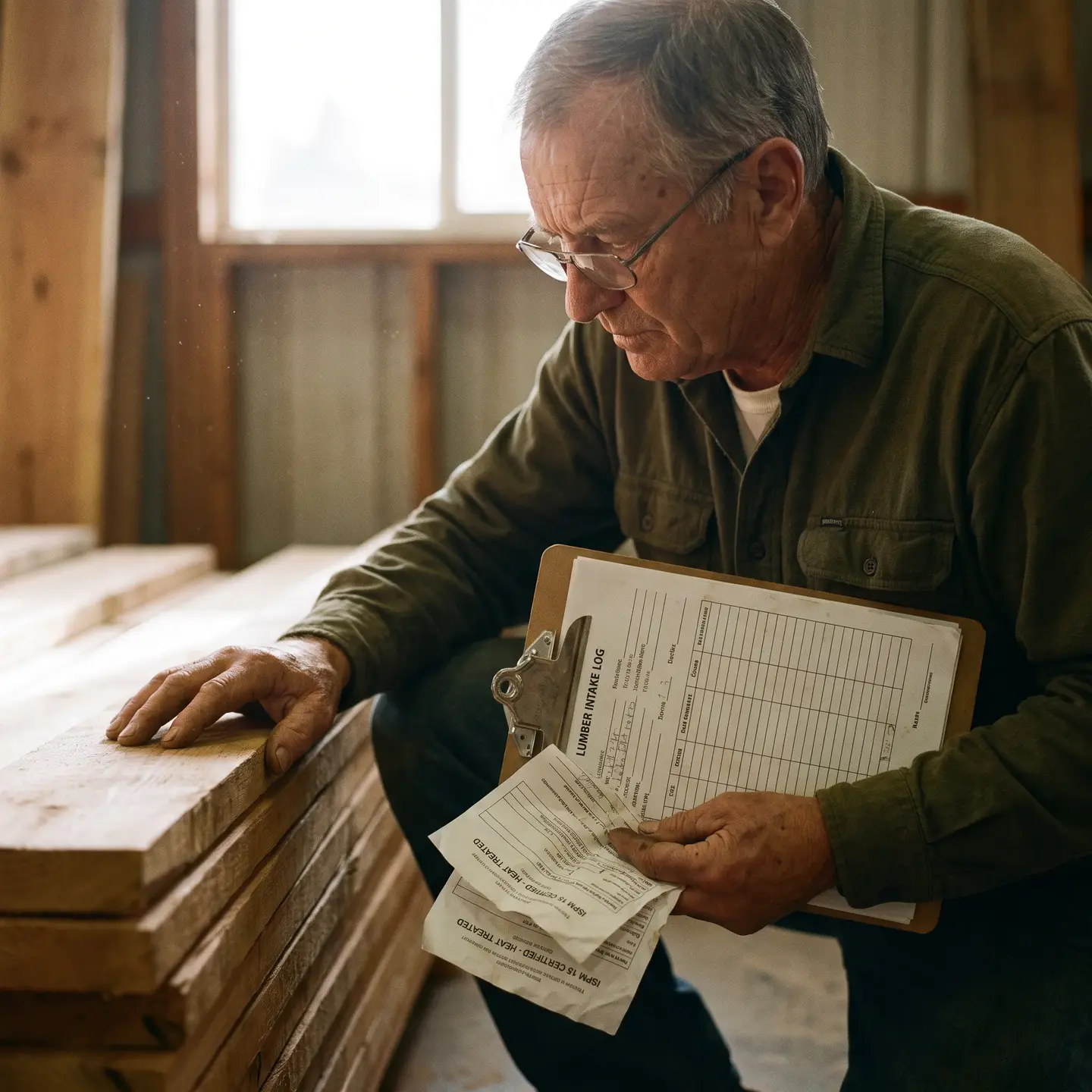
Here is what this means in practice:
- Receiving inspection – Every incoming lumber shipment gets checked against treatment certificates. Batch numbers must match. Dates must align with delivery timing.
- Supplier qualification – We work with heat treatment facilities whose credentials we have verified. Random low-cost suppliers offering lumber “probably heat-treated” do not make the cut.
- Inventory segregation – Export-compliant lumber is stored separately and tracked through our production system. Materials for domestic crates never mix with export inventory.
- Traceability to project – When we build your crate, we can identify which lumber batch went into it and provide documentation linking your specific shipment to verified treatment records.
This approach costs more than accepting whatever lumber comes through the door. We pay for that certainty, and our pricing reflects it. What you get in return is a crate that will not trigger a customs hold because someone six months ago decided to save a few dollars on lumber sourcing.
Our ISPM 15 export crating services page explains the broader compliance framework. This article focuses on the upstream decision that makes all of that compliance meaningful: what lumber we allow through our door in the first place.
Questions to Ask Your Crating Supplier
Whether you work with us or another provider, you should be able to get clear answers to these questions before any export crate gets built:
Supply Chain Verification Questions
- Can you show me heat treatment certificates for the lumber that will go into my crate? A legitimate supplier will have batch-specific documentation from their kiln source. Vague answers like “all our lumber is heat-treated” without supporting paperwork are a red flag.
- Do you accept lumber from non-certified sources? The answer should be an unqualified no for any export work. If a shop uses mixed sourcing, you have no way to know which lumber ended up in your crate.
- What is your intake inspection process? Look for specific procedures: document verification, batch matching, physical inspection. Shops that cannot describe their process probably do not have one.
- Can you provide traceability documentation linking my crate to specific treatment records? This is the test of a real compliance system. If they cannot connect your finished crate to verified upstream treatment, the chain of custody is broken.
- How do you verify your lumber supplier’s credentials? Kiln operators need certification from national plant protection authorities. Your crating supplier should know who issued that certification and how they verified it.
Red Flags to Watch For
- Reluctance to provide documentation
- Claims that “visual inspection” is sufficient to verify treatment
- Significant price differences from competitors that could only come from cheaper material sourcing
- Inability to name their heat treatment lumber supplier
- Mixing domestic and export work without clear inventory controls
These questions are not accusations. They are basic due diligence for anyone shipping equipment internationally. A supplier with legitimate practices will answer them easily. A supplier cutting corners will struggle.
What Happens When Compliance Fails
We have seen what happens to shipments when the wood packaging does not pass inspection. Understanding these consequences helps frame why upstream supply chain control matters.
Immediate Consequences
- Quarantine hold: Your shipment gets pulled for inspection. This can add days or weeks to delivery, depending on port backlog and inspection schedules.
- Fumigation or destruction: Non-compliant crates may be fumigated on-site (at your expense) or destroyed entirely. In some jurisdictions, the contents can be destroyed along with the packaging if removal is deemed too risky.
- Re-crating costs: If the original crate is rejected, you need new compliant packaging built—often at the destination port, where labor costs are high and turnaround is slow.
Project-Level Impact
The equipment inside the crate is usually time-sensitive. A server destined for a data centre deployment, a test station needed for a manufacturing line commissioning, HVAC equipment for a building handover—these shipments have deadlines. A two-week customs delay can cascade into missed installation windows, contractor schedule conflicts, and penalty clauses.
We work with clients shipping equipment worth $50,000 to $350,000 in single crates. The freight costs alone run into thousands of dollars. A compliance failure does not just add fumigation fees. It potentially doubles shipping costs, delays revenue recognition, and creates emergency logistics scrambles that consume far more management time than proper vetting would have required upfront.
Reputational and Relationship Damage
When you ship equipment to a customer or project site, a customs rejection reflects on you—not on your crating supplier. Your customer sees the delay. Your project manager explains the timeline slip. The question “why didn’t you verify your packaging supplier?” comes up, and there is no good answer.
This Is Who This Article Is For
This information is most relevant if you:
- Ship high-value equipment internationally from Canada
- Work in defence, aerospace, high-tech, or manufacturing sectors with compliance-sensitive projects
- Have experienced customs delays or rejections related to wood packaging
- Are evaluating crating suppliers for international work and want to know what questions to ask
- Need to explain ISPM 15 compliance requirements to internal stakeholders
This article is not a comprehensive guide to export documentation or customs procedures. For the full ISPM 15 regulatory framework, visit our ISPM 15 export crating services page. For general custom crating solutions including domestic work where ISPM 15 may not apply, we can discuss your specific requirements directly.
The Supply Chain Decision That Protects Your Shipment
Heat treatment is not a feature that crating companies either “have” or “don’t have.” It is a supply chain discipline that either exists throughout the process or breaks somewhere along the way.
The kiln that originally treated the lumber did its job correctly. The question is whether your crating supplier maintained the chain of custody from that kiln through their receiving dock, through their inventory system, through the build process, and onto the finished crate that carries your equipment across borders.
That chain breaks at the intake boundary. It breaks when a shop accepts lumber without documentation. It breaks when cost pressure leads to “probably compliant” sourcing. It breaks when domestic and export materials share inventory without controls.
We built our intake rule—no green, no untracked lumber—because we know where compliance actually lives. It does not live in the stamp. It lives in the documentation that proves the stamp is legitimate.
If you are shipping internationally and want to discuss lumber traceability for your specific project, contact us. We will show you the documentation chain that backs every export crate we build. That transparency is not a sales pitch. It is the minimum standard you should demand from any supplier handling your international freight.
Frequently Asked Questions
How does using the wrong lumber actually delay our international shipments?
Delays start the moment customs questions the wood in our crate, not the way we secured the equipment. If inspectors cannot confirm the lumber was heat-treated and documented, they can hold the shipment in a bonded warehouse, order fumigation, or demand re-crating. Those steps add days or weeks, push back installation windows, and risk penalty clauses on projects that depend on tight timelines.
Why should we care whether our crating supplier uses heat-treated or green lumber?
Green lumber carries moisture, insects, and fungi that regulators are trying to keep out of their countries. Heat-treated lumber has been brought to 56°C at its core for at least 30 minutes in a certified kiln, which kills those pests. Because green and heat-treated boards can look identical, the difference is not visual. It is documented. If our supplier cannot prove heat treatment, we carry the compliance risk, not them.
What specific documentation should we demand before trusting a crate for export?
We should insist on heat treatment certificates that tie directly to the lumber in our crate. That means batch numbers, treatment dates, and kiln facility identifiers that match the IPPC stamp on the wood. We should also expect traceability linking our finished crate back to those records. Vague claims like “all our lumber is heat-treated” without paperwork are a red flag because customs decisions are based on documentation, not assurances.
How do mixed inventories and “probably compliant” lumber put our cargo at risk?
When a shop mixes domestic and export materials, or accepts partial loads with incomplete certificates, the chain of custody breaks. At that point, nobody can say which boards in our crate were actually treated. The stamp on the outside may look correct, but regulators treat that as fraud if the underlying lumber is untracked. We then face quarantine, re-crating at destination rates, and doubled freight costs on equipment worth $50,000 to $350,000 per crate.
What questions should we ask a crating supplier to avoid customs failures?
We should ask five direct questions: Can they show batch-specific heat treatment certificates for our job? Do they ever accept non-certified lumber? What is their intake inspection process, step by step? Can they trace our crate to a specific kiln batch? How do they verify their kiln’s accreditation? Clear, specific answers show a real compliance system. Hesitation, reliance on “visual inspection,” or big price gaps usually signal corners cut at our expense.