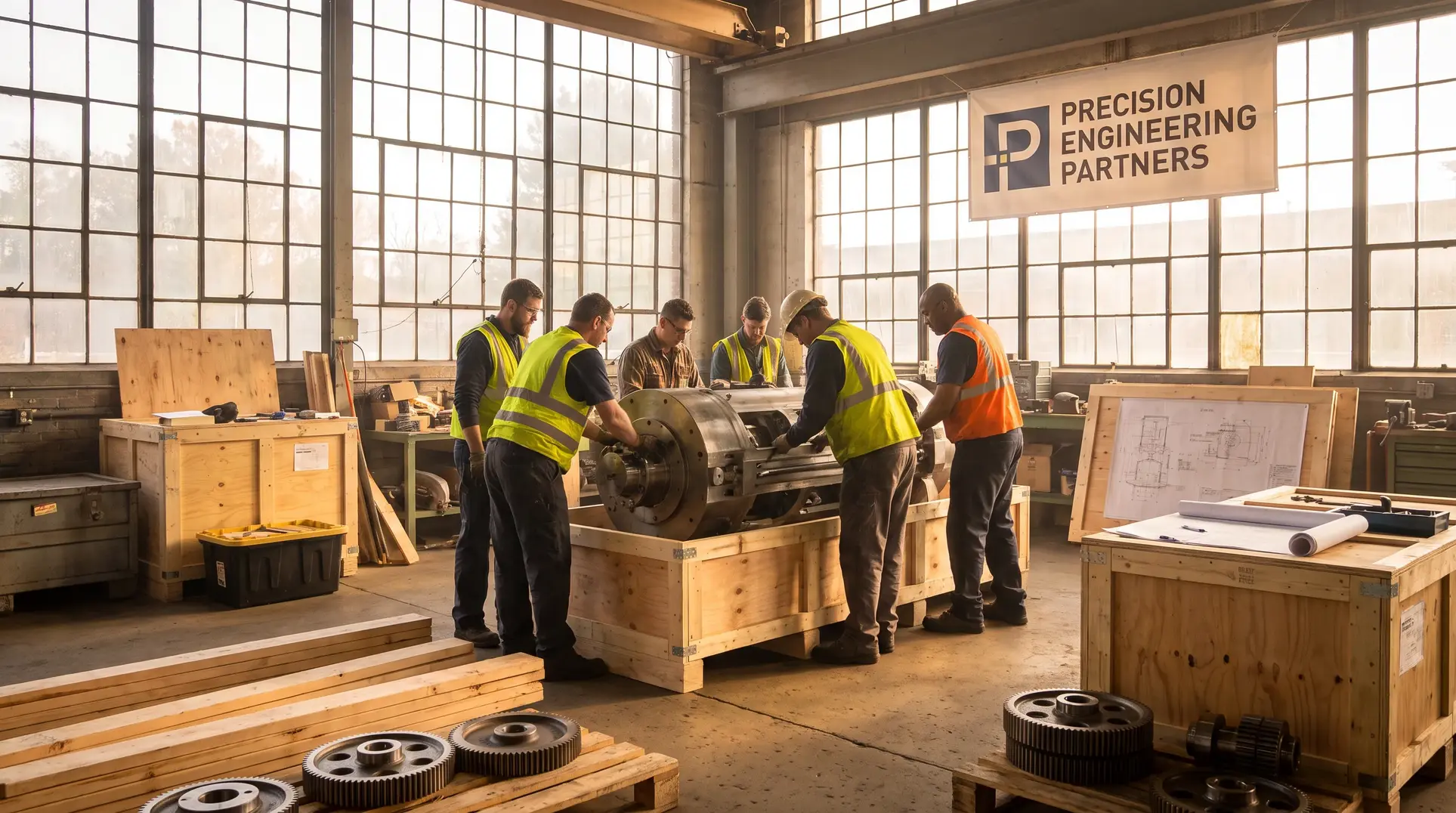
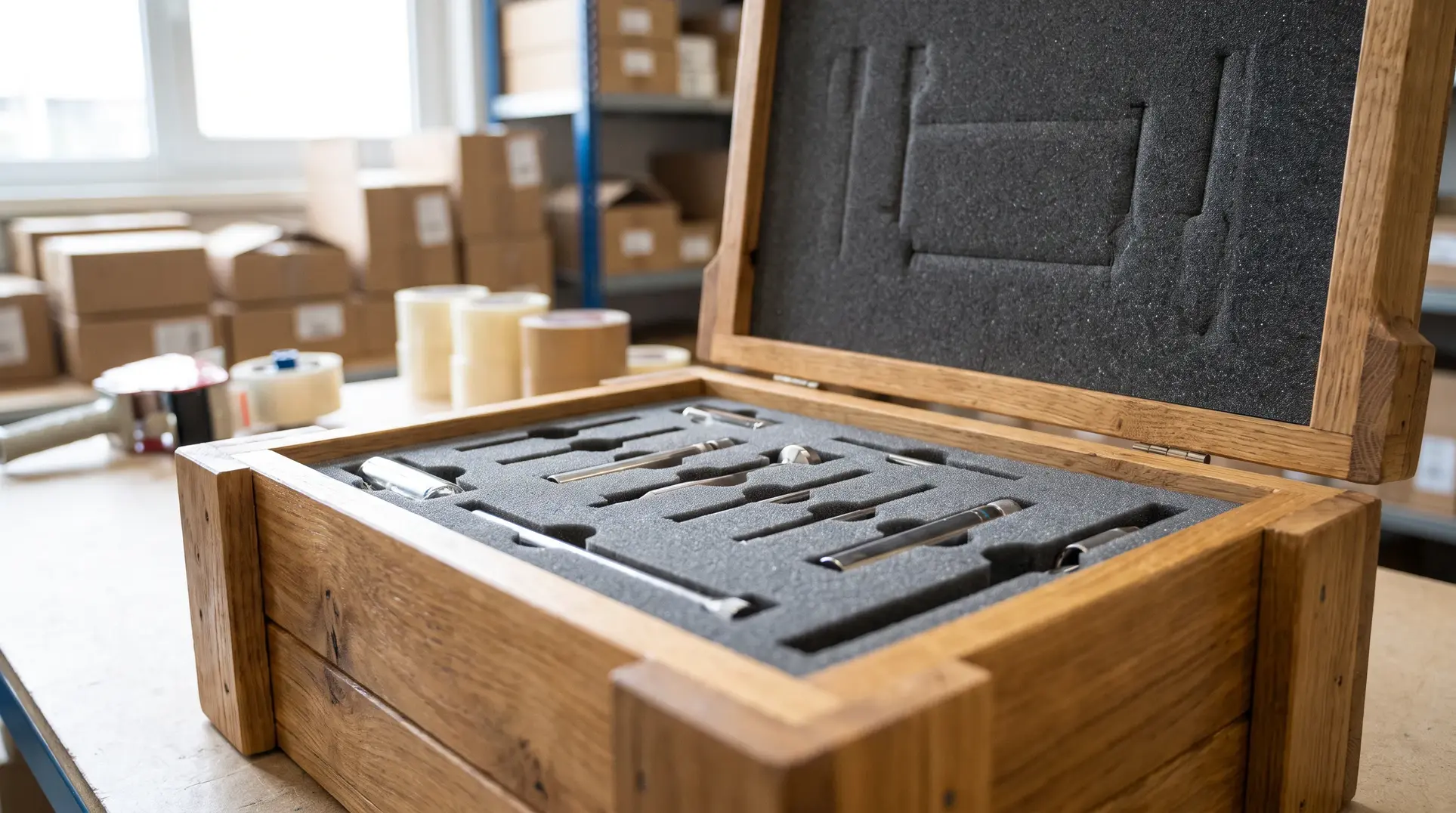
A fully loaded server rack can weigh over 1,500 kilograms and contain equipment worth $350,000 or more. When that rack needs to move—whether across town to a new facility or across the country during a data centre consolidation—the stakes are immediate and unforgiving. A single shock event during loading, a vibration-induced solder joint failure during transit, or moisture damage from a temperature swing can turn a routine relocation into a six-figure insurance claim and weeks of downtime while production waits.
We have been building crates for high-tech and server shipping solutions since 2011, and server rack relocations remain some of the most technically demanding projects we handle. The equipment is heavy, sensitive to orientation, vulnerable to electrostatic discharge, and often mission-critical. The margin for error is essentially zero. This guide covers what we have learned about protecting server racks in transit—from pre-move assessment through uncrating at the destination.
Who This Article Is For
This article is written for IT managers, facilities directors, and logistics coordinators responsible for planning server rack relocations. You likely work at an organization with recurring shipping volume, understand that standard freight handling will not protect sensitive electronics, and need to evaluate whether your current approach adequately manages risk.
This article is not for:
- Consumer electronics shipping or residential moves
- Single server or workstation relocations (different requirements)
- Organizations seeking the cheapest possible shipping option
If protecting mission-critical data centre infrastructure during transport is your priority, continue reading.
Pre-Move Assessment and Documentation
Every successful server rack move begins weeks or months before any crate is built. The assessment phase identifies exactly what you are protecting and reveals potential problems before they become expensive surprises during transit.
What to Document
- Weight verification: Weigh each rack in its loaded configuration. Estimated weights from spec sheets often undercount cabling, mounting hardware, and accessories. Accurate weights determine crate structural requirements and vehicle capacity.
- Dimensional survey: Measure height, width, and depth including any protrusions—cable management arms, rear-mounted PDUs, or network switches that extend beyond the rack footprint.
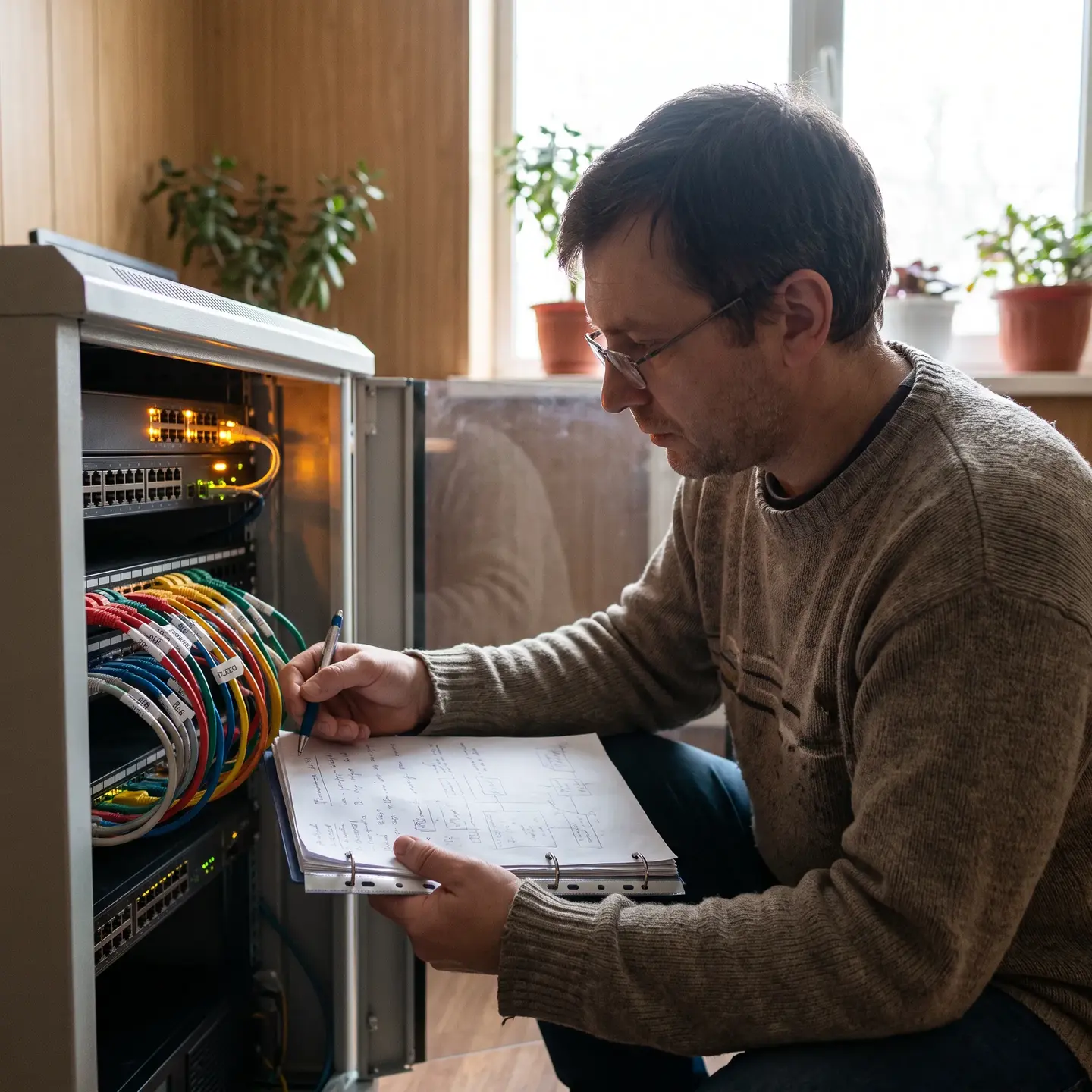
- Cable photography: Photograph every cable connection from multiple angles before disconnecting anything. Label cables at both ends. This documentation saves hours during reinstallation.
- Environmental sensitivities: Identify equipment with specific orientation requirements, temperature limitations, or humidity sensitivities. Spinning disk arrays, for instance, have different shock tolerances than solid-state storage.
- Sequencing dependencies: Document which racks need to arrive first to re-establish core infrastructure before dependent systems can come online.
This documentation creates the foundation for engineering appropriate protection. Without it, crating becomes guesswork.
Preparing Server Racks for Transport
The physical preparation of server racks directly affects their survivability in transit. This work typically falls to your IT team, but understanding what needs to happen helps you plan realistic timelines.
Component Securing
Internal movement is the silent killer of server equipment. Components that shift during transport can unseat connectors, stress PCB mounts, or impact neighbouring hardware. Before crating:
- Secure all drive caddies. Even if drives appear locked, verify the retention mechanisms are engaged.
- Remove or immobilize loose cards. GPU accelerators and network interface cards may benefit from removal and separate packaging with appropriate anti-static protection.
- Manage cabling internally. Loose cables inside the rack become projectiles during sudden deceleration. Bundle and secure them away from fans and airflow paths.
- Lock or remove sliding rails. If your racks use sliding server trays, either lock them in the closed position or remove servers from the rails entirely.
Restoration Documentation
Beyond cable photography, create detailed notes on configuration settings, IP addresses, and boot sequences. Even if you have this information documented elsewhere, having a physical copy travelling with the equipment prevents delays when systems need to come online at the destination.
Anti-Static and ESD Protection Requirements
Electrostatic discharge poses a serious threat to server components, one that is invisible and may not cause immediate failure. A static discharge event can weaken a component that fails days or weeks later—long after the shipping company’s liability window has closed.
According to electrostatic discharge protection standards, even discharges below the human perception threshold (around 3,500 volts) can damage sensitive semiconductors. During packing and unpacking, charge differentials build rapidly in dry environments or when using non-conductive packaging materials.
ESD Protection Measures
- Anti-static packaging materials: All cushioning and wrapping in direct contact with equipment should be anti-static rated, not standard bubble wrap or foam.
- Humidity control: Maintaining relative humidity between 40% and 60% during packing reduces static buildup. This is one reason why packing should occur in controlled environments when possible.
- Grounding procedures: Personnel handling equipment should use grounding straps. The packing area should have conductive flooring or mats.
- Faraday protection: For particularly sensitive components removed from racks, conductive bags that create a Faraday cage effect provide additional protection.
We incorporate anti-static liners into our server crates as standard practice. The cost is minimal compared to the risk of latent ESD damage appearing after warranty periods.

Custom Crating Design for Server Racks
Off-the-shelf shipping solutions fail server racks for predictable reasons. Standard palletizing does not account for the height-to-base ratio that makes racks prone to tipping. Generic cushioning materials bottom out under concentrated loads. Universal dimensions leave gaps that allow internal movement.
Engineering Considerations
Purpose-built server rack crates address these challenges through specific design features:
- Internal bracing: Server racks are essentially tall, narrow boxes. Internal bracing prevents rack flex during handling and transport, protecting both the enclosure and the equipment it contains.
- Load-bearing skid design: The crate base must support the rack’s weight while allowing safe forklift or pallet jack entry from multiple sides. Four-way entry reduces handling restrictions at loading docks.
- Caster isolation: Rack casters are common stress points. The crate design should secure the rack frame itself, not rely solely on caster engagement with the floor.
- Access points: For high-value shipments, inspection access without full disassembly allows verification at intermediate points without compromising protection.
Transport Mode Considerations
Crate design varies based on how the equipment will travel:
- Ground transport: Road vibration is the primary concern. High-density foam bases and floating floor designs isolate the rack from continuous low-frequency vibration.
- Air freight: Pressure equalization and more aggressive shock protection matter more. Altitude changes can stress sealed enclosures.
- Ocean shipping: Extended transit times require enhanced moisture barriers and corrosion protection. Humidity inside shipping containers can fluctuate dramatically.
For international shipments, crate materials must also meet ISPM-15 phytosanitary standards. We maintain certification through the CWPCA heat treat program to ensure wood packaging clears customs without delays.
Shock Isolation and Vibration Dampening
The physics of protecting server equipment comes down to controlling energy transfer. Drops, impacts, and vibration all transfer kinetic energy to the payload. Effective crating absorbs and dissipates that energy before it reaches sensitive components.
Multi-Layer Protection Systems
Professional server rack crates use layered approaches:
- Outer structural protection: Plywood and lumber construction absorbs initial impacts and distributes forces across the crate surface.
- Floating floor systems: High-density foam blocks beneath rack casters compress under load and impact, absorbing shock before it transmits upward.
- Internal cushioning: Closed-cell foam in contact with equipment provides final-stage damping for residual vibration.
The foam selection matters. Open-cell foams bottom out under heavy loads, eliminating their protective value. Closed-cell polyethylene foams engineered for the specific rack weight maintain compression resistance throughout transit.
Cumulative Vibration Damage
Road vibration may not cause obvious damage, but hours of continuous low-frequency oscillation stresses solder joints, connector pins, and mechanical components. This damage often does not manifest until equipment has been powered on and thermal cycling adds additional stress. By the time failure occurs, tracing the root cause back to shipping damage is nearly impossible.
Air-ride suspension trucks and shock-absorbing crate bases work together to minimize this cumulative exposure. Neither alone is sufficient for sensitive electronics.
Environmental Protection During Transit
Temperature and humidity extremes during shipping can damage server equipment even when mechanical protection is adequate. Environmental guidelines for IT equipment specify operating and storage ranges for good reason—excursions outside those ranges risk immediate damage or reduced equipment lifespan.
Moisture Barriers
For shipments crossing climate zones or travelling by ocean, moisture barrier systems prevent condensation damage:
- Vapour barrier bags or liners seal the equipment from external humidity
- Desiccant packs absorb residual moisture inside the sealed environment
- Humidity indicator cards provide visual confirmation that conditions remained acceptable
The most common moisture damage scenario involves equipment moving from cold cargo holds to warm, humid receiving areas. Condensation forms on surfaces that were below the dew point, potentially causing shorts when power is applied.
Temperature Monitoring
For high-value shipments, temperature loggers provide documentation of transit conditions. This serves two purposes: it creates evidence for insurance claims if temperature excursions occur, and it provides peace of mind that equipment arrived within specification.
Multi-Rack Sequencing and Coordination
Moving a single server rack is straightforward compared to relocating an entire data centre or multiple interconnected racks. The sequencing of what moves when, and how equipment relationships are maintained, often determines whether a migration succeeds.
Sequencing Principles
- Infrastructure first: Network core equipment, storage arrays, and domain controllers typically need to arrive and be operational before dependent systems can be restored.
- Dependency mapping: Document which systems talk to which, and plan arrival sequences that minimize the time any system sits waiting for its dependencies.
- Labelling systems: Every rack, every crate, every cable should carry consistent labelling that survives handling. Colour coding by system tier or installation priority speeds reinstallation.
Coordination Between Teams
Multi-rack moves involve decommissioning teams at the origin, transportation crews, and installation teams at the destination. Clear handoff protocols prevent gaps where equipment sits unprotected or unattended. Documentation should specify who accepts custody at each transition point.
Staging and Warehousing Between Locations
Not every data centre move proceeds directly from origin to destination. Construction delays, lease timing mismatches, or phased migration schedules often require equipment to be stored between locations.
Storage Requirements
Server equipment in staging needs:
- Climate control: Temperature and humidity within equipment specifications, not just “inside a building”
- Physical security: Access controls, surveillance, and documented chain of custody
- Insurance coverage: Confirmation that stored equipment is covered for the storage period and conditions
- Accessibility: Equipment may need inspection or retrieval on short notice if project timelines shift
We maintain climate-controlled warehousing at our Ottawa facility for exactly these situations. When your new facility’s construction is delayed by six weeks, proper staging prevents rushed installations that create their own risks.
Transportation Mode Selection
How equipment travels matters as much as how it is packed. The right transportation mode depends on distance, urgency, security requirements, and the nature of the equipment.
Ground Transport Options
- Dedicated trucks: Your equipment is the only payload. Driver can be instructed on handling requirements. Most control over transit conditions.
- Air-ride suspension: Essential for sensitive electronics. Standard truck suspensions transmit road vibration directly to cargo.
- Blanket-wrap service: Appropriate for local moves with minimal handling, but provides less protection than crating for longer distances or multiple transfers.
- Shared LTL freight: Cost-effective for less sensitive equipment, but your cargo shares space and handling with other shipments. Multiple load/unload cycles increase risk.
For server racks, we generally recommend dedicated transport with air-ride suspension. The cost difference is modest compared to the equipment value at risk.
Insurance, Liability, and Risk Transfer
Standard carrier liability for freight damage is typically limited to pennies per kilogram—nowhere near the replacement cost of server equipment. Understanding your exposure and options prevents unpleasant surprises.
Coverage Considerations
- Declared value: Carriers offer higher coverage at additional cost. Declare the actual replacement value, not original purchase price.
- IT equipment exclusions: Read policy fine print. Many cargo policies exclude or limit coverage for electronics, especially for damage discovered after installation.
- Packaging requirements: Insurers may deny claims if equipment was not professionally packed. This is one area where documented professional crating provides concrete value beyond physical protection.
Keep all packing documentation, photographs, and shipping records. If a claim becomes necessary, this evidence establishes that equipment was properly protected and identifies where in the chain damage likely occurred.
Receiving and Uncrating Best Practices
The final handling phase carries its own risks. Improper uncrating can damage equipment that survived transit intact.
Receiving Protocol
- Inspect before signing: Note any visible crate damage on shipping documents before accepting delivery.
- Document condition: Photograph crates from multiple angles before opening.
- Controlled uncrating: Open crates in a clean, climate-controlled environment. Allow equipment to acclimate to room temperature before powering on.
- Visual inspection: Check for obvious damage, shifted components, or moisture intrusion before installation.
- Powered testing: Run diagnostic tests before integrating equipment into production systems.
Damage discovered during unpacking should be documented immediately with timestamped photographs. This establishes the timeline needed for insurance claims or carrier disputes.

Choosing a Server Rack Shipping Partner
Not every crating company has experience with IT equipment. When evaluating potential partners, look for:
- Specific IT equipment experience: Ask about server rack projects specifically. General “electronics” experience may not translate to understanding data centre requirements.
- Engineering capabilities: Can they design custom solutions for unusual rack configurations, or only offer standard options?
- Climate-controlled storage: If your project might need staging, verify facilities exist and meet IT equipment specifications.
- Compliance certifications: For international shipping, confirm ISPM-15 certification. For defence sector work, Controlled Goods Program registration matters.
- References: Ask for contacts at organizations that have done similar moves. Verify those projects were successful.
The right partner understands that server rack shipping is not about moving furniture. It requires engineering discipline applied to physical protection of mission-critical infrastructure.
Moving Forward
Server rack relocations do not have to cause sleepless nights. With proper planning, appropriate protection, and disciplined execution, equipment arrives ready to perform. The key is treating physical transport with the same rigour you apply to network architecture or security protocols.
If you have a server rack move on the horizon and want to discuss protection requirements, reach out to our team. We will review your equipment specifications, routing requirements, and timeline constraints, then provide a detailed approach with pricing. No obligation, no pressure—just a straightforward conversation about what it takes to move your equipment safely.
Frequently Asked Questions
How should we assess a server rack before moving it?
We should verify the rack’s loaded weight, complete dimensions, protruding components, environmental sensitivities, and system dependencies. Spec-sheet weights often exclude cabling, mounting hardware, and accessories, so weighing the assembled rack is more reliable. We should also photograph every cable connection, label both ends, and record the required arrival sequence. This information lets us select suitable lifting equipment, crate strength, transport capacity, and reinstallation procedures without relying on assumptions.
What components should we secure before crating a server rack?
We should confirm that drive caddies are locked, sliding rails are secured, and internal cables are bundled away from fans and airflow paths. Loose GPU accelerators, network cards, or other removable components may need to be removed and packed separately in anti-static bags. The crate should secure the rack frame rather than relying only on its casters. These steps prevent internal movement that can unseat connectors, stress circuit boards, or damage neighbouring equipment.
How do we protect server equipment from electrostatic discharge during relocation?
We should use anti-static wrapping, liners, cushioning, and conductive bags instead of standard bubble wrap or non-rated foam. Personnel should wear grounding straps, while the packing area should use conductive mats or flooring. Maintaining relative humidity between 40% and 60% also reduces static buildup. Components removed from the rack require particular care because an ESD event may weaken semiconductors without causing immediate failure, making later damage difficult to trace.
Why is custom crating preferable to palletizing for server racks?
We should use a purpose-built crate because server racks are tall, narrow, heavy, and vulnerable to tipping and vibration. A suitable design includes internal bracing, a load-bearing skid with four-way forklift access, caster isolation, and fitted closed-cell polyethylene cushioning. Floating floor systems reduce shock transfer, while internal supports prevent movement. Standard pallets or universal packaging can leave gaps, overload foam, and transmit road vibration directly to the rack.
What should we do when receiving and uncrating a server rack?
We should inspect and photograph the crate before signing the delivery documents, recording visible damage immediately. Uncrating should take place in a clean, climate-controlled area, and equipment should acclimate before power is applied to prevent condensation-related shorts. We should then inspect for shifted components, moisture intrusion, and physical damage before installation. Timestamped photographs and diagnostic testing create essential evidence if we need to pursue an insurance claim or carrier dispute.