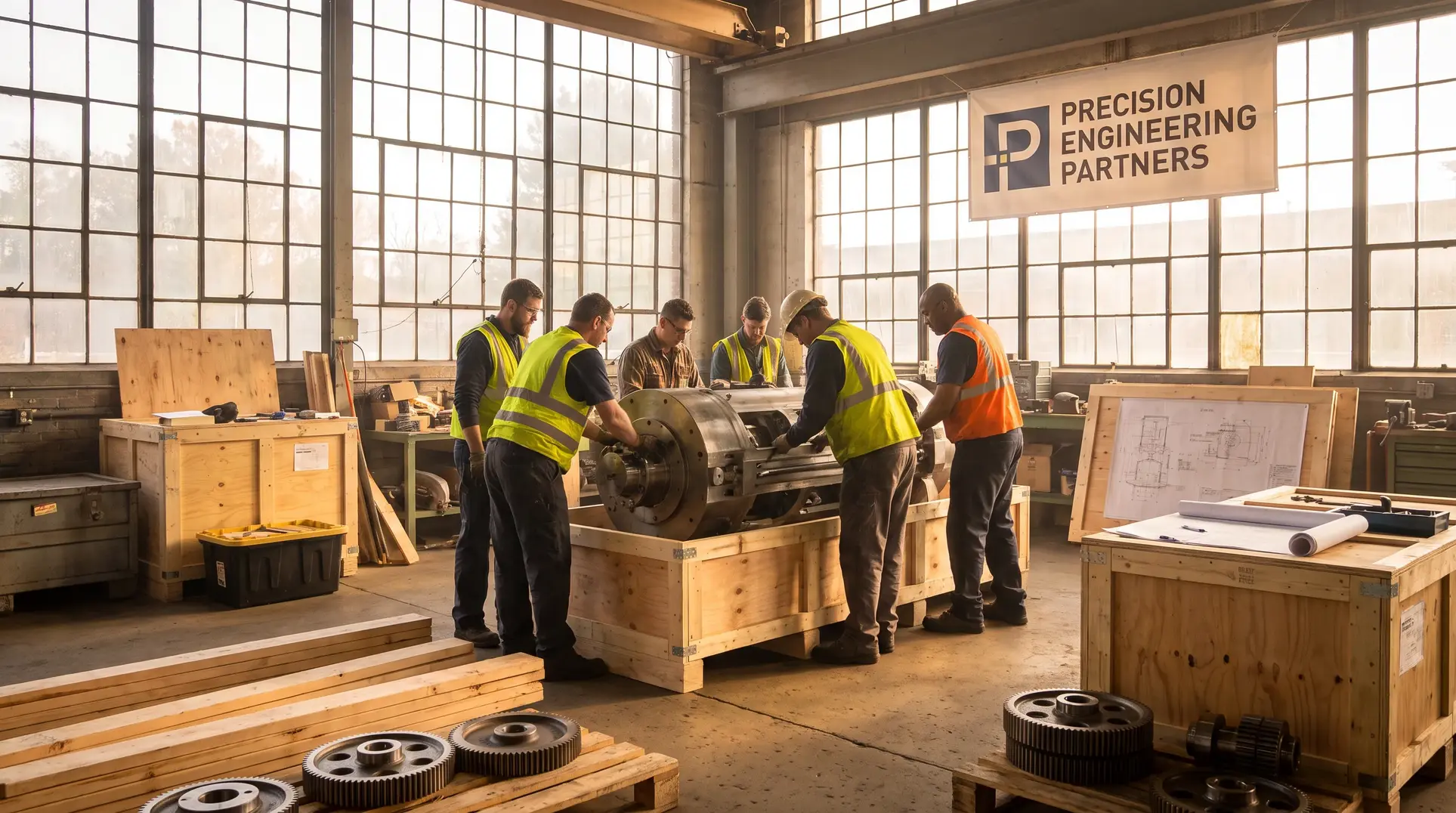
A finished crate sitting in a warehouse might look like the end of the job. It is not. The interval between build completion and pickup is a custody phase that demands the same care as fabrication. At AML Crating, we treat every crate in our Ottawa facility as a traceable asset under controlled protection until the moment it leaves our dock. This article explains exactly what happens during that window and why it matters for your equipment.
Who This Article Is For
This information is relevant if you ship high-value equipment such as servers, test stations, drones, or HVAC units and want to understand what happens after your crate is built but before your carrier arrives. It is especially useful for logistics coordinators and procurement officers managing tight shipping windows or extended storage due to December shutdowns and production schedules.

This article is not for residential movers, consumer goods shippers, or anyone looking for self-storage container rentals. We focus on the professional staging process inside a working crating facility that serves defence, aerospace, high-tech, and manufacturing clients.
The Moment Your Crate Is Completed
When our build team finishes your crate, it does not simply get pushed aside. The crate moves through a documented handoff from fabrication to warehouse custody. Here is what happens:
- Final inspection: We confirm that panels, fasteners, skids, blocking, bracing, and closures match the approved design. Gross weight and dimensions are recorded.
- Photography: We photograph the completed crate from multiple angles. These images establish baseline condition before storage begins.
- Export compliance check: For international shipments using regulated solid wood, we verify debarked, treated wood and a legible ISPM-15 mark. As a custom crating services provider certified under the CWPCA heat treat program, we maintain this compliance throughout the build and storage process.
- Unique identification: Each crate receives a unique ID that links to its drawings, photographs, condition records, and release status in our system.
This process creates an unbroken chain of documentation. If questions arise later about condition or configuration, we have timestamped evidence from the moment custody began.
Where Your Crate Goes: Facility Standards That Matter
Not every warehouse provides equal protection. Our Ottawa facility operates under standards designed for high-value cargo. Understanding Class A warehouse standards helps explain why this matters.
Key features of our storage environment:
- Indoor, dry storage: Crates stay under roof, away from precipitation, UV exposure, and ground moisture.
- Controlled access: Only authorized personnel enter storage areas. Visitors and drivers follow sign-in procedures and remain accompanied.
- Surveillance coverage: CCTV monitors loading areas, storage zones, and dock activities.
- Location assignment: Each crate is placed in a marked floor position appropriate for its weight, footprint, and stackability status. We do not stack crates unless the design expressly permits it.
The TAPA Facility Security Requirements 2026 standard provides a useful benchmark for secure warehouse operations. It covers perimeter protection, CCTV, alarm systems, access control, and pickup verification. While certification requirements vary by facility, these principles inform our approach to protecting customer assets.
The Ready Notice and Unique Pickup Code System
When your crate enters warehouse staging, you receive a ready notice containing a unique pickup code. This code serves multiple purposes:
- Positive identification: When a carrier arrives, we match the code against your release instructions before loading begins.
- Fraud prevention: Industry data shows that fictitious pickups, compromised emails, and fraudulent documents are increasingly common. In 2025, 22% of recorded global cargo theft incidents involved insiders, and strategic theft using fake carrier identities continues to rise. Your unique code adds a verification layer that stops unauthorized collection.
- Coordination flexibility: You can share the code with your chosen carrier or freight forwarder without providing broader access to your account information.
We do not release crates solely because someone presents a load number or a generic bill of lading. Driver identification, vehicle information, and pickup authorization must align with your instructions.
The 10-Business-Day Staging Window
Your crate can remain in complimentary staging for 10 business days after completion. This window exists for practical reasons:
- Freight carrier schedules do not always align perfectly with build completion.
- Your receiving facility may need time to prepare for arrival.
- Quality holds or final approvals sometimes require a few extra days.
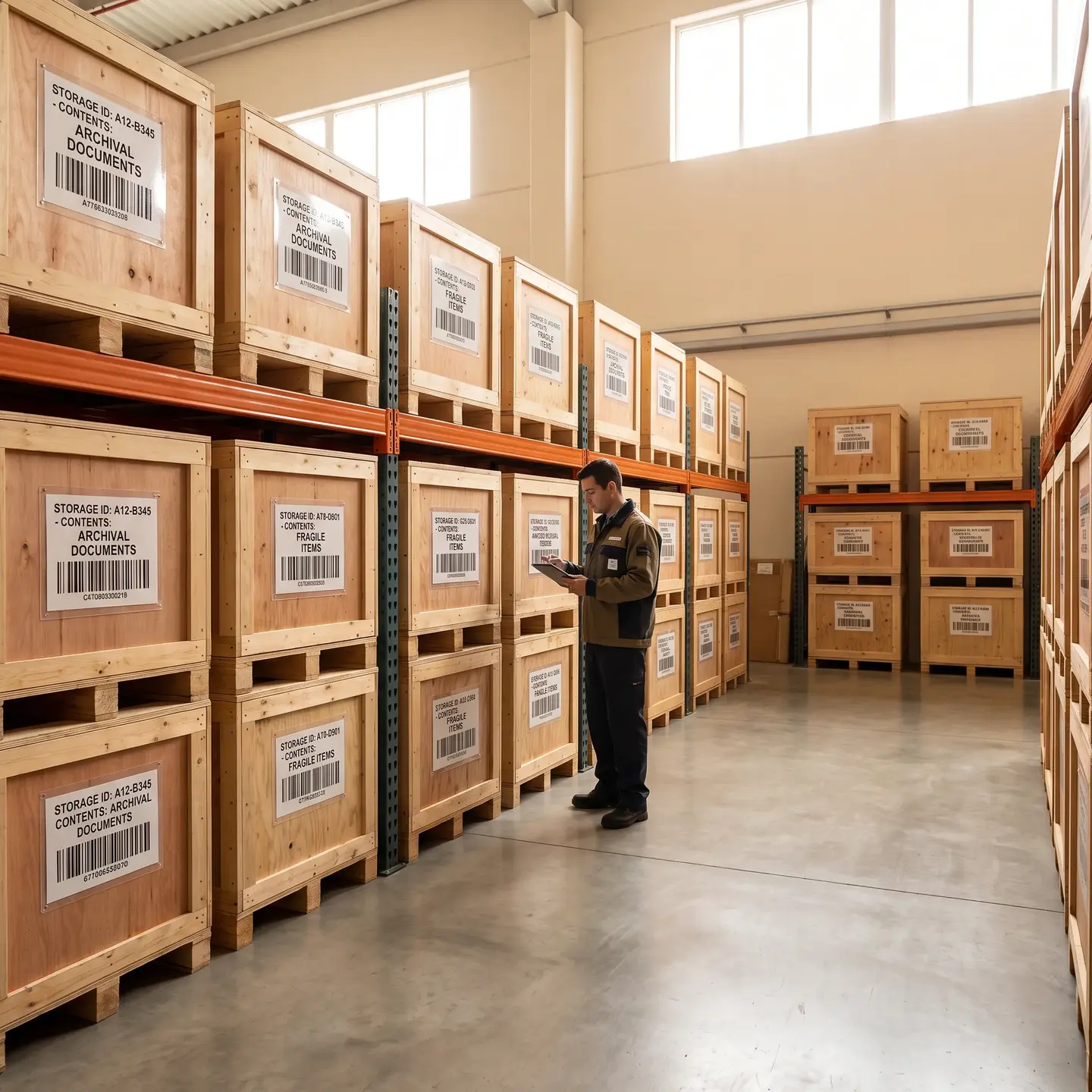
During this period, your crate remains in its assigned location under the same security and condition monitoring protocols. We inspect stored crates for any signs of water intrusion, structural issues, or disturbance. If an indicator card shows humidity concerns or if we observe anything unusual, you receive immediate notification.
As the 10-day window approaches expiration, we contact you to confirm pickup arrangements or discuss transition to longer-term storage.
Transition to Long-Term Storage
Sometimes pickup gets delayed. December shutdowns push shipments into January. Production schedules shift. International freight encounters routing changes. When items need to remain beyond the initial staging window, the process is straightforward:
- Notification: We contact you before the window closes to discuss your timeline.
- Storage agreement: If extended storage is needed, we establish terms including duration, rates, and any special requirements.
- Relocation if needed: Depending on facility utilization, your crate may move to a designated long-term zone. Any movement is scanned, documented, and performed using marked lift points.
- Ongoing inspection: For extended dwell times, we schedule periodic condition checks. Crates with moisture-sensitive contents may need desiccant review or humidity indicator verification.
Our comprehensive warehousing services accommodate clients who need months of storage rather than days. The initial staging conversation during your intake process establishes whether extended storage might be relevant for your project.
Controlled Goods Storage Requirements
For clients in defence, aerospace, and certain high-tech sectors, storage involves additional compliance layers. AML Crating is registered under Canada’s Controlled Goods Program, which means we can legally receive, store, and transfer items subject to controlled goods regulations.
What this means for your crate:
- Access restrictions: Only CGP-registered personnel handle controlled goods. This requirement does not end when fabrication finishes.
- Documentation continuity: Custody records maintain the chain required for compliance. If your downstream recipient asks who handled your equipment, the answer is documented.
- Segregation when required: Depending on the classification, controlled items may be stored in restricted areas with additional access logging.
Understanding Controlled Goods Program registration requirements helps explain why a crating provider’s registration status matters. An unregistered handler creates a compliance gap that can void your entire chain of custody.
For items subject to ITAR controlled goods regulations, storage requirements may be even more stringent. We work with clients to understand specific obligations before accepting custody.
Security Measures During Storage
Theft from warehouses and production facilities represented a significant share of cargo losses in 2025 industry reports. European data showed that 33% of recorded thefts occurred at warehouses, with an additional 8% at production facilities. This is not a theoretical risk.
Our protective measures include:
- Physical barriers: Controlled entry points, secured doors during non-operating hours, and restricted access zones.
- Electronic monitoring: Alarm systems with continuous response capability. CCTV coverage of docks and cargo movement.
- Movement logging: Every relocation of your crate is scanned and timestamped. We know where it is and who moved it.
- Pickup verification: Pre-alert matching, driver identification, and authorization confirmation before any crate leaves the building.
We also distinguish between warehouse legal liability and customer cargo insurance. Our facility coverage protects against losses caused by our failure to exercise reasonable care. Your own cargo or property policy may provide different or broader coverage. We recommend confirming that your insurance covers goods in third-party storage, including scenarios like flood, fire, and theft.
Freight Carrier Coordination at Pickup
When your carrier arrives, the handoff follows a structured process:
- Verification: We confirm driver identity, vehicle information, and pickup authorization against your instructions.
- Outbound inspection: We compare current crate condition with intake photographs. Any discrepancies are documented and flagged before loading.
- Vehicle check: We confirm the trailer or container is clean, dry, and structurally suitable for your crate.
- Loading: Our equipment operators use marked forklift entry points and center the load appropriately. For rigging situations, we use correctly rated and inspected equipment.
- Documentation: Bill of lading, seal numbers if applicable, signatures or electronic proof of collection, and timestamped transfer records.
This process establishes a clear custody transfer point. If damage is later discovered, we have evidence showing the crate’s condition at the moment it left our control.
Seasonal Considerations: December Shutdowns and Holiday Planning
December and early January create unique storage pressures. Manufacturing facilities close for holiday periods. Freight carriers operate reduced schedules. International customs processing slows.
Practical recommendations:
- Plan early: If you know your shipment will cross year-end, discuss storage expectations during the initial crating conversation.
- Confirm carrier schedules: A crate ready on December 15 may not move until January 3 if carriers are not operating.
- Review compliance timelines: Export documentation, ISPM-15 markings, and controlled goods paperwork all need to be ready when the carrier is ready.
- Consider preservation: Extended storage over a cold, damp period may require humidity monitoring for moisture-sensitive equipment.
Our long-term storage solutions accommodate clients who need to bridge the gap between December production completion and January shipping windows.
What Happens If Something Goes Wrong
If we discover damage during storage or suspect a security incident, the response follows a defined protocol:
- Isolate the crate and stop any further movement.
- Photograph current condition and compare with baseline images.
- Preserve CCTV footage, access logs, and movement records.
- Notify you immediately with documented findings.
- Await your instructions before proceeding with repair, claim processing, or investigation.

We retain collection records, condition photographs, and access logs according to our documented retention schedule. This evidence supports claim defense and chain-of-custody reconstruction if disputes arise.
Next Steps
Understanding what happens between build and pickup gives you confidence that your investment remains protected. If you have questions about storage duration, controlled goods requirements, or seasonal planning, contact our team. For clients who need extended storage beyond the standard staging window, we offer warehouse solutions tailored to high-value equipment protection.
Request a quote for warehousing services to discuss your specific storage requirements.
Frequently Asked Questions
What happens after our crate is completed but before pickup?
We complete a documented custody handoff rather than moving the crate directly to a holding area. We inspect the panels, fasteners, skids, blocking, bracing, closures, dimensions, and gross weight. We also photograph the finished crate, confirm export markings where required, and assign a unique identification number. This record links the crate to its drawings, condition evidence, and release status, giving us a clear baseline if questions arise later.
How do we protect equipment while it remains in the warehouse?
We store completed crates indoors in a dry, controlled-access facility. Each crate receives a marked floor position suited to its weight, footprint, and stacking limitations. We do not stack crates unless their design permits it. Access controls, sign-in procedures, CCTV, alarms, and movement logging reduce unauthorized handling. These measures address practical risks such as moisture, accidental disturbance, theft, and exposure to precipitation or ultraviolet light.
How long can our crate remain in complimentary staging?
We provide 10 business days of complimentary staging after completion. During that period, the crate stays in its assigned location and remains subject to condition monitoring. We check for water intrusion, structural concerns, or unusual disturbance, including humidity indicators when applicable. As the 10-business-day window approaches, we contact you to confirm pickup or arrange longer-term storage. This helps prevent avoidable delays when carriers or receiving facilities are not ready.
What verification is required before our carrier can collect the crate?
We require more than a load number or generic bill of lading. We match the unique pickup code with your release instructions, then verify the driver, vehicle, and authorization details. Before loading, we compare the crate with its intake photographs and inspect the trailer or container for cleanliness, dryness, and structural suitability. We document seals, signatures, electronic proof of collection, and the exact transfer time.
What happens if our shipment requires extended storage or involves controlled goods?
We contact you before the initial staging period ends to establish storage terms, duration, rates, and special handling requirements. If relocation is necessary, we scan and document the move using marked lift points, followed by periodic condition checks. For controlled goods, access remains restricted to authorized personnel, and custody records continue throughout storage. Moisture-sensitive equipment may also require desiccant reviews or humidity-indicator checks during an extended dwell.