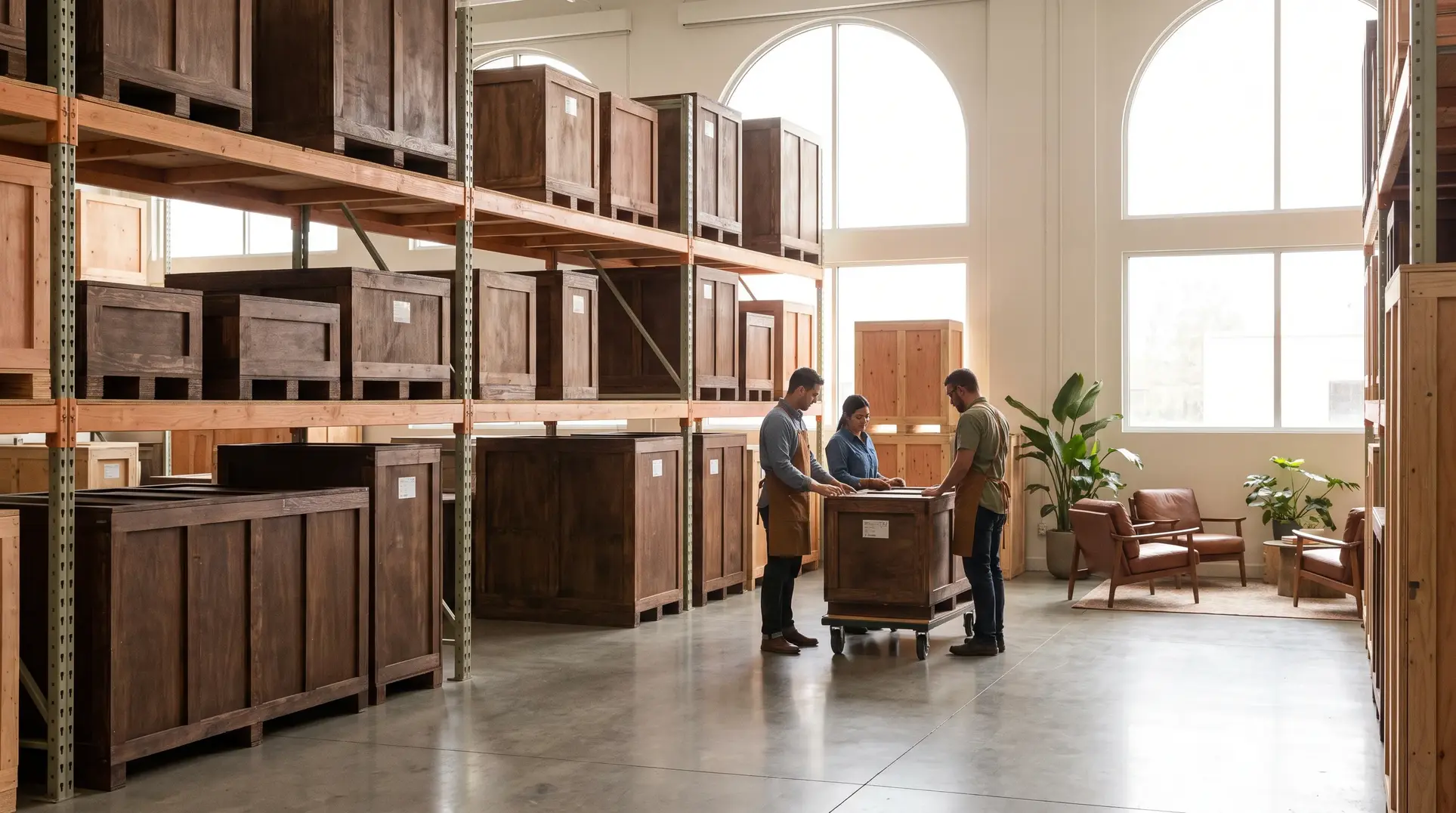
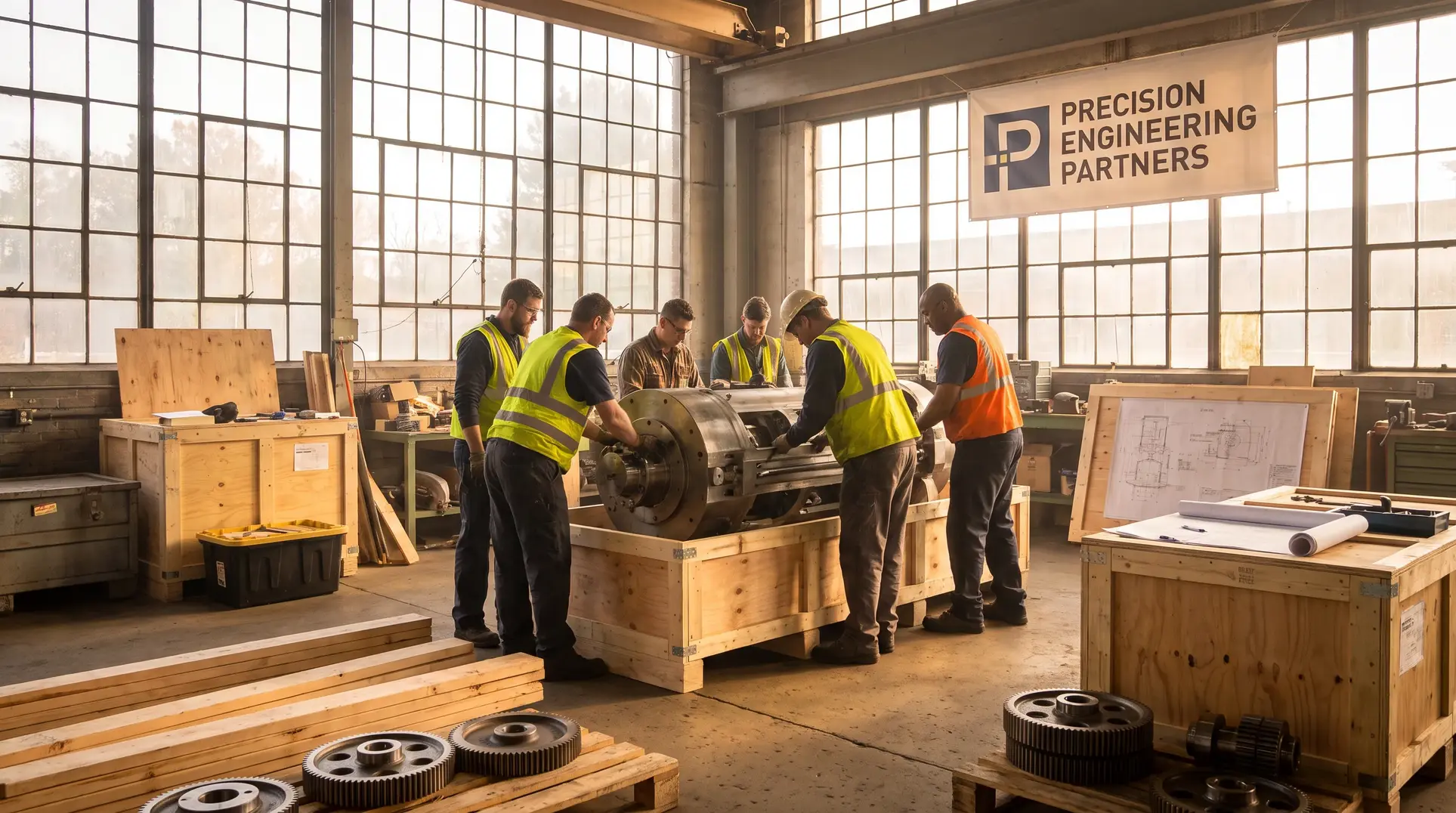
The exterior of a crate keeps weather, handling forces, and contaminants away from your cargo. The interior controls what happens to that cargo while it travels. A well-built wooden shell means nothing if the product inside can shift, rub, or slam against surfaces during a forklift transfer or a truck hitting a pothole. Dunnage, foam lining, and blocking are the components that turn an empty box into a protective system. Understanding how these interior elements work—and when each applies—helps you evaluate crating proposals, ask better questions, and recognize when a provider is engineering protection rather than just filling space with foam.
Who This Article Is For
This guide is written for procurement professionals, logistics coordinators, and operations managers who ship industrial equipment, electronics, machinery, or other high-value assets. You may have seen “dunnage” or “blocking and bracing” on quotes without fully understanding what separates professional interior protection from commodity packing materials.
This is not a guide for residential moving, parcel shipping, or e-commerce fulfillment. If you are packing consumer goods in cardboard boxes, the principles here are different from what you need.
What Dunnage Actually Means
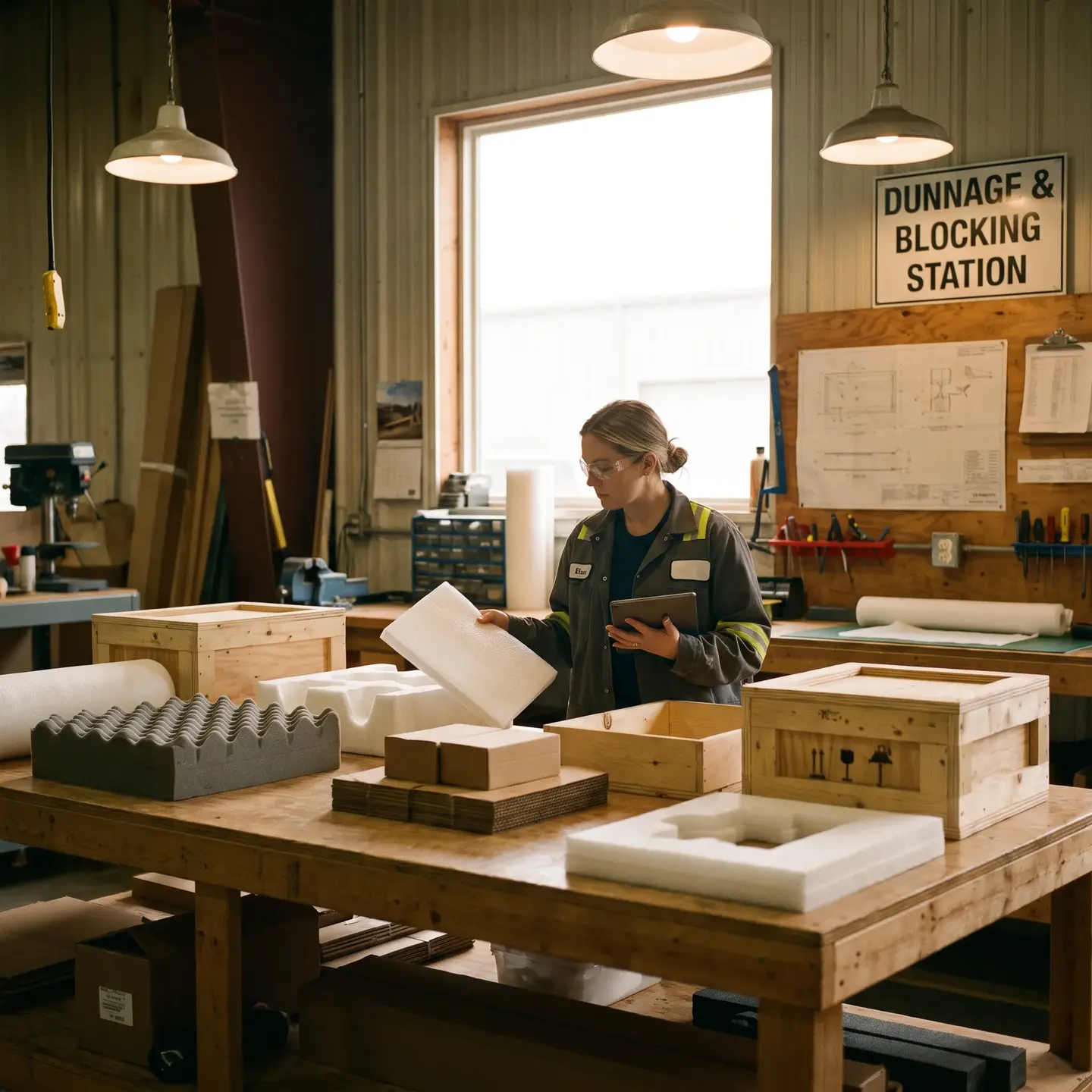
Dunnage is any material placed inside a container to secure, support, cushion, or protect cargo during handling and transit. The term originated in maritime shipping, where loose materials kept cargo from shifting in a ship’s hold. Today, it covers everything from crumpled kraft paper to precision-cut foam inserts.
In custom crating, the word “dunnage” often gets used as shorthand for all interior protective components. That shorthand can obscure important distinctions. Professional craters separate three functions:
- Dunnage fills voids, separates parts, prevents rubbing, and provides light cushioning
- Blocking prevents movement at or near the floor by direct structural contact
- Bracing resists tipping, upper-body movement, and multidirectional loads above the floor
A server rack bolted to a skid with timber blocks around its base and foam lining its contact surfaces uses all three. Commodity bubble wrap filling empty corners is dunnage in the narrow sense but provides no structural restraint. The difference matters when your cargo weighs 2,000 kg and needs to survive a 0.8 g longitudinal force during a sudden stop.
The Three Functions of Interior Crate Components
Cushioning: Absorbing Energy
When a crate gets dropped, the cargo inside wants to keep moving. Cushioning materials compress through a controlled distance to slow that momentum gradually rather than stopping it abruptly. The goal is reducing transmitted shock—measured in G—below your product’s fragility threshold.
This is where foam matters most. A thin foam liner prevents scratches. Engineered foam cushioning, properly selected by density and thickness, can be the difference between a working machine and a warranty claim.
Blocking: Preventing Lateral Movement
Blocking uses fixed barriers to stop cargo from sliding forward, backward, or sideways. In a proper crate, timber blocks transfer transportation forces into the skid, cross-members, and structural base. The blocks themselves should be fastened through compression-resistant joints, not held by a few nails into thin sheathing.
For heavy equipment, this means positioning blocks against strong frame members, machine feet, or designated mounting points—not against control panels, sheet metal skins, or unsupported projections.
Bracing: Resisting Shifting Forces
Tall or top-heavy loads can tip even if their base is secured. Bracing uses angled supports, diagonal timber, steel members, or threaded restraint systems to counter these rotational forces. Effective bracing transmits loads through compression rather than depending on timber bending strength or the holding power of nails.
Together, blocking and bracing create a load path: product to mounting points, mounting points to restraints, restraints to skid, skid to the transportation surface. Each link in that chain needs to carry the anticipated force.
Types of Dunnage Materials
Not all dunnage is created equal. The right choice depends on what you are protecting, how heavy it is, how fragile it is, and what environment it will travel through.
Foam Materials
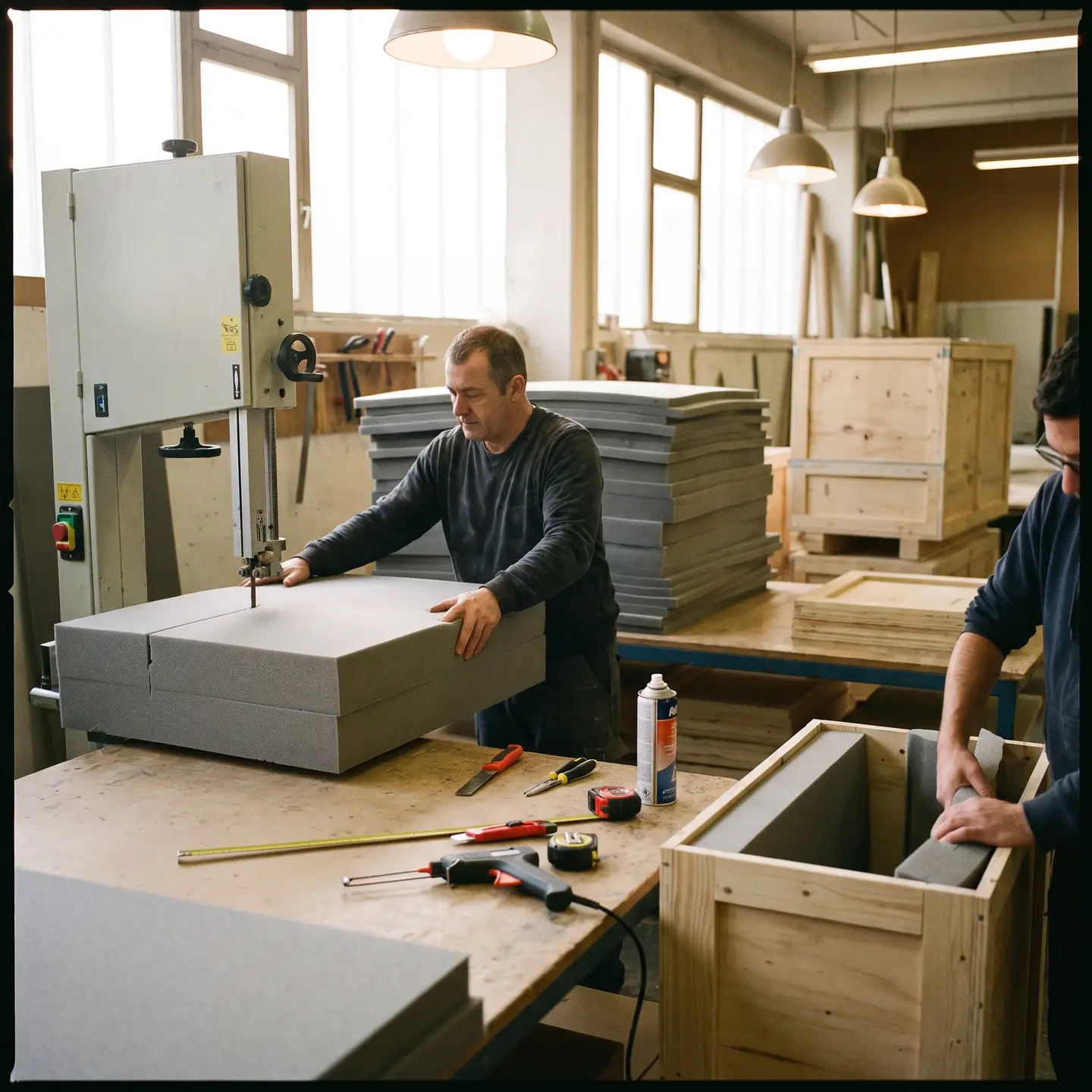
- Expanded polyethylene (EPE/PE): Closed-cell, moisture-resistant, and resilient across multiple impacts. Common for heavy or medium-weight industrial products, reusable inserts, and end caps.
- Cross-linked polyethylene (XLPE): Smoother surface, dimensionally stable, and available in multiple densities. Preferred for precision instruments, painted finishes, and clean presentation interiors.
- Polyurethane (PU): Soft and conformable, good for lightweight or irregular items. Open-cell versions absorb moisture, so PU is generally not suitable for long-term storage or direct contact with heritage objects.
- Expanded polystyrene (EPS): Lightweight and economical for one-way molded cushions. Brittle under repeated impacts and difficult to recycle in many systems.
- Antistatic foam: Reduces charge generation for electronics. Pink or black color alone does not guarantee ESD protection—ask for resistance and shielding data.
Lumber and Structural Materials
- Dimensional lumber: Used for blocking, chocks, and structural supports. Must be properly sized to transfer expected forces without crushing or splitting.
- Plywood: Creates platforms, dividers, and load-spreading surfaces. Often used for flooring and partitions.
- Hardwood: Higher strength for heavy equipment blocking. FedEx recommends hardwood pallets and blocking for individual goods above 1,500 lb.
Corrugated and Fiber Materials
- Corrugated board: Partitions, void fill, and lightweight cushioning. Strength is directional and humidity-sensitive.
- Paper honeycomb: Broad-area compression support and foam replacement in some applications. Recyclable in paper streams but not a universal substitute for timber or resilient foam.
- Molded pulp: Recycled-fiber option for repetitive product geometries. Performance depends on geometry and humidity exposure.
Specialty Materials
- Air cushions and inflatable dunnage bags: Fill controlled gaps between stable packages. Not a substitute for product-level cushioning. Rated by capacity based on contact area and working pressure.
- Edge protectors: Prevent strap damage and distribute compression loads at corners.
Foam Engineering by Fragility Level
Choosing foam is not about squeezing samples and picking the softest one. The selection process follows a sequence:
- Establish fragility. What is the maximum shock, in G, that your product or its weakest component can tolerate?
- Define the environment. What handling does the crate face? Expected drop heights? Vibration from truck, rail, or air?
- Calculate static stress. Divide the supported force by the foam bearing area.
- Consult the cushion curve. Material suppliers publish curves showing transmitted acceleration versus static loading for specific foam types, densities, thicknesses, and drop heights.
- Choose a point below the fragility limit. More foam area is not always better—too much area makes the foam too stiff, transmitting higher shock.
- Check vibration response. Foam is a spring. Around the system’s natural frequency, it can amplify vibration rather than dampen it.
A typical cushion curve is U-shaped. Too little bearing area and the foam bottoms out. Too much bearing area and it barely compresses, transmitting the impact directly. The optimum sits in the middle.
Material Selection by Cargo Type
- Electronics: Anti-static foam with verified ESD properties. May require discharge shielding beyond the foam itself.
- Glass and optics: Multi-density layering with soft contact surfaces and firm support.
- Machinery with sharp edges: Firm foam that will not compress and allow edges to puncture the crate wall.
- Vibration-sensitive equipment: Isolation foam or engineered mounts designed to attenuate specific frequency ranges.
- Art and polished surfaces: Chemically stable XLPE or PE foam. Polyurethane can deteriorate and adhere to surfaces over time.
For sensitive applications, testing the complete package—not just the foam material—is essential. ASTM D4169 evaluates shipping units through a sequence of anticipated distribution hazards. The International Safe Transit Association testing standards provide protocols ranging from basic integrity checks to comprehensive transport simulations.
Blocking and Bracing Techniques
Heavy cargo should be attached to the structural base. Soft foam protects contact surfaces but should not serve as the sole restraint for heavy machinery.
Blocking Configurations
- Corner blocking: Four blocks positioned at corners for rectangular cargo.
- Perimeter blocking: Continuous or segmented blocking around the cargo footprint.
- Cradle blocking: Curved or angled blocks supporting cylindrical items like pipes, drums, or rolled goods.
- Chocks: Wedge-shaped blocks preventing rolling.
Blocks should be fastened with at least two fasteners at each end to prevent pivoting. Washers spread bolt loads and help prevent pull-through. Predrill dense wood to avoid splitting.
Bracing Configurations
- Diagonal bracing: Angled timber from the upper cargo body to the crate wall or floor.
- Cross-bracing: X-pattern bracing for tall loads.
- Threaded restraint systems: Adjustable rods with mounting hardware for repeatable securement.
The CTU Code, developed jointly by the IMO, ILO, and UNECE, states that temporary structures should transfer forces mainly through compression rather than depending on timber bending strength. Understanding cargo securement regulations helps ensure your blocking and bracing meets transportation requirements.
The Physics of Transportation Forces
A critical road-transport case can require longitudinal securement for 0.8 g. A 5,000 kg machine subject to that force experiences approximately 39.2 kN—roughly equivalent to four tonnes pushing it forward during a sudden stop. Your blocking and bracing system must handle that load without failure.
When Vapor Barriers and Sealing Apply
A structurally sound crate can still deliver a rusted product. Wood absorbs and releases moisture. Ocean transits expose cargo to humidity fluctuations and condensation.
For corrosion-sensitive cargo, the protection system typically includes:
- Clean and dry the product before packing
- Protect openings and sharp projections
- Apply temporary corrosion preventive or VCI (volatile corrosion inhibitor) where appropriate
- Seal the item in a water-vapor-resistant barrier
- Add correctly calculated desiccant
- Include a humidity indicator where monitoring is required
- Cushion or block the barrier so it cannot be punctured
- Use a weather-resistant crate roof as secondary protection
This applies to bare metals, electronics, optical equipment, and items facing long ocean transits or extended storage. Moisture protection is designed separately from shock protection—both are necessary, but one does not replace the other.
Dunnage in Different Shipping Contexts
Dunnage Racks in Warehousing
A dunnage rack elevates product or pallets off the warehouse floor. This provides clearance for forklift tines, improves air circulation, and protects against ground moisture. The term appears in warehouse management contexts distinct from in-crate cushioning.
Dunnage in Trucking
In trucking, dunnage fills voids between pallets, prevents load shift, and protects cargo from contact damage during transit. Inflatable dunnage bags are common for this application. They must be sized and inflated to manufacturer specifications—they are not generic balloons.
Dunnage Lumber
Dunnage lumber refers to dimensional lumber used for blocking, cross-members, or temporary structures supporting cargo. For international shipments, solid wood dunnage falls under ISPM 15 international standards and requires treatment and marking.
Dunnage in Construction
Construction sites use dunnage as temporary platforms, equipment elevation, and material separation. The principles are similar—preventing ground contact and providing stable support—but the durability requirements differ from transit packaging.
How Professionals Select Dunnage
When we design interior protection at our Ottawa facility, we evaluate:
- Cargo weight and dimensions: Determines blocking requirements and foam bearing area
- Fragility and shock sensitivity: Drives foam selection and cushion thickness
- Transportation mode and duration: Air freight vibrates differently than truck; ocean transits face humidity
- Environmental conditions: Temperature, humidity, vibration spectrum, and stacking exposure
- Mounting points: Where can we anchor the product without damaging it?
- Reuse requirements: Single shipment or returnable packaging system?
This framework allows informed conversations with crating providers. You can ask: What is the expected drop height? What foam density are you specifying? How are you handling moisture exposure? The answers reveal whether you are getting engineered protection or generic packing.
Regulatory and Compliance Considerations
For international shipments, solid wood packaging—including blocking and dunnage lumber—must comply with ISPM 15. This requires debarked wood, an approved heat treatment (56°C core temperature for 30 continuous minutes), and an official IPPC mark. Processed wood such as plywood is generally exempt when the package is made entirely from processed material.
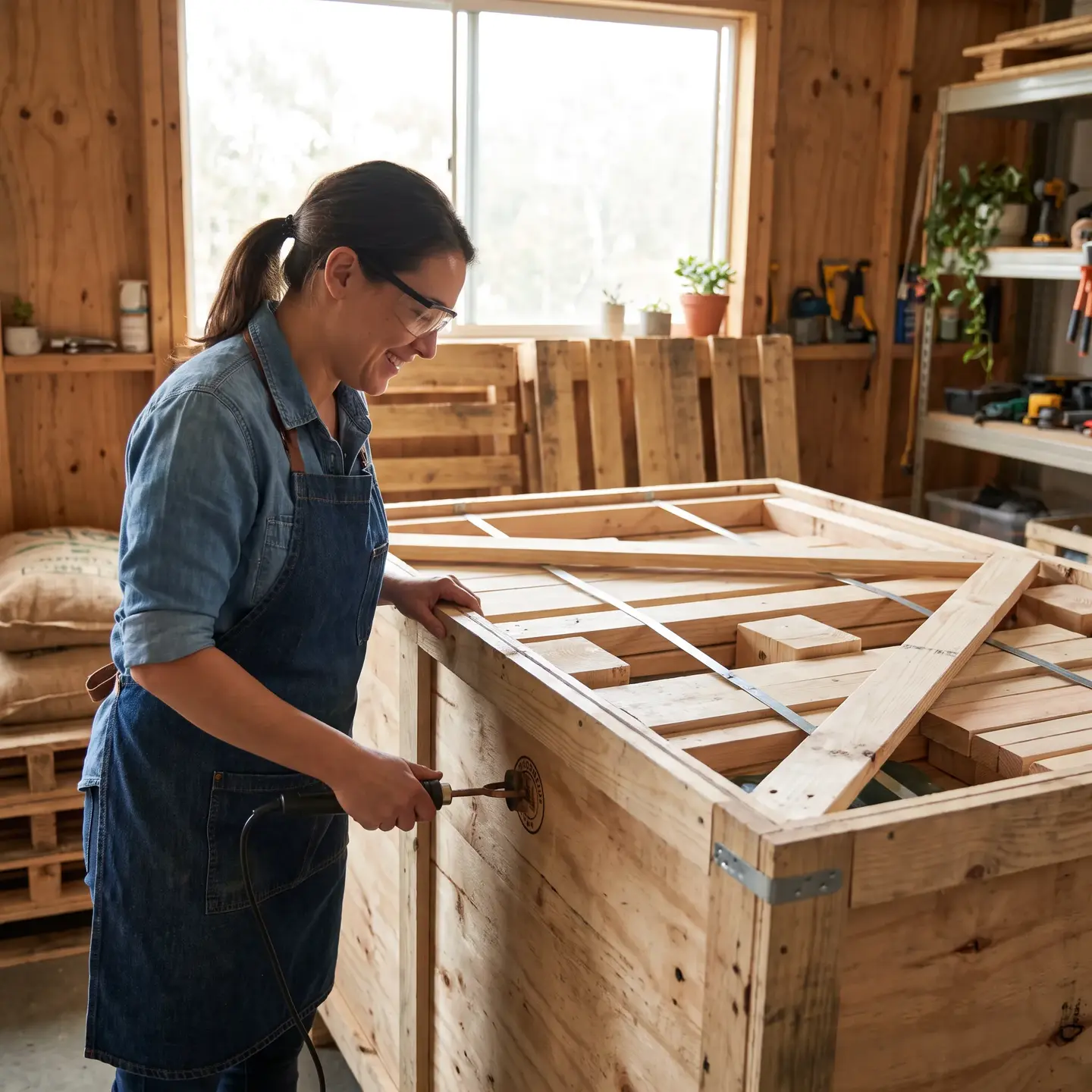
At AML, we are ISPM-15 certified and members of the CWPCA heat treat program. We apply the treatment and mark the wood so your crate clears customs without delays.
Specific industries add requirements. Controlled goods under Canada’s Controlled Goods Program require registered handlers. Aerospace components may need documentation of material certifications. Medical devices might specify cleanroom-compatible materials.
The Engineering Behind the Interior
TT Club, a major cargo insurer, reports that 65% of cargo-damage incidents in their claims experience result from poor or improper packing and securing. That statistic reflects the gap between “pack it tightly” and “engineer the protection system.”
Professional dunnage selection is an engineering decision. It involves calculating forces, selecting materials by tested performance, and validating the complete package under anticipated conditions. The optimum design is proven by testing—not by the amount of material used.
For information about our logistics and dunnage services and how we approach interior protection for high-value equipment, explore our service pages. If you need custom crating solutions engineered for your specific cargo, we are ready to discuss your requirements.
Frequently Asked Questions
Why are dunnage, blocking, and bracing treated as separate components?
We use dunnage to fill voids, separate surfaces, and provide light cushioning. Blocking stops the cargo from sliding across the crate floor, while bracing limits tipping and movement above the base. Treating these functions separately helps us create a reliable load path from the product to the skid. Foam alone cannot safely restrain a 2,000 kg machine during braking or forklift handling.
How do we choose the correct foam for industrial cargo?
We select foam based on the product’s fragility limit, weight, contact area, expected drop height, vibration, and storage environment. EPE and XLPE suit many industrial products because they resist moisture and repeated impacts. Antistatic foam is appropriate for electronics, but color alone does not prove ESD performance. We also review cushion curves because excessive foam can become too stiff and transmit more shock.
Where should blocking contact heavy machinery?
We place blocking against strong frame members, machine feet, or approved mounting points. We avoid control panels, thin sheet metal, and unsupported projections because these areas may deform under restraint forces. Blocks should transfer loads into the skid through compression-resistant joints and use at least two fasteners at each end. This prevents pivoting and reduces the risk of movement during sudden stops.
When do we need vapor barriers and desiccant?
We add moisture protection when cargo includes bare metal, electronics, optical equipment, or items exposed to ocean transit and long-term storage. The typical system includes a clean, dry product, corrosion preventive or VCI, a sealed vapor barrier, calculated desiccant, and a humidity indicator. We design this separately from shock protection because foam and blocking cannot prevent condensation or corrosion.
What should we ask a crating provider before approving the design?
We recommend asking for the expected drop height, transportation modes, foam type and density, mounting points, restraint calculations, and moisture-control plan. For international shipments, we also confirm that solid wood blocking carries the required ISPM 15 treatment and mark. If risk is high, we ask whether the complete package will be tested under a method such as ASTM D4169, which evaluates compression, vibration, and drop hazards.