Custom crating quotes frustrate buyers for a simple reason: the industry answers every cost question with “it depends.” That response is technically accurate, but it leaves procurement teams guessing when they need to set budgets, compare vendors, or justify expenses internally. We believe you deserve better than vague non-answers, so this article explains exactly how custom crating pricing works, what drives quotes higher or lower, and how to prepare the information that gets you an accurate estimate on the first try.
Who This Article Is For
This guide is written for procurement officers, logistics coordinators, and operations managers who ship high-value equipment and need to understand crating costs before requesting formal quotes. If you are moving servers, test stations, drones, HVAC units, or similar industrial assets worth tens or hundreds of thousands of dollars, the pricing framework here applies directly to your situation.

This article is not for residential movers, consumer goods shippers, or anyone looking for cardboard box solutions. We focus on engineered wooden crates built to protect equipment where damage means production delays, warranty claims, and repair costs that dwarf the price of proper packaging.
How Custom Crating Pricing Works: The Cubic Footage Model
Most professional crating companies price by cubic foot of finished crate volume, not by hourly labour or raw material weight. The formula is straightforward:
Length × Width × Height (in inches) ÷ 1,728 = Cubic Feet
A crate measuring 48 inches long × 40 inches wide × 60 inches tall contains approximately 67 cubic feet. That volume becomes the baseline for your quote.
This model makes sense because every cost driver scales with volume:
- Materials — Larger crates require more lumber, plywood panels, and fasteners
- Labour — Bigger structures take longer to cut, assemble, and finish
- Shop space — Crates occupy floor area during construction and staging
- Storage and handling — Volume determines how many crates fit in a warehouse or truck
This differs fundamentally from freight pricing, which often emphasizes weight, distance, and shipping mode. Crating cost is about building the protective structure. Freight cost is about moving it. Keep these separate in your budgeting, because your crating provider and your carrier are solving different problems.
Why Bigger Crates Often Cost Less Per Cubic Foot
Here is a counterintuitive reality that helps with budget planning: larger crates typically carry a lower per-cubic-foot rate than smaller ones.
The reason is efficiency. A ten cubic foot crate might cost $15 per cubic foot, while a 100 cubic foot crate might cost $8 per cubic foot. The bigger crate uses more total material, but the setup time, cutting patterns, and assembly steps do not scale linearly with size. Certain fixed costs get spread across more volume.
This has practical implications for your projects:
- Consolidating shipments reduces per-unit packaging cost when items can safely share a crate
- Batching orders for recurring production runs often yields better pricing than one-off requests
- Planning ahead lets you bundle multiple assets into fewer, larger crates where handling allows
When you work with a crating provider on a production program rather than single emergency shipments, the economics shift in your favour.
Complexity Factors That Increase Cost
Cubic footage sets the baseline. Complexity multipliers push the quote higher. Understanding these factors helps you anticipate where your project falls on the cost spectrum.
Custom Foam Inserts
Precision foam inserts, whether CNC-cut or hand-carved, add significant cost. These are not optional extras for fragile equipment. They prevent migration inside the crate, absorb shock at sensitive contact points, and distribute load during handling. For servers, test equipment, and electronics, foam is often the difference between a working unit and an expensive repair.
Anti-Static and Conductive Materials
Electronic equipment requires protection against electrostatic discharge. Anti-static foam, conductive packaging layers, and proper grounding add material cost and fabrication time. Skipping this protection to save money is a false economy when a static event destroys a circuit board.
Moisture Barriers and Desiccants
Equipment crossing climate zones or sitting in storage faces condensation risk. Moisture barriers, vapour-proof wrapping, and desiccant packs prevent corrosion and humidity damage. These are standard practice for ocean freight and long-term warehousing.
Shock Indicators and Tilt Sensors
Some shipments include monitoring devices that document handling conditions. Shock indicators turn red when impact thresholds are exceeded. Tilt sensors record if a crate was dropped or mishandled. These add modest cost but provide documentation if damage occurs in transit.
ISPM-15 Heat Treatment
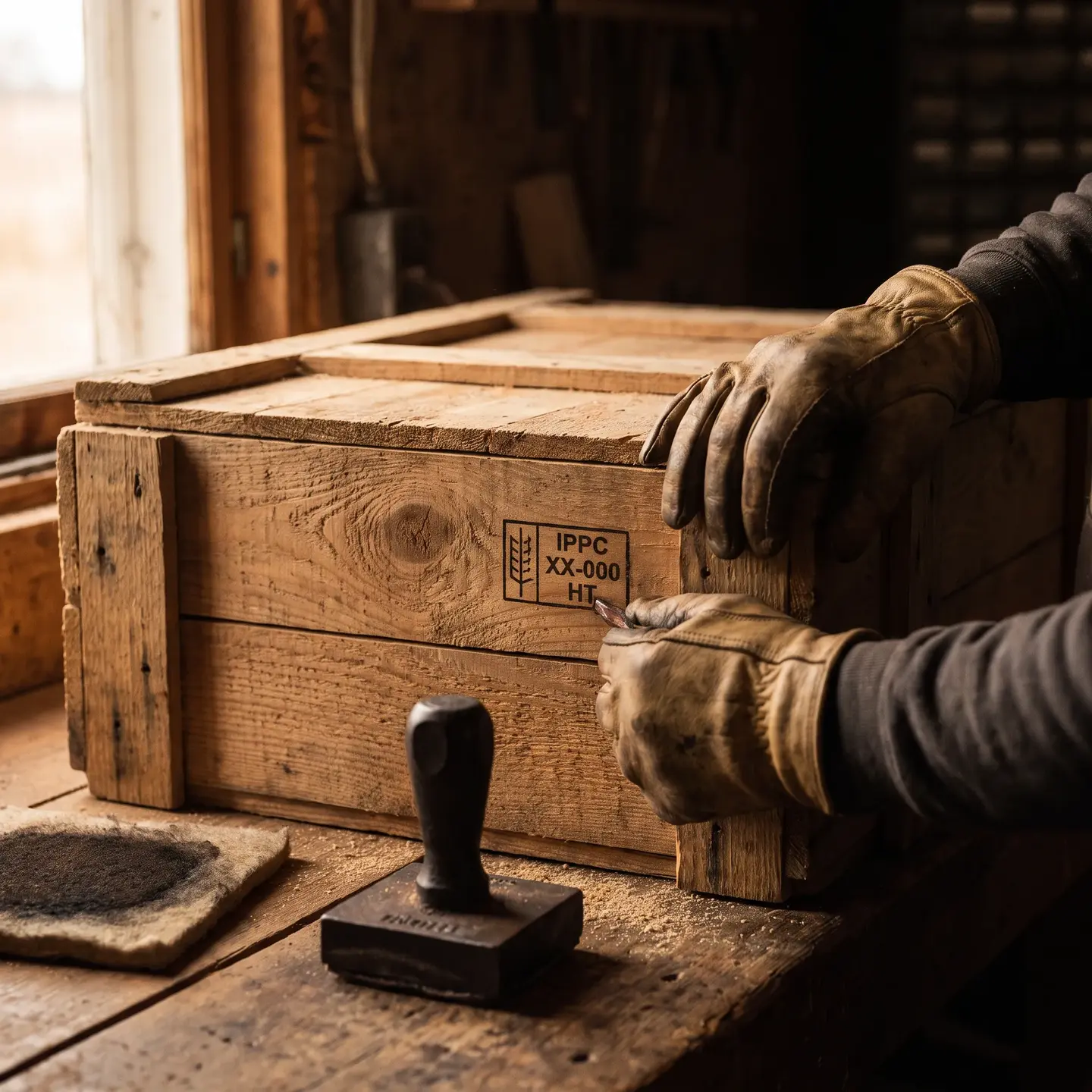
International shipments require wood packaging that meets ISPM-15 heat treatment requirements. This international standard controls pest transmission by requiring wood to reach a core temperature of 56 degrees Celsius for at least 30 minutes. Certified heat-treated lumber costs more than standard wood, and proper marking and documentation add administrative overhead. Non-compliant crates get rejected at borders, so this is not optional for export shipments.
Specialized Closures and Sealing Systems
Heavy-duty closure systems, reinforced corners, and weatherproof sealing add durability for rough handling environments. Equipment destined for remote installations, outdoor staging, or multiple handling events often needs these features.
Each complexity factor reflects a real protection need. Our job is matching the crate to your asset and shipping conditions, not selling unnecessary features or under-building to win on price.
Onsite Packing vs. Shop-Built Crates
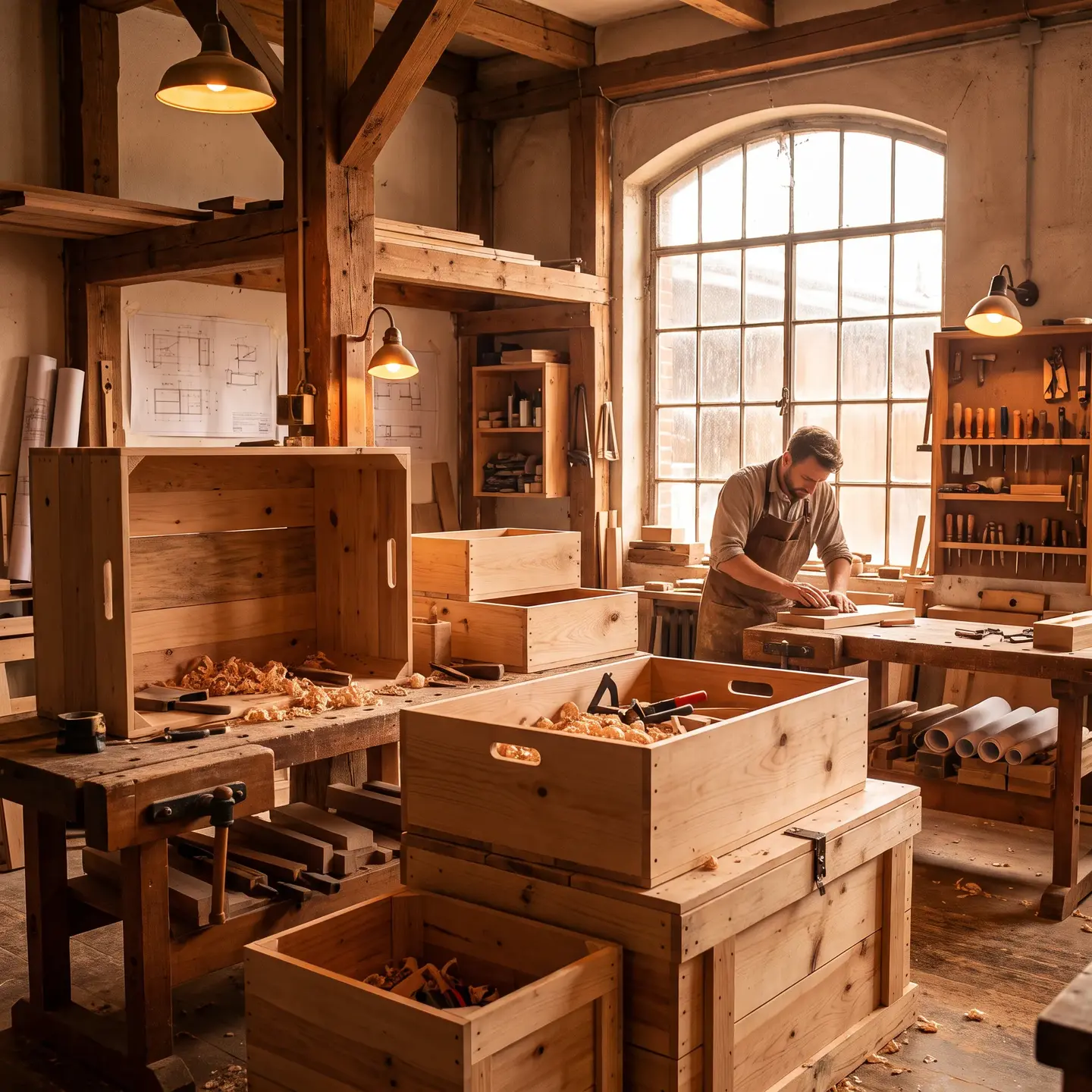
Where the crate gets built affects cost significantly. Most crates are fabricated in our shop, where we have controlled conditions, proper equipment, and efficient workflows. However, some equipment cannot be moved uncrated, and some facilities have security or access restrictions that require onsite work.
Onsite packing services carry additional costs:
- Travel time — Crew mobilization to your facility
- Per diem expenses — For projects requiring overnight stays
- Efficiency loss — Working outside our shop environment slows production
- Coordination complexity — Scheduling around your operations, security protocols, and site access
For items that truly cannot leave your facility until crated, onsite packing is essential. For equipment that can safely travel to our shop, you will typically get better pricing and faster turnaround.
When you request a detailed quote, tell us about any site constraints. We can advise whether onsite packing is necessary or if alternatives exist.
What Information You Need to Provide for an Accurate Quote
Vague requests yield vague quotes. Detailed specifications enable precise pricing. Here is what we need to generate an accurate estimate:
- Product dimensions — Length, width, height of the item being crated (not just the finished crate size)
- Weight — Total weight of the item, including any base or mounting hardware
- Quantity — Number of units for this shipment and anticipated recurring volume
- Fragility and value — What components are sensitive, and what is the replacement cost if damaged
- Packing requirements — Known needs like foam inserts, moisture barriers, or anti-static protection
- Pickup and delivery locations — Origin and destination addresses
- Timeline — When the equipment needs to ship
- Regulatory requirements — Whether ISPM-15 certification, Controlled Goods compliance, or other standards apply
Photos help enormously. Images showing the equipment, any fragile points, existing packaging (if any), and the loading environment let our team design accurately without assumptions that inflate the quote as safety margin.
If you are shipping regulated assets, let us know upfront. We are registered under Canada’s Controlled Goods Program and can maintain compliance chain from your floor to final delivery, but we need that information before quoting.
What Is NOT Included in Crating Cost
Crating cost covers the design, materials, and construction of the protective structure around your equipment. Several related costs are typically separate:
- Freight and shipping — The cost of transporting the crated item to its destination
- Pickup and delivery fees — Unless bundled into a turnkey service
- Special site requirements — Liftgate service, inside delivery, or crane access at either end
- Insurance — Coverage for the item’s value during transit
- Storage — If the crate needs to be held before shipping
When comparing quotes, make sure you understand what is included. A lower crating quote that excludes services another provider bundles creates an apples-to-oranges comparison. We provide itemized quotes that break down materials, labour, and any additional services, so you see exactly what you are paying for.
Typical Cost Ranges (With Important Caveats)
We hesitate to publish price ranges because every project is genuinely custom. What protects a $350,000 test station differs fundamentally from what protects an HVAC condenser. However, we understand you need directional guidance for budget planning.
General patterns we observe in the industry:
- Basic wood crates with standard lumber construction and minimal internal protection typically fall in the $200 to $800 range for moderate sizes
- Engineered crates with custom foam inserts, blocking, and bracing for fragile equipment commonly range from $500 to $2,000 or more depending on size and complexity
- Export-compliant crates with ISPM-15 certified lumber, moisture barriers, and reinforced structures often range from $500 to several thousand dollars for large or complex assemblies
The National Wooden Pallet and Container Association provides industry standards that influence material and construction requirements, which in turn affect pricing across the market.
A useful benchmark from industry sources: packaging cost commonly falls between 2% and 10% of product value, depending on fragility and shipping complexity. For robust equipment with minimal enclosure needs, 2% is typical. For fragile, high-value assets requiring engineered protection, the percentage climbs accordingly.
These ranges are directional only. Your actual quote depends on the specific factors discussed throughout this article.
How Recurring Production Runs Change the Economics
One-off crating projects carry setup costs that get amortized across larger production programs. When you ship the same equipment repeatedly, several efficiencies emerge:
- Design work happens once — The engineering investment in your first crate applies to every subsequent unit
- Material purchasing improves — We can buy lumber and components in quantities that reduce per-unit cost
- Production flow optimizes — Our team builds the same design faster with each repetition
- Quality consistency increases — Documented processes ensure every crate meets the same standard
If you ship equipment on a regular schedule, discuss production crating programs rather than treating each shipment as a standalone project. The cost difference can be substantial.
How to Get a Quote from AML Crating
We provide detailed, itemized quotes that show exactly what goes into your crate and what it costs. The process is straightforward:
- Gather your information — Dimensions, weight, quantity, fragility, timeline, and any special requirements
- Contact us — Submit a request for a detailed quote through our website, or call to discuss your project
- Review and discuss — We will ask clarifying questions if needed and provide a comprehensive breakdown
- Refine if necessary — If budget is a constraint, we can often suggest alternatives that balance protection with cost
Quotes are free. We would rather spend time understanding your project properly than surprise you with hidden costs later.
Our custom crating services cover the full range from basic wood crates to engineered solutions with foam inserts, ISPM-15 compliance, and onsite packing. We serve clients across the Montreal to Toronto corridor from our Ottawa facility, with crates shipping worldwide every week.
Key Takeaways for Budget Planning
Before you request quotes, keep these principles in mind:
- Cubic footage is the baseline — Larger volume means higher total cost but often lower cost per cubic foot
- Complexity drives premiums — Foam, barriers, anti-static materials, and heat treatment add real value and real cost
- Onsite work costs more — If equipment can travel to the shop, you will save money
- Detail enables accuracy — The more information you provide, the more precise your quote
- Crating and freight are separate — Budget for both, but understand they are different line items
- Production runs beat one-offs — Recurring shipments warrant different pricing conversations
Custom crating is an investment in protecting assets that are worth far more than the packaging. When a damaged arrival means shipping equipment back for repairs while production waits, the crate that prevents that scenario is not an expense. It is insurance that pays for itself the first time it works.
We have been building crates in Ottawa since 2011 for clients in defence, aerospace, high-tech, and manufacturing. We are registered under Canada’s Controlled Goods Program and ISPM-15 certified, which means we can handle shipments that require compliance chains most crating providers cannot support. If you are ready to move past “it depends” and get a real number for your project, request a detailed quote and we will show you exactly what your crate will cost and why.
Frequently Asked Questions
How can we estimate custom crating costs before we have a formal quote?
We start with cubic footage because every major cost driver scales with volume. We calculate crate size in inches, convert to cubic feet, and use that as the baseline for material, labour, shop space, and handling requirements. Bigger crates cost more overall but often less per cubic foot. From there, we layer in complexity factors like foam, barriers, and certifications. This approach gives us a directional budget number before we finalize a detailed quote.
Why do quotes for similar-sized crates vary so much between projects?
Two crates with similar dimensions can have very different risk profiles. If we are protecting a robust HVAC condenser, basic wood construction may be enough. If we are crating a $350,000 test station or sensitive electronics, we need engineered foam, anti-static materials, moisture control, and sometimes monitoring devices. Each protection layer adds cost because it adds real performance. We price to match the asset and shipping conditions, not just the size on paper.
What information do we need to provide to avoid vague “it depends” quotes?
We get accurate quickly when you give us hard data instead of general descriptions. Dimensions, weight, and quantity are the starting point. We then need to understand fragility, replacement value, known packing requirements, timelines, and any regulatory or site constraints, such as ISPM-15 or Controlled Goods. Photos of the equipment and loading environment help us design without guesswork. The more detail we have, the less “safety margin” we need to build into pricing.
When does onsite packing make sense, and what extra costs should we expect?
Onsite work is the right choice when equipment cannot safely move uncrated or when your facility’s security or access rules prevent shop-based packing. The trade-off is cost and efficiency. We add travel time, possible per diem, and coordination around your operations. Working away from our shop slows production. When gear can travel to us, you usually get lower pricing and faster turnaround. We recommend onsite only when it truly protects the asset or keeps you compliant.
How should we budget for crating relative to the value of our equipment?
As a rule of thumb, we see packaging costs fall between 2% and 10% of product value, depending on fragility and shipping complexity. More robust assets with simple protection sit near 2%. Highly fragile, high-value equipment with engineered crates, export compliance, and environmental controls trends toward the higher end. We view crating as risk management: the right crate is a one-time cost that can prevent a single damaged shipment from triggering repairs, delays, and warranty claims that far exceed the packaging.