An OEM crating program turns a recurring headache into a repeatable process. When your facility ships the same equipment month after month—test stations, servers, HVAC units, drones—building each crate as a one-off project wastes engineering time, creates inconsistent results, and leaves your production schedule vulnerable to delays. A formal program solves this by locking specifications, creating manufacturing templates, and establishing standing orders that integrate directly with your output calendar. We have built these programs for defence contractors, aerospace suppliers, and high-tech manufacturers across the Montreal to Toronto corridor since 2011, and the structure follows a predictable path from first conversation to locked pricing and lead times.
Who This Article Is For

This article is written for procurement officers, logistics coordinators, and operations managers at manufacturing companies that ship high-value equipment on a recurring basis. If your facility produces 20, 50, or 200 units of the same product annually and each shipment needs protective packaging, this content explains how to move from project-based crating to a structured program.
This is not for companies shipping occasional one-off items or residential moves. If you ship one server rack every two years, a formal OEM program adds unnecessary complexity. For single-shipment needs, a custom manufacturing packaging solutions approach makes more sense.
What Defines an OEM Crating Program
The difference between one-off custom crating and an OEM program comes down to repeatability. A one-off project involves measuring a single unit, designing a crate for that shipment, building it, and moving on. An OEM program involves:
- Locked specifications that define exact materials, dimensions, and construction methods
- Manufacturing templates (jigs) that ensure every crate matches the original design
- Standing order arrangements with agreed pricing and lead times
- Production integration that aligns crate availability with your shipping calendar
The goal is simple: when unit 47 comes off your production line, its crate is identical to the crate that protected unit 1. Your receiving teams at destination facilities know exactly what to expect. Your procurement team knows exactly what it costs. Your logistics coordinator knows exactly when crates will be ready.
Phase 1: Initial Specification and 3D Design
Every program starts with understanding what you are protecting and how it travels. We gather specific information before touching a piece of lumber:
- Product dimensions and weight—not estimates, but verified measurements including any protrusions, handles, or cable connections
- Weight distribution—a server with batteries at the bottom behaves differently than one with uniform weight
- Fragility points—circuit boards, optical components, pressurized lines, calibrated sensors
- Shipping method—air freight has different vibration profiles than ocean containers; domestic truck differs from international multimodal
- Destination handling—some receiving facilities have forklifts; others have loading docks at specific heights; some have neither
This information feeds into our 3D crate design process, where we model the complete solution before fabrication. The 3D model shows blocking and bracing positions, foam cushioning placement, fastener locations, and the crate’s external dimensions for freight planning. You review this model and request changes before any wood is cut.
The 3D design phase matters because changes are cheap at this stage. Moving a support bracket two inches to the left costs nothing in CAD software. Moving it after the jig is built costs real money and delays your timeline.
Phase 2: Prototype Build and Jig Creation
With the design approved on screen, we build the first physical crate. This prototype serves two purposes: it confirms that the design works with your actual product, and it becomes the template for creating jigs.
A jig is a manufacturing fixture that ensures repeatability. When we cut panels for crate number 37, the jig positions the wood exactly where it sat for crate number 1. When we drill fastener holes, the jig places them in identical locations every time. Without jigs, every crate introduces small variations—a quarter-inch here, a different grain orientation there—that accumulate into inconsistent quality.
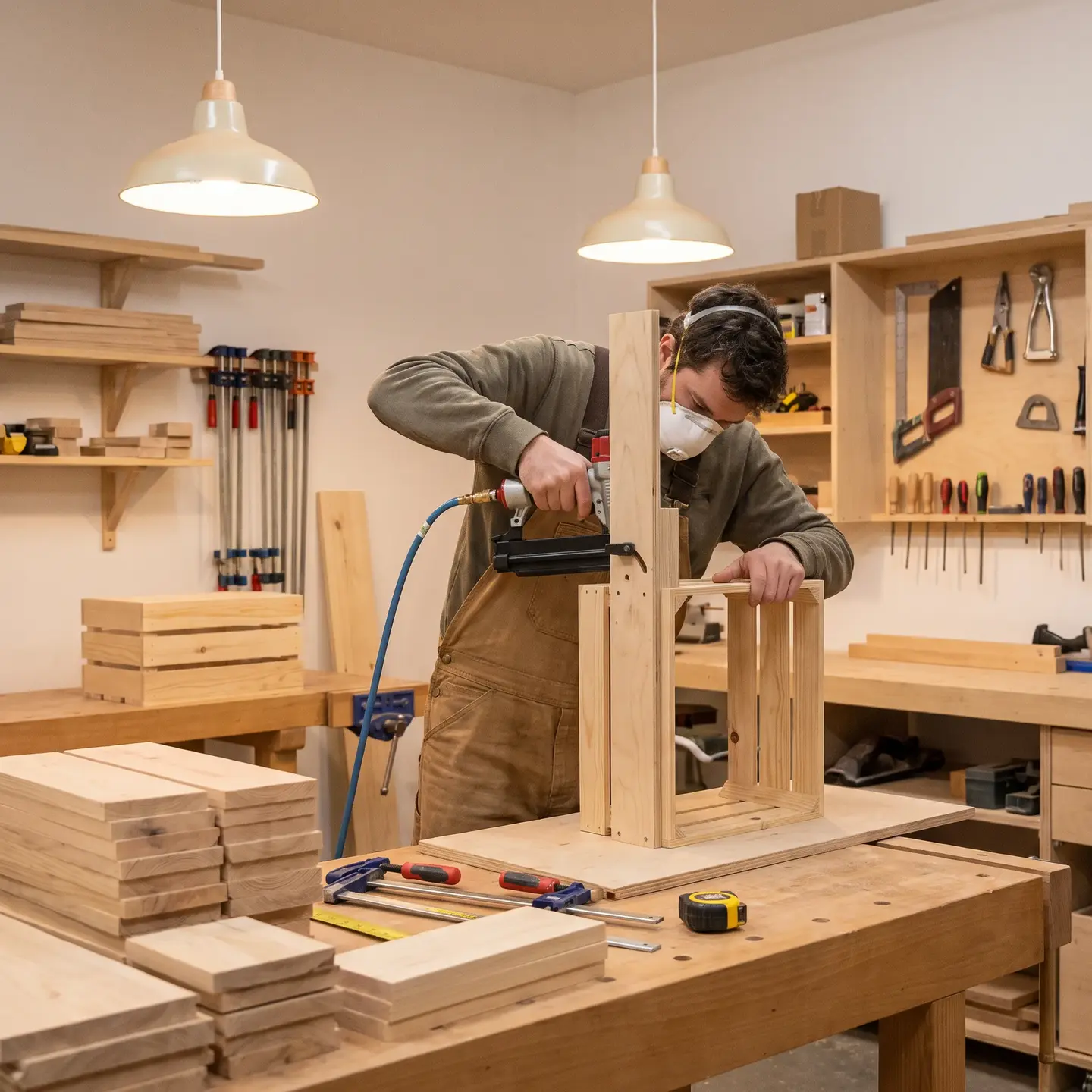
During prototype testing, we fit your actual equipment into the crate. We check that:
- The product enters and exits without forced angles or awkward handling
- Blocking and bracing contact points align with the equipment’s structural points
- Foam cushioning provides adequate clearance and doesn’t compress excessively under load
- Fastening hardware is accessible for unpacking without specialized tools
If adjustments are needed, we make them before creating the jigs. Once jigs exist, the specification is essentially locked from a manufacturing standpoint.
Phase 3: Program Approval and Specification Lock
The specification lock is a formal step where you approve the complete package: materials, construction method, labelling requirements, and any special handling instructions. This document becomes the reference point for every future order.
A locked specification includes:
- Material grades—specific lumber types, plywood thicknesses, foam densities
- Construction method—fastener types, glue specifications, reinforcement patterns
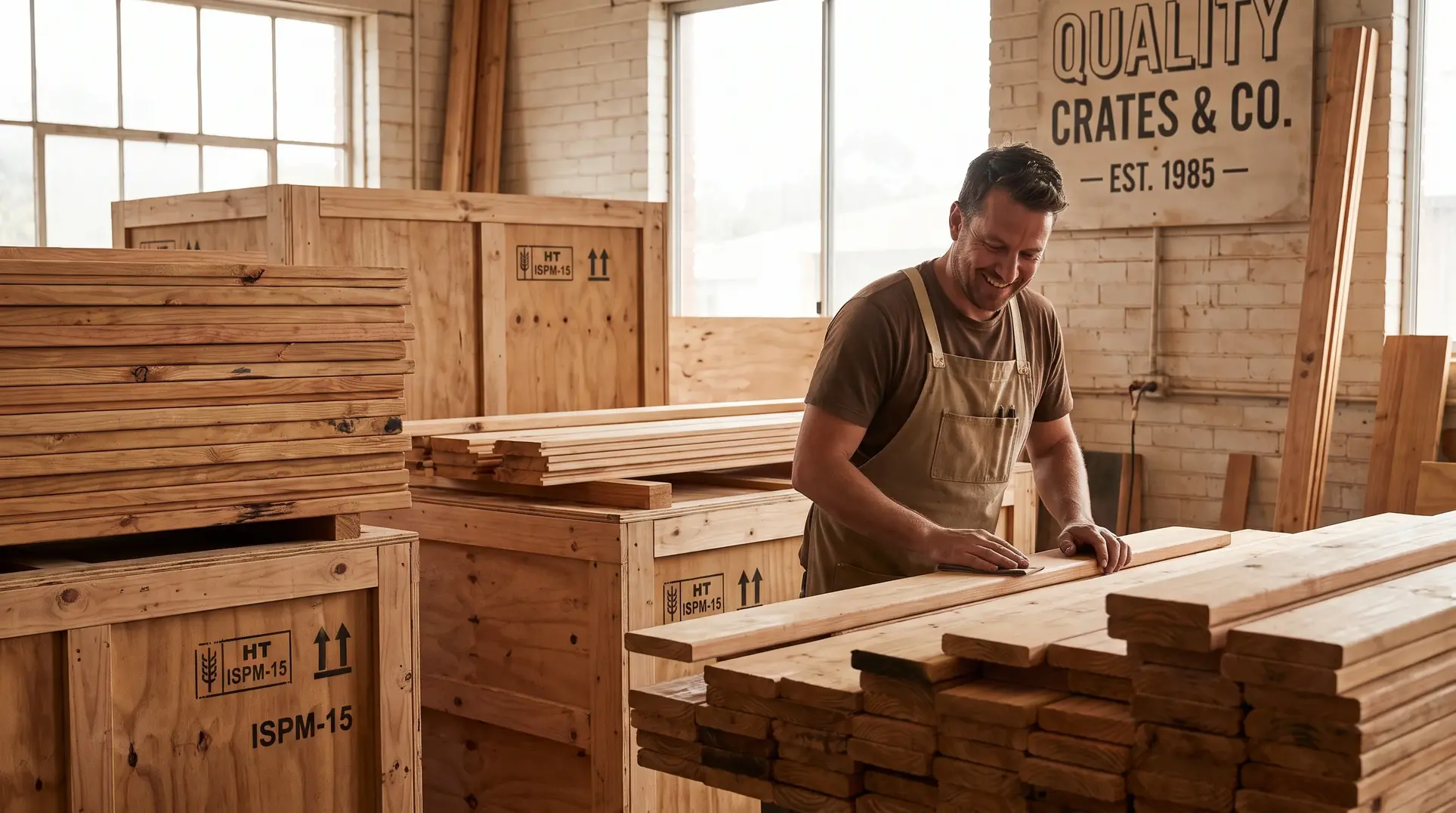
- Compliance requirements—ISPM 15 international standards heat treatment stamps for export, Controlled Goods Program handling requirements for defence equipment
- Labelling standards—customer logos, handling symbols, shipping marks, barcode locations
- Internal components—dunnage configurations, foam lining specifications, humidity indicators
Once locked, this specification remains constant unless you request a formal revision. Your receiving teams know what to expect. Your compliance officers have documentation on file. Your insurance coverage reflects consistent packaging standards.
For organizations shipping under Canada’s Controlled Goods Program, the specification lock also documents the chain of custody. Our facility is CGP-registered, meaning controlled items never leave approved hands during the crating process.
Phase 4: Standing Orders and Volume Pricing
With specifications locked and jigs in place, the program moves into operational mode. Standing orders establish the ongoing relationship between your production schedule and our fabrication capacity.
A typical standing order arrangement includes:
- Scheduled production runs—we build a set quantity on a regular interval (weekly, bi-weekly, monthly)
- Minimum order quantities—batch production reduces per-unit costs compared to building single crates
- Volume-based pricing—committed annual volumes unlock lower rates than project-based orders
- Material pre-ordering—we stock lumber, fasteners, and foam to match your anticipated needs
The pricing conversation shifts from “how much for this crate?” to “how much for the next 100 crates over 12 months?” That predictability benefits your budgeting process. You know crating costs when you calculate your product’s landed cost for customers.
Our production crating services page outlines how we structure these ongoing programs for clients with recurring needs.
Phase 5: Locked Lead Times and Production Integration
Established programs deliver predictable lead times because the design work is complete and materials are pre-positioned. A one-off custom crate might take two to three weeks from first contact to delivery. A program crate from an existing specification can ship in days, depending on inventory and batch scheduling.
This matters when your production line completes units on a schedule and shipments have hard deadlines. Consider the difference:
- Without a program: Unit ships Tuesday. You call Monday to request a crate. Engineering reviews your drawings. Materials are ordered. The crate is built Thursday. Your shipment misses its freight window.
- With a program: Unit ships Tuesday. Your standing order has crates ready. You notify us Friday. Crate arrives Monday morning. Shipment makes its window.
For manufacturers with consistent production, this integration means crating never becomes a bottleneck. The crates exist when you need them because we built them to your forecast.
Operational Benefits: Receiving Teams That Know the Crate
An often-overlooked advantage of program crating shows up at the destination, not the origin. When the same crate design arrives repeatedly, receiving teams become familiar with:
- Opening procedures—which fasteners to remove first, which panels lift off
- Handling requirements—where to position forks, what weight to expect
- Unpacking sequences—which blocking to remove before lifting equipment, where internal supports are located
- Inspection points—where damage indicators sit, what condition to expect
This familiarity reduces damage risk and speeds up receiving operations. A technician unpacking the 30th unit from an identical crate works faster and more confidently than someone opening an unfamiliar design for the first time. Following protective packaging best practices at origin means less confusion and fewer mishaps at destination.
For defence and aerospace clients, this consistency also supports documentation requirements. Receiving inspectors can reference standing procedures rather than creating new inspection protocols for each shipment.
Program Management and Ongoing Support
Products change. Shipping routes shift. Volumes fluctuate. A crating program needs mechanisms to handle these realities without starting from scratch.
Product modifications: When your engineering team revises the equipment—adding a component, changing a connector location—we evaluate whether the existing crate accommodates the change or requires specification revision. Minor changes might only need adjusted foam inserts. Major changes trigger a design revision cycle.
Volume adjustments: Standing orders include provisions for ramping up or down. If your production doubles, we scale fabrication. If demand slows, we adjust batch sizes and timing. The program framework remains; the quantities flex.
Inventory management: We maintain component inventory—cut lumber, foam blocks, hardware kits—based on your forecast. This pre-positioning enables the fast lead times that make programs valuable.
Quality consistency: Jigs and locked specifications ensure crate 200 matches crate 1. We conduct periodic reviews to confirm materials haven’t drifted and construction methods remain consistent.
Our ongoing production crating programs include this support infrastructure as part of the relationship.
When an OEM Crating Program Makes Sense
Not every shipping operation needs a formal program. Use these criteria to assess your situation:
A program likely makes sense if you:
- Ship the same or similar equipment at least 12 times annually
- Value predictable lead times over project-by-project scheduling
- Need documentation consistency for compliance or insurance purposes
- Want volume pricing locked for budget planning
- Have receiving teams that benefit from consistent packaging formats
A program likely doesn’t make sense if you:
- Ship different equipment each time with no repeating products
- Have fewer than six shipments annually of the same item
- Cannot forecast volumes even roughly
- Prefer to solicit competitive bids for each shipment
The threshold isn’t absolute. A company shipping 10 units annually of $350,000 equipment might find program benefits outweigh the setup investment. A company shipping 50 units of low-value goods might prefer project-based pricing. The calculation depends on your equipment value, compliance requirements, and tolerance for shipping delays.
Moving From Discussion to Implementation
Starting an OEM crating program involves a straightforward sequence:
- Initial consultation—we discuss your equipment, volumes, shipping patterns, and compliance requirements
- Design phase—3D modelling and specification development
- Prototype and testing—building the first crate, fitting your equipment, refining as needed
- Specification lock—formal approval of materials, methods, and compliance documentation
- Standing order setup—pricing, volumes, lead times, and scheduling alignment
- Ongoing production—crates built to forecast, delivered to schedule
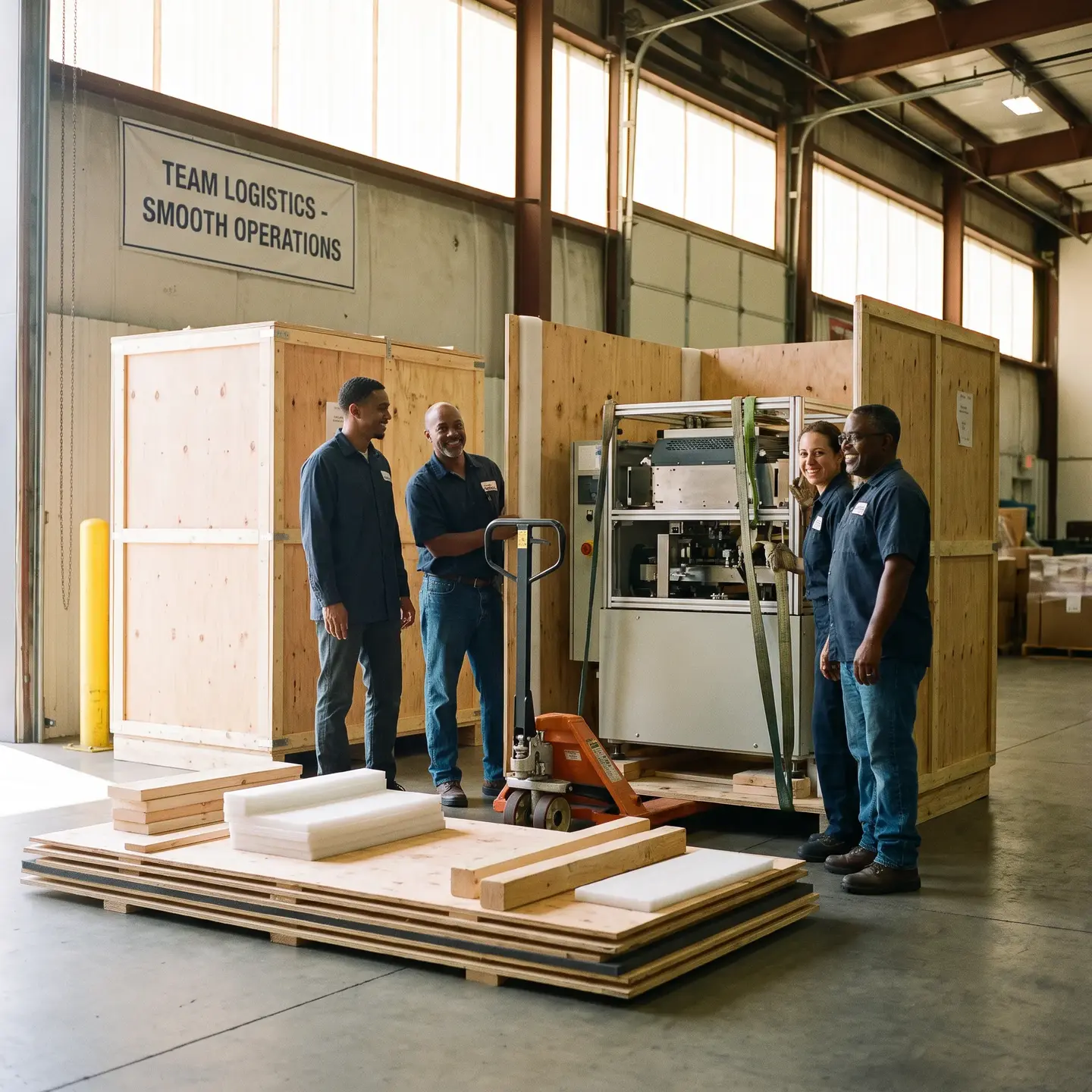
The timeline from first conversation to standing order typically runs four to eight weeks, depending on design complexity and your approval cycles. Simpler equipment with straightforward protection needs moves faster. Complex assemblies with multiple components or unusual fragility points take longer.
If your operation ships high-value equipment on a recurring basis and you’re tired of treating each crate as a new project, a program structure brings the predictability your production schedule needs. Request a quote to discuss how a formal crating program would work for your specific equipment and shipping patterns.
Frequently Asked Questions
How do we know when an OEM crating program is worth the setup effort for our operation?
We look first at how often we ship the same equipment and how much risk each shipment carries. If we are sending at least a dozen similar units a year, especially test stations, servers, HVAC units or drones, the engineering time, delays, and damage risk of one-off crates add up quickly. A program makes sense when we value predictable lead times, documentation consistency, and stable landed costs more than the flexibility of project-by-project crating.
How does an OEM crating program reduce delays and bottlenecks in our shipping schedule?
Our biggest delay risk comes from starting crate design after a unit is already on the dock. With a program, we complete 3D design, prototyping, jig creation, and specification lock once, up front. Then we tie standing orders and batch runs directly to our production calendar. That means when unit 47 is ready to ship, its crate already exists. We avoid last-minute engineering, material ordering, and missed freight windows altogether.
What problems does the 3D design and prototype phase actually solve for our team?
Without a structured design phase, we discover fit and handling issues on the shop floor, when changes are slow and expensive. By modelling in 3D first, we verify dimensions, weight distribution, fragility points, and shipping method before cutting lumber. The physical prototype then confirms real-world loading, bracing, foam performance, and access to fasteners. This upfront work prevents awkward handling, compressed foam, and misaligned supports that can damage equipment or frustrate technicians.
How do locked specifications and jigs protect us from quality drift over time?
When we build crates as one-offs, small variations—panel placement, fastener location, foam type—creep in over months and years. Locked specifications and jigs stop that drift. We define exact lumber grades, plywood thicknesses, foam densities, fastener types, and labelling once, then use jigs to position every panel and drilling point the same way for crate 200 as for crate 1. Our receiving teams, compliance officers, and insurers all benefit from that consistent, documented standard.
What happens when our product design or shipping volumes change after the program is in place?
We assume our equipment and schedules will evolve, so we build revision paths into the program. When engineering adds components or moves connectors, we review whether the existing crate can adapt with foam or dunnage changes, or whether it needs a full design revision. When volumes ramp up or down, we adjust batch sizes, standing orders, and inventory levels. The framework stays intact, but quantities and specifications flex in a controlled, documented way, without restarting from zero.